Online Sellers’ Bill Of Rights Targets Marketplace Holds, Suspensions And Policy Changes

A new bill would establish federal due process and transparency protections for third-party sellers facing account suspensions, frozen payments, inventory holds and sudden policy changes on major online marketplaces.
Representatives Becca Balint of Vermont and Nydia Velázquez of New York introduced the Online Sellers’ Bill of Rights Act of 2026 this week, arguing small businesses have become increasingly dependent on platforms that can cut off access to customers and income with little warning or meaningful recourse.
The proposal is aimed primarily at Amazon and Walmart, where sellers may have inventory stored inside platform-controlled fulfillment networks and substantial amounts of money tied up in marketplace accounts.
But the bill is broad enough to have significant implications for eBay, Etsy, Poshmark and other marketplaces where sellers have raised similar concerns about opaque suspensions, payment reserves, automated enforcement mistakes and policies that change with little notice.
“No corporation should have the power to destroy someone’s livelihood with the click of a button,” Balint said in announcing the legislation.
Sellers should receive clear explanations and a timely appeal when a platform takes action against their business. The challenge is protecting legitimate sellers without making it harder to respond to fraud, unsafe products and other misconduct.
The bill has support from the Responsible Online Commerce Coalition, Open Markets Institute, Public Citizen, Small Business Majority and several other small-business, antitrust and public-interest organizations.
“Independent, third-party sellers are the backbone of a vibrant and competitive online marketplace,” said ROCC Policy Director Joe Van Wye, arguing dominant platforms use “vague, unpredictable, and ever-changing rules” in ways that undermine sellers’ ability to survive and grow.
What The Online Sellers’ Bill Of Rights Would Do
The bill directs the Federal Trade Commission to create rules establishing fair terms between third-party sellers and what it calls “critical trading partners.”
Those rules would address inventory and payment holds, policy changes, transparency in investigations and a presumption of innocence for sellers facing enforcement.
Platforms would generally be prohibited from holding seller inventory for more than 30 days unless they can meet a legally valid standard of proof that the goods are counterfeit or otherwise unlawful.
The bill would also address products that become restricted after they have already entered a platform’s fulfillment network. Sellers would have to be given at least 30 days to sell through the remaining inventory or have it returned at no cost, unless there is direct evidence the goods are counterfeit or unlawful.
Additionally, seller funds could not be held beyond 30 days unless the platform showed, by a preponderance of the evidence, that the money came from unlawful transactions.
The platforms would also have to provide written notice to sellers within 72 hours explaining the reason for either type of hold and how they can appeal.
The proposal would also require at least 30 days’ written notice before material changes involving product eligibility, category or listing restrictions, compliance and documentation requirements, or marketplace commissions and fees.
When a seller is investigated, suspended or has a listing removed, the platform would have to identify the policy allegedly violated and provide the relevant facts and documentation. It would also have to explain the proposed penalty, appeal process and expected timeline instead of relying on generic responses.
A summary of the bill put out by Balint's office focuses almost entirely on Amazon and Walmart, describing them as dominant platforms that have become effectively unavoidable for many online businesses.
That focus is understandable, given that Amazon alone reportedly accounts for roughly 40% of online transactions, giving it enormous leverage over businesses that rely on access to its customers and fulfillment infrastructure.
The inventory protections are particularly relevant to sellers using Fulfillment by Amazon or Walmart Fulfillment Services, where a new restriction can leave merchandise stranded inside the platform’s network.
Sellers on eBay, Etsy, Poshmark and other marketplaces may not have inventory trapped in warehouses, but they can still lose access to income and customers through opaque suspensions, payment holds and automated enforcement errors.
For those platforms, the payment, investigation and policy-notice provisions may matter more than the inventory protections.
For example, eBay has taken greater control over seller payments in recent years, giving the company broad authority to delay payouts for a variety of reasons.
In 2023, eBay began holding funds for some sellers until after delivery, leaving affected businesses paying for merchandise and shipping while waiting to receive proceeds from completed sales.
eBay later backtracked on parts of the policy after seller pushback, but still retains wide discretion to place holds and reserves on seller funds.
 Liz Morton
In one case, a longtime seller said eBay demanded proof of purchase for a piece of art acquired more than 20 years earlier, then suspended the account when the seller could not produce a receipt.
My own experience offers another example. The account I use for eBay’s community forum was “permanently” banned, then restored only because of my “social presence,” showing how arbitrary enforcement and appeals can be.
 Liz Morton
Requiring eBay to identify the transaction, policy and factual basis behind a decision would give sellers a realistic chance to correct errors, rather than sending them through appeals that simply repeat the original conclusion.
Etsy’s payment reserve policies provide another clear example of how the legislation could affect sellers beyond Amazon and Walmart.
 Liz Morton
Etsy uses reserves to withhold a percentage of seller proceeds based on internal risk factors. Some sellers say payments were held in error, while others received little explanation of what triggered the reserve or how to have it removed.
The bill would likely prevent Etsy from holding funds beyond 30 days without meeting the required evidentiary standard, while requiring individualized notice rather than a general statement that a shop presented increased risk.
That would be a substantial improvement, though the bill would likely need to distinguish between money tied to completed transactions and reserves intended to cover future refunds, chargebacks or delivery claims.
Similar requirements could limit the damage when technical or verification errors wrongly trigger shop suspensions, while giving sellers more useful information when enforcement is intentional.
Poshmark’s rollout of warnings and suspensions for repeatedly deleting and relisting merchandise also showed how quickly sellers can face penalties under a policy they have not had enough time to understand or adjust to.
 Liz Morton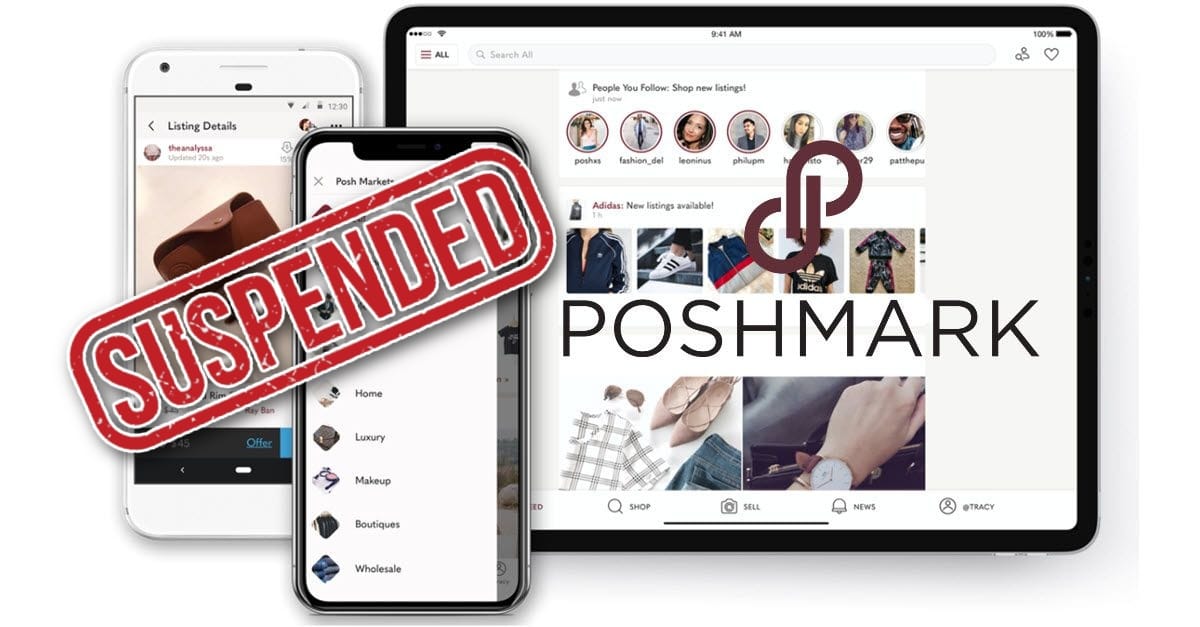
Which Marketplaces Would Be Covered?
One of the bill’s biggest problems is that it covers sellers on a “dominant platform” without defining dominance by revenue, transactions, users, market share or any other measurable threshold.
The separate definition of “critical trading partner” is much broader, covering a trading partner with the ability to restrict or impede a business user’s access to customers or tools needed to serve them.
By that measure, almost any marketplace could qualify because every marketplace can block a seller’s access to its own users.
Amazon would certainly qualify, with Walmart and eBay also likely candidates. Etsy and Poshmark are less certain because the bill does not say whether dominance should be measured across ecommerce generally, within a narrower category or by seller dependence on a particular platform.
That would leave the FTC to fill in a central part of the law through rulemaking, almost certainly drawing legal challenges.
Marketplaces will argue sellers can cross-list elsewhere or build direct websites, weakening claims that every platform is essential infrastructure. But rebuilding traffic, reputation and sales history elsewhere is rarely an immediate substitute for access to a built-in marketplace audience.
Platform Rights And Legal Questions
Marketplace terms giving platforms broad authority over listings, accounts and payments would not override a new federal law. Congress can limit contractual terms if it determines sellers need protections that cannot simply be waived at signup.
The harder legal fight would involve a platform’s right to decide which products and sellers it carries, especially where expressive products, content moderation, First Amendment protections or Section 230 are involved.
Those arguments would carry less weight in disputes over payment holds, verification errors and basic procedural fairness.
The 30-day window appears intended to give platforms time to investigate suspected misconduct, though the bill should clarify how that window interacts with its prohibition on acting solely on suspicion.
The bill would give the FTC 180 days to issue implementing rules and allow enforcement by federal and state authorities.
It would also let injured sellers sue in federal court despite mandatory arbitration agreements and recover three times their damages, legal costs and reasonable attorneys’ fees.
Treble damages and fee recovery would make improper suspension and payment-hold cases more viable for sellers who might otherwise be forced into individual arbitration, while also inviting litigation over the bill’s vague terms and whether class action waivers remain enforceable.
The Online Sellers’ Bill of Rights recognizes a problem sellers have faced for years: opaque marketplace decisions can do serious damage before anyone meaningfully reviews them.
The bill may not yet provide the final answer, but it raises an important question.
When a private marketplace has the power to cut off a business’s customers, inventory and income, what level of transparency and accountability should come with that power?
Download the full current version of the proposed Online Sellers’ Bill of Rights and let us know in the comments below what you'd like to see lawmakers do to protect online sellers.