eBay GMV Growth Is Back In Double Digits, But Sales Aren’t The Whole Story

eBay’s Gross Merchandise Volume is back in double-digit growth as Depop prepares to enter the company’s results, bringing renewed attention to what the metric actually captures.
The company reported $22.4 billion in GMV for the second quarter of 2026, up 15% year-over-year as reported, defining the metric as the total value of paid transactions on its marketplaces, including shipping fees and taxes and without adjustment for returns or cancellations.
 Liz Morton
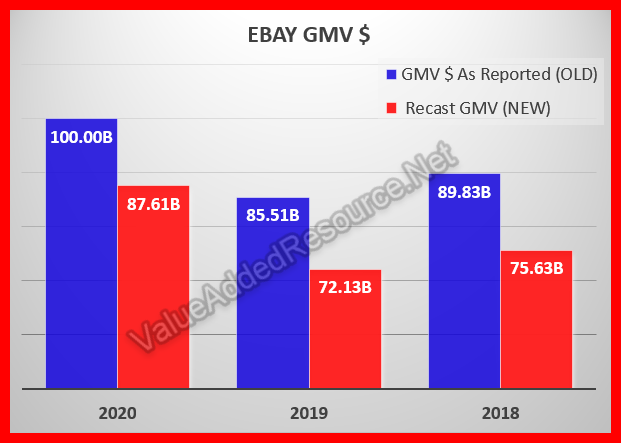
The current definition dates back to late 2021, when eBay moved away from counting “successfully closed transactions” whether or not the buyer actually paid and began using payment data from Managed Payments instead. At the same time, the company explicitly said GMV included shipping and taxes and restated historical results going back to 2018.
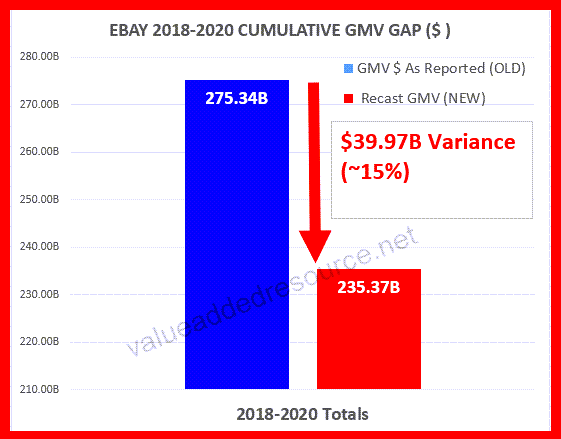
eBay called the impact of the change immaterial, but the restatement reduced previously reported GMV by roughly $13 billion per year, or almost $40 billion across 2018 through 2020.
Source: data from eBay Annual Report 2021
The company changed its definitions of active buyers and active sellers at the same time, replacing the same “successfully closed” transaction standard with paid transactions. Active buyer figures were also restated back to 2018, but no comparable historical figures were provided for active sellers, which had been reported less consistently before the company stopped disclosing the figure after 2021.
eBay didn't provide a detailed reconciliation showing how much of the restatement came from excluding unpaid transactions versus other changes in methodology, including the newly explicit treatment of shipping and taxes.
GMV isn't a standardized accounting measure, so companies have latitude in how they define and report this metric, but the way eBay has chosen to do so means changes in the reported number don't always reflect a corresponding change in the underlying level of marketplace activity. Higher average selling prices can also push GMV up without more units being sold, while currency movements can affect the reported growth rate.
Shipping can move GMV even when merchandise sales don't. If carrier rates go up while the same number of items sell at the same prices, eBay still reports higher GMV because buyer-paid shipping is included in the total, an increasingly important distinction as the company expands managed shipping programs that give it more control over the delivery rates buyers pay.
For sellers, though, shipping isn't simply a pass-through expense. eBay generally calculates Final Value Fees on the total amount of the sale, including the item price, shipping and sales tax, so a seller expecting postage to cost $10 can't necessarily charge the buyer $10 and still have $10 left to pay the carrier after eBay takes its percentage. The seller can absorb the difference, charge more for shipping or build more of the cost into the item price.
Higher advertising costs can feed into pricing too. eBay introduced the expanded Promoted Listings General attribution model in Germany in February 2025, followed by the UK, Australia and other European markets in June 2025 and the US and Canada in January 2026, increasing the number of circumstances in which a sale can carry an additional ad fee. As with shipping, those higher selling costs can be reflected in the prices sellers charge, which influences eBay's reported GMV.
Sellers on every marketplace price around some combination of fees, fulfillment costs, advertising and desired margins, but other marketplaces calculate their main seller fees differently. eBay generally applies Final Value Fees to the item price, shipping and sales tax, while Etsy's 6.5% transaction fee and Mercari's 10% selling fee also include shipping but exclude marketplace-collected sales tax.
Poshmark’s standard commission is based on the item sale price, while Whatnot calculates its main selling commission on the merchandise sale price alone, though a separate payment processing fee applies to the broader amount paid by the buyer. Fees on shipping and tax give sellers more cost to recover, which can feed back into the prices they charge.
Sales tax is an even stranger component of eBay’s GMV because the money never becomes seller proceeds at all. Under marketplace facilitator laws, eBay calculates and collects applicable tax from the buyer and remits it to the appropriate taxing authority. The seller does not receive that money, but it still increases eBay GMV and the amount on which Final Value Fees are calculated.
Including taxes in GMV becomes particularly problematic when eBay gets the calculation wrong, for example by charging battery-related taxes and fees or electronic waste fees on items that should not have been subject to them. In those cases, the buyer has already paid before the error is corrected, either through a later refund or by being told to seek reimbursement from the relevant taxing authority. Because eBay does not deduct refunds or cancellations from GMV, the overcollected amount remains part of the transaction volume even after the buyer gets the money back.
eBay has also shifted transaction fees from sellers to buyers in some C2C markets, with the buyer fee included in the displayed price and broken out at checkout. Sellers may lower their prices after transaction fees are removed, but not necessarily by the full amount, so the change can affect reported transaction value even without more merchandise being sold.
Buyer coupons, seller fee discounts and other incentives are used to stimulate transactions, particularly in areas like eBay Live where the company has been spending to drive participation and GMV. Those programs can make it harder to separate underlying marketplace demand from growth eBay has paid to generate.
CEO Jamie Iannone once criticized that kind of spending under eBay’s previous management, saying broad 15% to 20% discounts had attracted low-value, infrequent or “one-and-done” buyers, even as eBay has increasingly returned to spending to drive marketplace activity.
 Liz Morton

Co-funded coupons are a little different because eBay pays the seller based on the full item price and deducts the seller-funded portion of the discount separately afterward. That leaves open the possibility that the full pre-discount amount is reflected in GMV even though part of the promotion is ultimately funded by the seller, but eBay has not publicly disclosed enough detail to confirm how those transactions are treated.
The other side of eBay’s GMV definition is that paid transactions are not reduced later for returns or cancellations, so a sale can remain in reported volume even if the buyer ultimately gets all of their money back.
That can be something routine, like a return, but it can also include transactions that never result in successful fulfillment. A buyer can pay for an item, have the seller fail to ship it, file an Item Not Received claim and receive a full refund while the original sale still remains part of GMV.
Presales make that disconnect even more obvious because the transaction can count long before the merchandise is delivered. For example, eBay’s Pokémon presale problems included listings for products that were not scheduled for release until months after buyers paid, with some appearing to violate the platform's requirement that presale items be shipped within 40 business days.
 Liz Morton
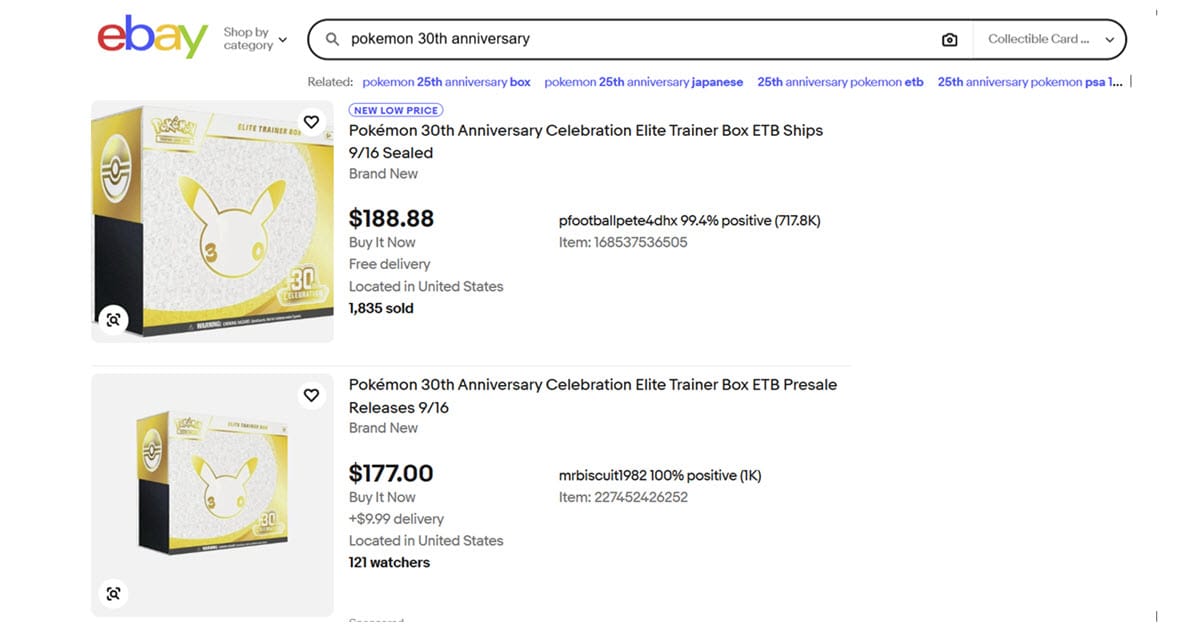
Those sales still contribute to GMV when payment is made. If the seller later fails to fulfill the order and the buyer is refunded, the original transaction is not removed from the metric.
That creates a clear advantage to cleanup after payment rather than prevention before it. A fraudulent, counterfeit or otherwise prohibited listing stopped before the buyer pays contributes nothing to GMV, while the same transaction can remain in the metric if eBay allows it to go through and refunds the buyer later.
eBay is not alone in using a company-specific definition of marketplace volume, but other platforms draw the lines differently around shipping, taxes and refunds.
Etsy defines Gross Merchandise Sales as the value of items sold, excluding shipping and net of refunds. Poshmark’s last public-company definition before its acquisition by Naver excluded shipping and sales tax but did not deduct returns or cancellations. Whatnot, which is privately held, now defines GMV for commission purposes as the merchandise sale price only, excluding buyer-paid shipping and tax.
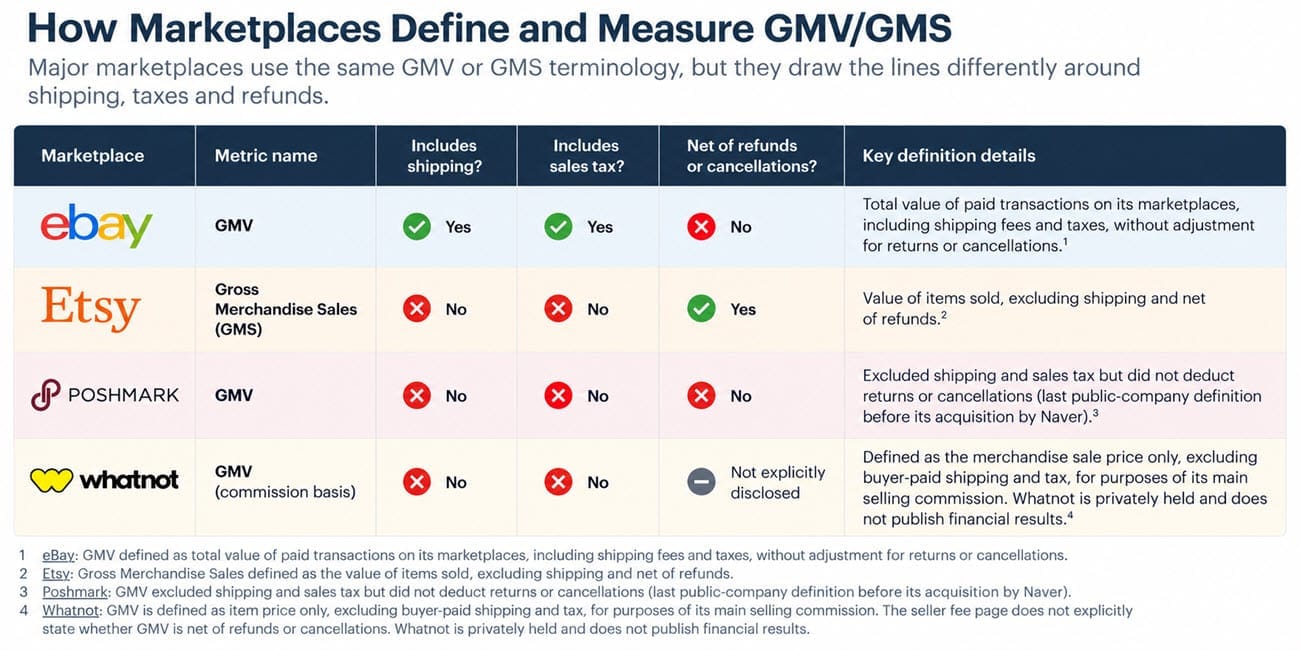
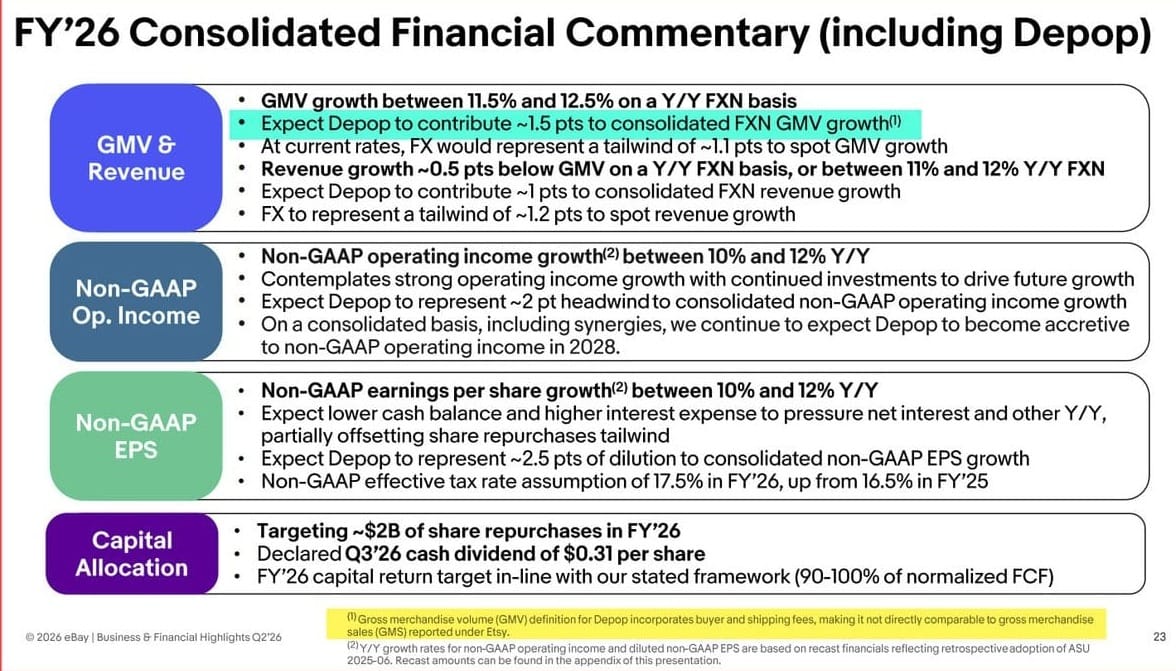
Depop is now moving from Etsy’s GMS methodology into eBay’s broader GMV definition. Under Etsy, Depop GMS excluded shipping and was net of refunds. eBay has already told investors Depop GMV will include buyer and shipping fees and will not be directly comparable with the historical GMS reported by Etsy. eBay’s standard GMV definition also includes sales tax and does not deduct refunds or cancellations.
With the acquisition closing July 30, Q3 will be the first quarter Depop is included in eBay’s consolidated results. On the Q2 earnings call, eBay guided for 10% to 12% FX-neutral GMV growth for the quarter, compared to 7% to 9% organically, with Depop expected to contribute about 2.5 percentage points to the total.
Its full-year presentation puts Depop's contribution at about 1.5 points for 2026 and explicitly notes that its GMV includes buyer and shipping fees, making it not directly comparable with the GMS Etsy previously reported.
eBay has also touted more than eightfold GMV growth for Live, but has not disclosed the underlying GMV, transaction volume, buyer or seller counts, or how much of that activity is incremental rather than shifted from traditional listings. The figure spans a period when Live expanded into multiple new countries and categories, making year-over-year comparisons difficult.
The company is guiding for Q3 GMV of $22.0 billion to $22.4 billion, up 10% to 12% year-over-year on an FX-neutral basis including Depop. eBay reports third quarter earnings October 28 at 5:30 PM Eastern.