Whatnot Cuts Fees For High-Volume Sellers, Takes Aim At eBay Live

Whatnot is cutting commissions for higher-volume sellers and introducing volume-based rates as competition in livestream shopping heats up, with the company taking some not-so-subtle shots at eBay's recently introduced Live fee structure along the way.
Starting September 21 for existing sellers, Whatnot's new commission structure will use total sales during each four-week period to determine the rate sellers pay during the next four weeks. New sellers will move to the structure the week of September 28.
The standard US commission remains 8% for most categories for sellers with less than $15,000 in sales over four weeks, with progressively lower rates kicking in as volume increases. Total sales across Live shows, Marketplace and Shop all count toward the four-week thresholds, with the commission charged on each sale determined by its category.
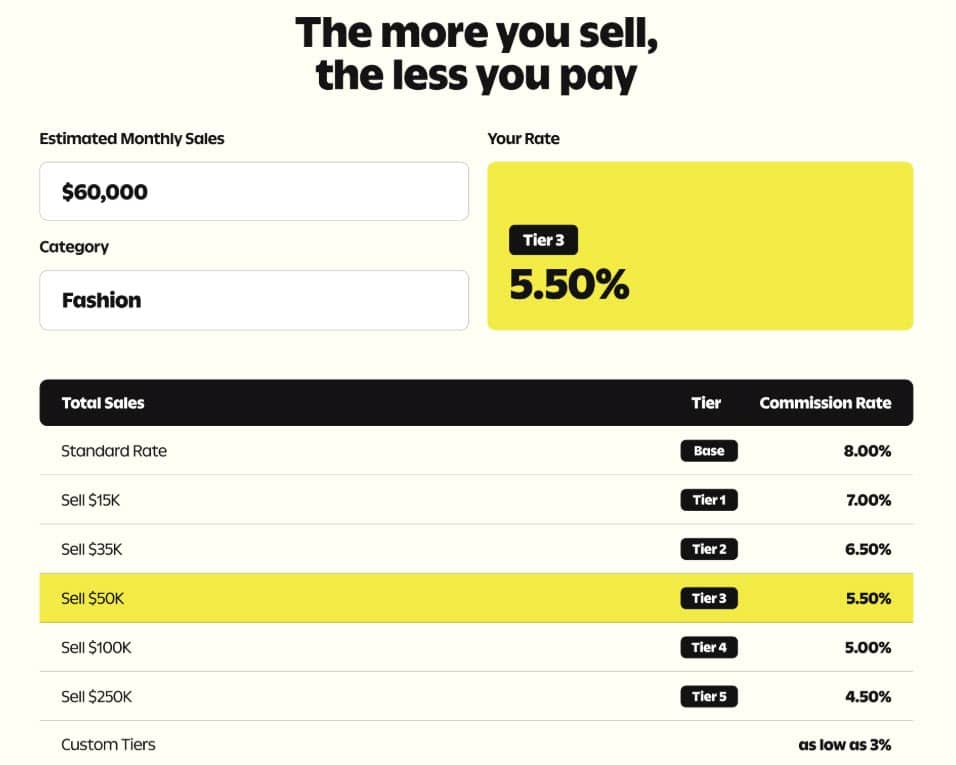
Sellers reaching $500,000 or more can qualify for publicly available rates of 6.5% for Sports and Trading Card Games, 5% for Other Collectibles, 4.5% for Fashion and 4% for the broader Other category. Coins start at 4% and can fall to 3.5%.
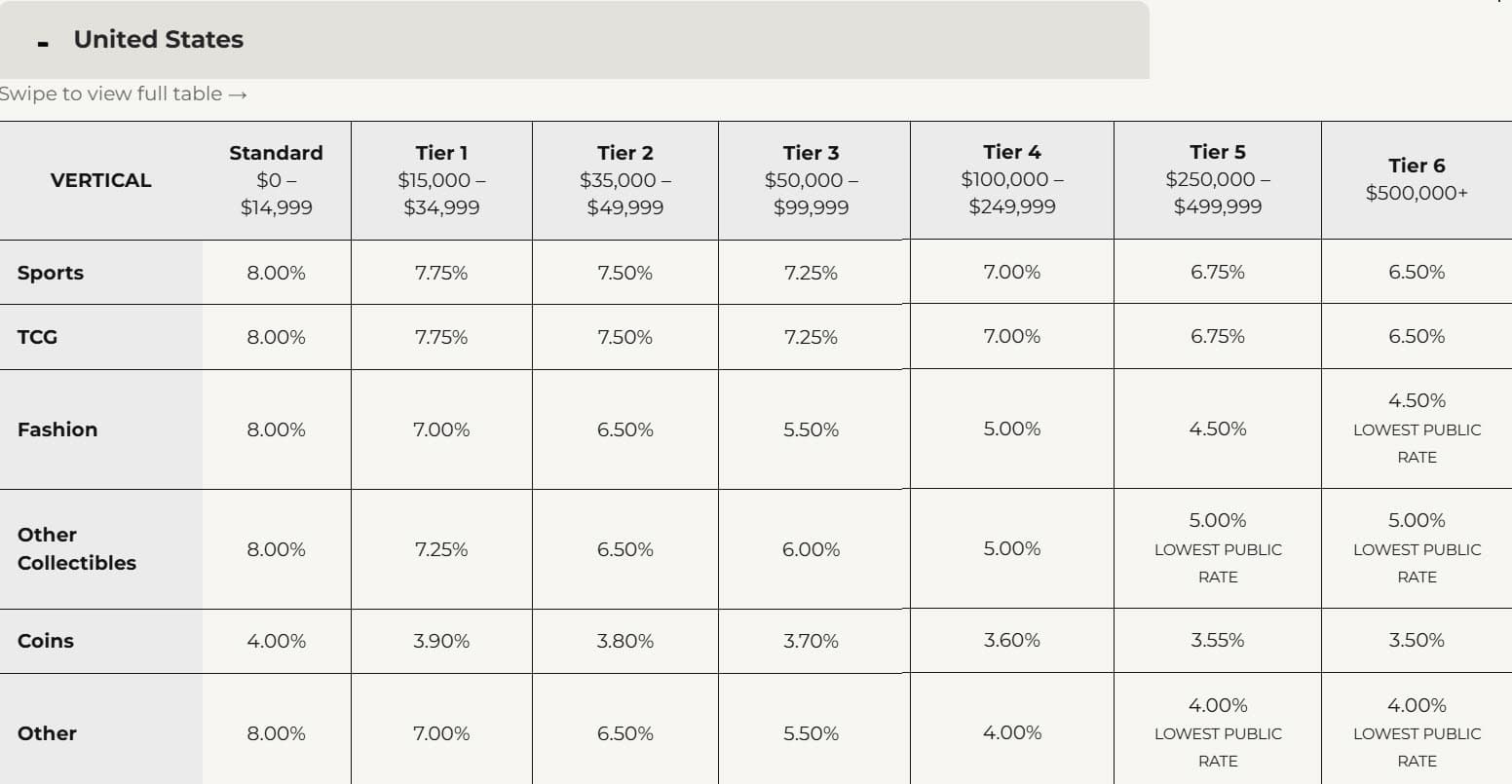
Whatnot is advertising rates "as low as 3%," though its updated fee page says those are custom rates reserved for its highest-volume sellers working directly with dedicated account managers rather than part of the public tier structure. Payment processing remains separate at 2.9% plus $0.30 per transaction in the US and is calculated on the full amount paid by the buyer, including shipping and taxes.
Premier Shop sellers get an additional 10% discount on their new commission rate through October 31, but that perk is also going away. Starting November 1, Whatnot says Premier Shop will no longer include a commission discount, leaving rates entirely based on sales volume. That means some lower-volume Premier Shop sellers could actually pay more under the new structure even as higher-volume sellers see reductions.
The company says the lower rates are possible as more sellers build larger businesses on the platform, stating one in eight now sell full-time and the number of sellers with more than $1 million in lifetime sales has more than doubled over the last year.
While Whatnot never explicitly names eBay, the target is hard to miss as the three-decade-old ecommerce giant tries to make up ground after years of sleeping on the livestream opportunity.
In July, eBay published standardized US Live rates for the first time, charging a 4% commission plus 2.9% payment processing for coins, bullion and eligible sneakers and 6% plus 2.9% for most other categories.
 Liz Morton
That put eBay's headline combined rate at 8.9% plus $0.30 for trading cards and most other categories compared to Whatnot's standard 10.9%, while both platforms landed at 6.9% for coins before accounting for differences in how those percentages are calculated.
Whatnot is now making those differences a central part of its pitch, saying a marketplace advertising a lower commission rate can still charge a higher fee because Whatnot applies commission only to the item sale price while competitors may include shipping and taxes.
Its updated help page gets considerably more specific, comparing Whatnot's 8% commission on a $10 item with "another marketplace" charging 6% on the full transaction.
Using $4.99 shipping and $0.85 in sales tax, Whatnot calculates its commission at $0.80 while the unnamed competitor's 6% fee on the $15.84 total comes to $0.95.
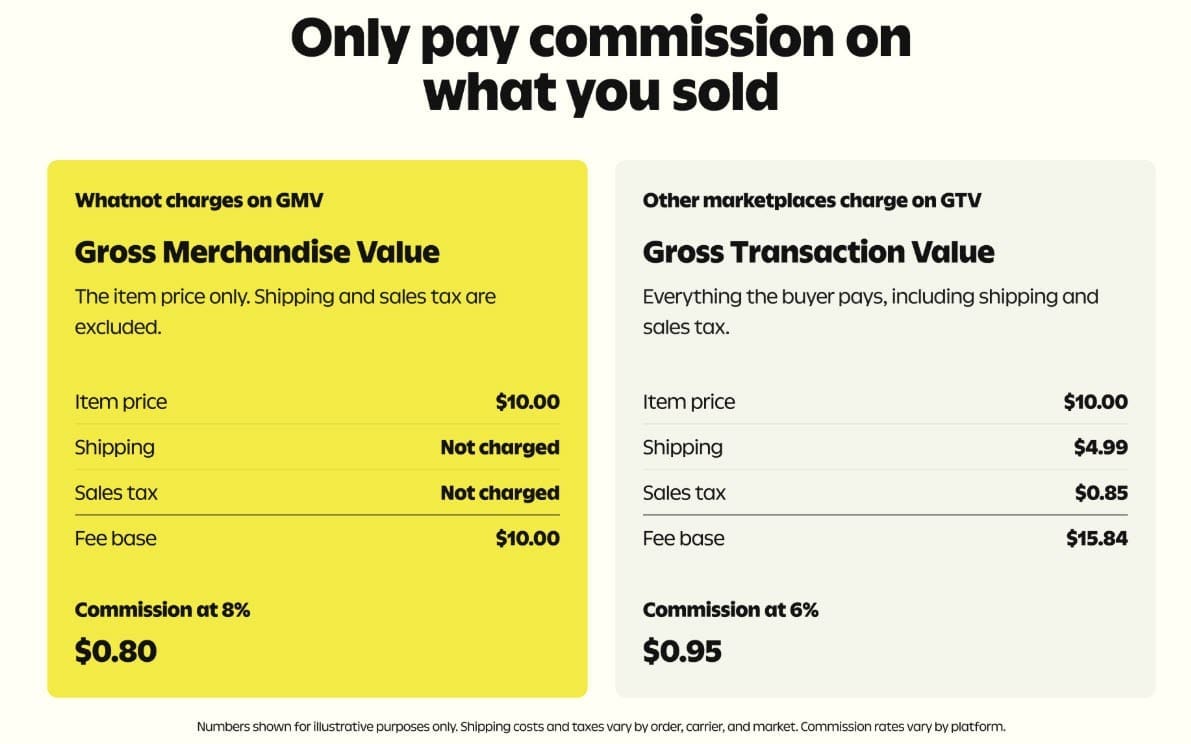
That 6% example maps directly to eBay Live's commission rate for most categories, where commission is calculated on the total amount of the sale including shipping, handling and tax. Both companies separately charge 2.9% payment processing plus a $0.30 fixed fee in the US, though eBay is temporarily reducing its fixed Live fee to $0.10 on qualifying low-priced sales through December 31.
Whatnot also takes a swipe at how marketplaces define the sales volume those fees are based on. The company says it "uniquely calculates commission using Gross Merchandise Value, or GMV," defining that as the price of the merchandise itself, while saying most other marketplaces use Gross Transaction Value, or GTV, which can include shipping and taxes.
Notably, eBay defines Gross Merchandise Volume for investor reporting as the total value of paid marketplace transactions inclusive of shipping fees and taxes without adjustment for returns or cancellations.
There are still transactions where eBay's fee structure can come out well ahead. eBay currently caps Live commission at $100 per item, making the effective rate fall substantially on higher-value sales, while Whatnot's new tiered rates replace a limited-time promotion that waived commission on the portion of qualifying high-value sales above $1,500.
eBay has been touting sevenfold to eightfold year-over-year Live growth while expanding into new countries and categories, though it still hasn't disclosed enough underlying GMV, buyer, seller or transaction data to show the actual scale of the business.
StockX has also entered the Live shopping race with an initial focus on sneakers, apparel, trading cards and collectibles, offering sellers zero fees through September 30 as it works to build activity.
 Liz Morton
Whatnot still has the advantage of a platform built around livestream selling and more broadly available seller access, while eBay brings a much larger established marketplace and is using lower fees, promotions, advertising and rapid category expansion to close the gap. Whatnot isn't waiting around to see how much ground eBay can make up.