Depop Adds AI Agent Restrictions, Arbitration & Class Action Waiver In New US Terms

Depop is rolling out new Terms of Service for US users on January 1, 2027, adding explicit restrictions on AI shopping agents, mandatory arbitration and a class action waiver, while removing existing account termination protections and expanding its authority to place holds on seller funds.
The update also moves US users into a separate agreement with Depop Inc., while the new Rest of World terms remain much closer to the current agreement, less than four months after eBay completed its $1.4 billion acquisition of Depop from Etsy.
As always, sellers are encouraged to read the entire updated terms carefully, but Value Added Resource has you covered with a side by side comparison highlighting some key changes.
Disclaimer: comparisons are made using both automated and manual methods and are provided for informational purposes only - no warranty of completeness or accuracy is expressed or implied and users are advised to do their own due diligence.
AI Agents & Automated Shopping
Depop is explicitly prohibiting AI "buy for me" agents and LLM-driven bots from accessing the US marketplace without permission.
The current terms already prohibit scraping, crawling and unauthorized bots or other third-party software, while specifically allowing sellers to use cross-listing platforms as long as they follow the Terms of Service, promptly remove items that sell elsewhere and accept responsibility if the same item sells on multiple marketplaces.
Old Version:
Modify, interfere with, intercept, disrupt or hack the Service, mine data, scrape or crawl the Service, including any internal software capabilities used to offer our Service (e.g. an application programming interface), or use any bots or other third party software on the Service.
You may simultaneously list your items for sale on other platforms and/or marketplaces (each an Alternative Platform) via third party cross-listing platforms, as long as you:
- Fully comply with our Terms of Service.
- Remove the item from Depop promptly in the event the item sells on an Alternative Platform.
- Accept full responsibility in the event your item sells on both Depop and an Alternative Platform, including refunding a buyer if the item is no longer available.
The January US terms retain those restrictions but add a separate provision aimed specifically at newer forms of automated shopping:
New Version:
Use any robot, spider, scraper, data mining tools, data gathering and extraction tools, or other automated means (including, without limitation, buy-for-me agents, LLM-driven bots, or any end-to-end flow that attempts to place orders without human review) to access our Service for any purpose, except with the prior express permission of Depop.
The wording closely tracks language eBay added to its own User Agreement earlier this year, including the references to buy-for-me agents and LLM-driven bots. Depop's version likewise distinguishes between unauthorized automated access and third-party cross-listing tools, which remain expressly permitted as long as sellers comply with the platform's rules.
 Liz Morton

Depop is also broadening how the US terms describe its own use of AI. The current agreement discusses AI primarily in the context of tools that help sellers create listings, including generated descriptions and the Repop feature, while the January version adds:
We may use artificial intelligence or AI-powered tools and products to provide and improve our Service, to offer you a customized and personalized experience, to provide you with enhanced customer service, and to support fraud detection. Availability and accuracy of these tools are not guaranteed.
The agreement goes on to retain the existing language about AI-powered listing tools and sellers' responsibility for reviewing the accuracy of generated content. The new language broadens Depop's stated uses of AI, but the terms still do not say member content will be used to train AI models. Depop already has a broad license to use member content under the current agreement.
The explicit AI-agent restriction is also limited to the new US agreement. Depop's updated Rest of World terms retain the existing restrictions on scraping, bots and unauthorized third-party software but do not add the language targeting buy-for-me agents, LLM-driven bots or automated purchases without human review.
Arbitration & Class Action Waiver
Depop is adding new mandatory arbitration requirements and a class action waiver for US users, neither of which appears in the current agreement.
The existing terms direct users with disputes against Depop to contact the company's Help Centre and say Depop prefers to resolve disagreements through its internal complaint-handling system. Business Users in the EU may also refer unresolved complaints to the Centre for Effective Dispute Resolution for mediation.
The January US agreement instead adds an extensive new Legal Disputes section covering claims involving Depop and related third parties, including its affiliates, subsidiaries and parent companies.
THIS AGREEMENT TO ARBITRATE APPLIES, TO THE FULLEST EXTENT PERMITTED BY APPLICABLE LAW, TO ANY DISPUTE OR CLAIM ARISING OUT OF OR RELATING TO YOUR USE OF THE SERVICES OR THESE TERMS OF SERVICE, WHETHER ASSERTED BY YOU, YOUR PARENT OR LEGAL GUARDIAN, OR BOTH.
In this Legal Disputes section, the term "related third parties" includes your and Depop's respective affiliates, subsidiaries, parent companies, predecessors, successors, assigns, as well as your, Depop's, and these entities' respective employees and agents.
You and Depop each agree that any and all claims or disputes at law or equity between you and Depop (or any related third parties) that relate to or arise out of this or previous versions of these Terms of Service, your use of or access to the Service, the actions of Depop or its agents, or any products or services sold, offered, or purchased through the Service, will be resolved in accordance with this Legal Disputes section.
The provision expressly covers disputes arising under "previous versions" of the Terms of Service, although whether that language could be enforced against claims already filed before January 1 is a separate question.
Users also waive the right to sue in court or have a trial before a judge or jury, except in small claims court, and must complete a 60-day informal dispute resolution process before arbitration can begin.
Covered claims must also be pursued individually rather than through a class, collective or representative action:
YOU AND DEPOP AGREE THAT EACH OF US MAY BRING CLAIMS AGAINST THE OTHER ONLY ON AN INDIVIDUAL BASIS, AND NOT ON A CLASS, REPRESENTATIVE, OR COLLECTIVE BASIS (AND WE EACH WAIVE ANY RIGHT WE HAVE TO BRING SUCH CLAIMS), AND WAIVE ALL RIGHTS TO HAVE ANY DISPUTE BE BROUGHT, HEARD, ADMINISTERED, RESOLVED, OR ARBITRATED ON A CLASS, COLLECTIVE, OR REPRESENTATIVE BASIS.
Depop has already faced multiple proposed class actions challenging its mandatory Marketplace Fee and the way the charge is disclosed to buyers.
In September, Javier Rivera filed a proposed class action in Illinois federal court alleging Depop engages in illegal "drip pricing" by advertising items without including the mandatory buyer fee and revealing the additional charge later in the checkout process. Rivera alleged an item advertised for $400 ultimately cost $472.63 after shipping, tax and a $20.70 Marketplace Fee were added, and said he would not have made the purchase or would have shopped elsewhere if the full price had been disclosed earlier.
 Liz Morton

Rivera's case followed a similar proposed federal class action filed by Linsey Dinh in February under California consumer protection laws. Dinh voluntarily dismissed that case without prejudice in July, without a ruling on the merits, while a related California state case filed by Nicole Yuen had also challenged Depop's Marketplace Fee practices.
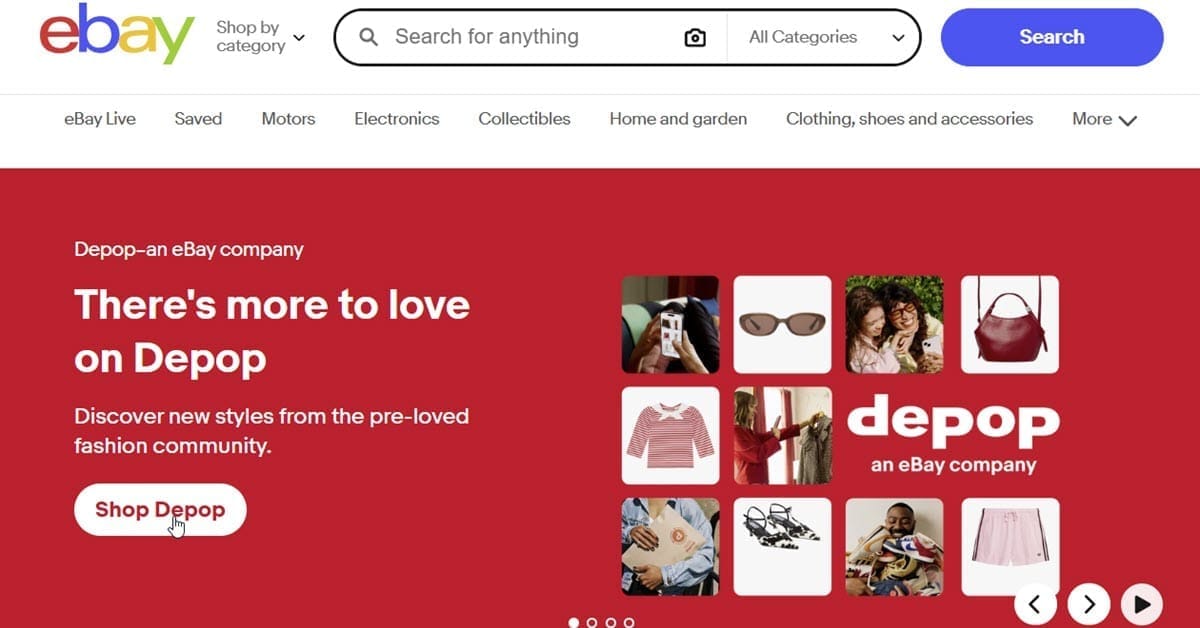
More recently, Depop listings appearing directly in eBay search have made that discrepancy even more visible, with eBay showing a fee-inclusive price for some Depop items while the corresponding Depop listing continues to display the lower item price before the Marketplace Fee is added at checkout.
 Liz Morton
Depop has also added a batch arbitration procedure for situations where at least 25 substantially similar individual demands are filed against the company with assistance from the same law firms or organizations. Those demands would generally be administered in batches of up to 100, with one arbitrator and one set of administrative fees for each batch.
Users can opt out of the arbitration agreement by mailing a written notice to Depop Inc.'s Litigation Department in Austin, Texas, but the deadline language is inconsistent between the Terms of Service and the separate opt-out form linked by Depop.
The terms say:
YOU CAN CHOOSE TO OPT OUT OF THIS AGREEMENT TO ARBITRATE ("OPT OUT") BY MAILING US A WRITTEN OPT-OUT NOTICE ("OPT-OUT NOTICE"). THE OPT-OUT NOTICE MUST BE POSTMARKED NO LATER THAN THE EFFECTIVE DATE OF THIS AGREEMENT OR 30 DAYS FROM THE DATE YOU FIRST ACCEPT THESE TERMS OF SERVICE.
But the separate form says users who registered their Depop account on or before November 30, 2026 have until January 30, 2027:
For Depop users who registered their Depop account on or before November 30, 2026, the Opt-Out Notice must be postmarked no later than 60 days after December 1, 2026. This means your Opt-Out Notice must be postmarked no later than January 30, 2027.
Page two of the same form then gives yet another formulation, saying the notice must be postmarked no later than "30 days after the effective date of the Terms of Service or 30 days from the date you first accept" them.
Account Termination & Seller Funds
The new US agreement also removes specific protections currently provided to users before some account terminations.
Under the current terms, Depop can already suspend or terminate accounts for suspected policy violations, including immediately in cases involving repeated breaches or a risk of harm, while otherwise requiring at least 45 days' notice for termination without cause and generally giving users 30 days to remedy a breach.
Old Version:
We may terminate your Account or your right to access or use all or any part of the Service without cause by giving to you not less than 45 days’ notice.
We may terminate your Account or terminate your right to access or use all or any part of the Service if you have failed to remedy a breach of the Terms of Service within 30 days, unless we can demonstrate that you have repeatedly been in breach or if there is a real risk of loss or harm were you to continue to use our Service in which case notice to terminate will be effective immediately.
Those protections remain in the January Rest of World agreement but have disappeared from the new US terms, which instead give Depop broad discretion to restrict accounts, delay or remove content, remove or demote listings, eliminate discounts and take technical or legal steps to prevent users from accessing the service.
New Version:
Without limiting Depop’s ability to refuse, modify, or terminate all or part of our Service, Depop may also terminate these Terms of Service with anyone at any time for any reason, at our sole discretion, by giving notice of such termination.
The US terms also expand Depop's express content-moderation powers. The current agreement says the company may refuse, moderate, reject, remove or delete content that violates or risks violating its policies, while the January US version adds the ability to "modify, obfuscate or restrict the visibility" of user content.
Seller funds are changing too. Depop already reserves the right to withhold amounts that have not yet been paid to a seller for 180 days from the applicable transaction date after an account is suspended or terminated, so that provision is not new.
The January agreement retains it but adds a new authority to place temporary holds on funds even outside that specific post-suspension framework:
We may also place a temporary hold on funds in your Account where we reasonably believe it is necessary to manage risk, including where we are investigating suspected fraud, where there is an unusually high level of disputes or refund requests on your Account, or where required by law or by a payment provider. We will release the funds as soon as the reason for the hold no longer applies.
Liability
The January US agreement also substantially rewrites what Depop says it can be held liable for, including new exclusions tied directly to account enforcement, search visibility and a user's ability to do business.
Under the existing terms, Depop says it provides its services with "reasonable care and skill," while consumer claims are treated separately from Business User claims, which are subject to additional exclusions and a liability cap tied to the Seller Fee or Marketplace Fee for the transaction.
The new US terms instead broadly disclaim responsibility for consequential losses and specifically exclude damages arising from several issues directly relevant to sellers, including:
a suspension or other action taken with respect to your Account or breach of section 6 above;
the duration or manner in which your listings appear in search results; or
your need to modify practices, content, or behavior, or your loss of or inability to do business, as a result of changes to these Terms of Service.
If Depop is found liable, the new terms cap recovery at the greatest of any applicable Depop Protection refund up to the item price plus original shipping, disputed fees paid during the previous 12 months, or $100.
Other US-specific changes include a new requirement that users under 18 have a parent or guardian's permission to use Depop, with the company reserving the right to restrict or close accounts if it believes that permission is missing. When announcing the acquisition, eBay specifically cited Depop's Gen Z audience and ability to reach younger consumers.
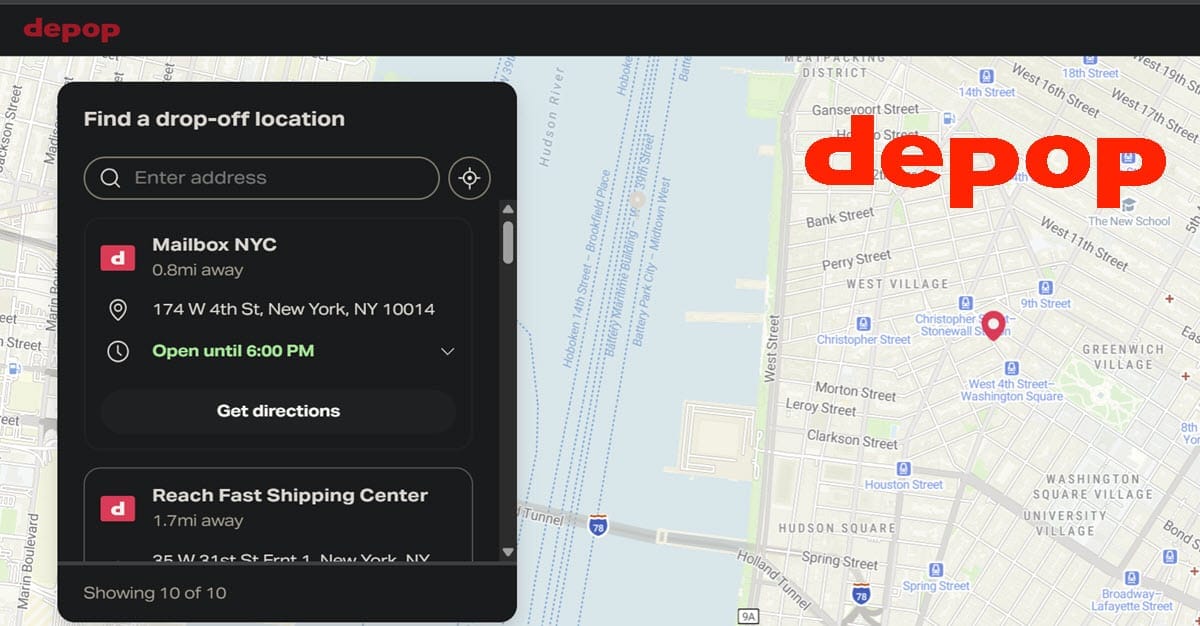
The terms also require sellers to comply with Depop's rules for local delivery and pickup when those options are added to their accounts or surfaced through the service, matching the new Depop Drop-off service launched in New York City this week as part of eBay's broader push to build out alternative low-cost shipping networks.
 Liz Morton
Rest Of World Terms
Most of these changes do not carry over to Depop's updated Rest of World agreement, which remains much closer to the current terms and largely removes US-specific provisions that are now handled through the separate Depop Inc. agreement.
Users outside the US retain the existing 45-day notice requirement for termination without cause and the general 30-day opportunity to remedy a breach, along with the current consumer and Business User liability structure, informal dispute-resolution process and English-law framework, with separate provisions for Australian users where applicable. The new US agreement is instead governed by New York law.
The Rest of World agreement does not add the explicit AI-agent restriction, mandatory arbitration and class action waiver, new risk-based funds holds or the rewritten US liability provisions.