Depop Faces Another Proposed Class Action Alleging Marketplace Fee “Drip Pricing”

Depop is facing another proposed class action accusing the fashion resale marketplace of hiding its mandatory Marketplace Fee until checkout, just two months after a similar federal case was dismissed without a ruling on the underlying claims.
Plaintiff Javier Rivera filed the complaint September 15 in the U.S. District Court for the Northern District of Illinois, alleging Depop uses illegal "drip pricing" by advertising items without including the Marketplace Fee and only revealing the additional charge near the end of the purchase process.
Rivera says he purchased an item advertised for $400 on Depop in August 2025, with $7.99 shipping and $43.94 sales tax shown before the Marketplace Fee of $20.70 appeared on the final checkout screen, bringing his total to $472.63. He claims he did not notice it until after completing the purchase and would not have placed the order or would have shopped elsewhere if Depop had disclosed the fee and full price upfront.
The complaint includes screenshots of another transaction to illustrate how Depop's pricing works, showing a $30 item in the buyer's bag where the item price is labeled "Total" and the only additional cost mentioned is shipping, which is "calculated at checkout."
Once the buyer proceeds further through checkout, the Marketplace Fee appears as a separate $2.20 charge, along with $5.99 shipping, bringing the total to $38.19.
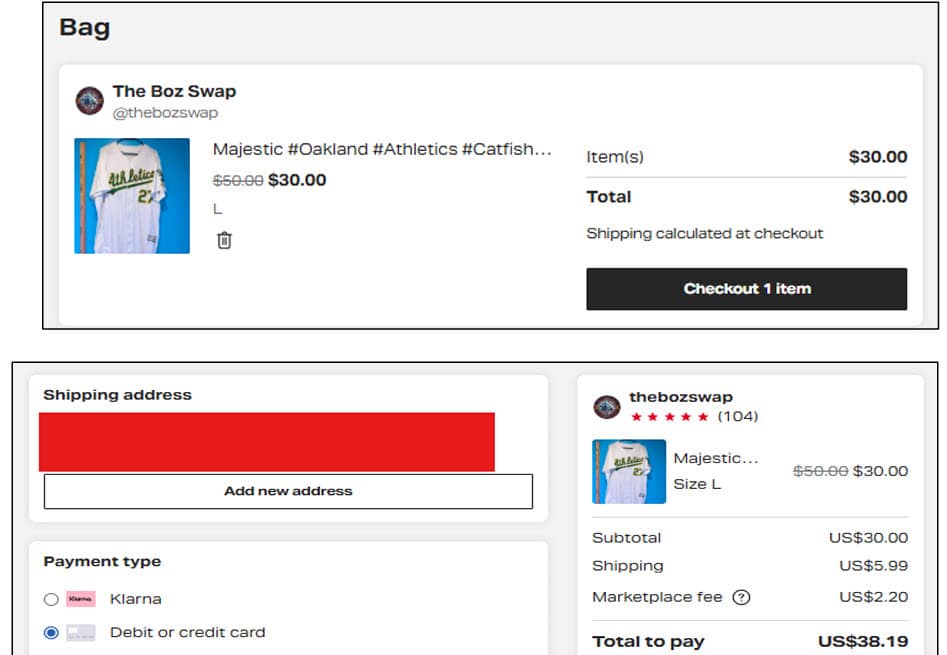
Rivera alleges that waiting until that stage to disclose the fee makes it harder for buyers to accurately compare Depop's prices with competing marketplaces and retailers. The complaint calls the practice a “classic form of digital ‘drip pricing’ that exploits consumer inertia and effectively deprives consumers of meaningful choice.”
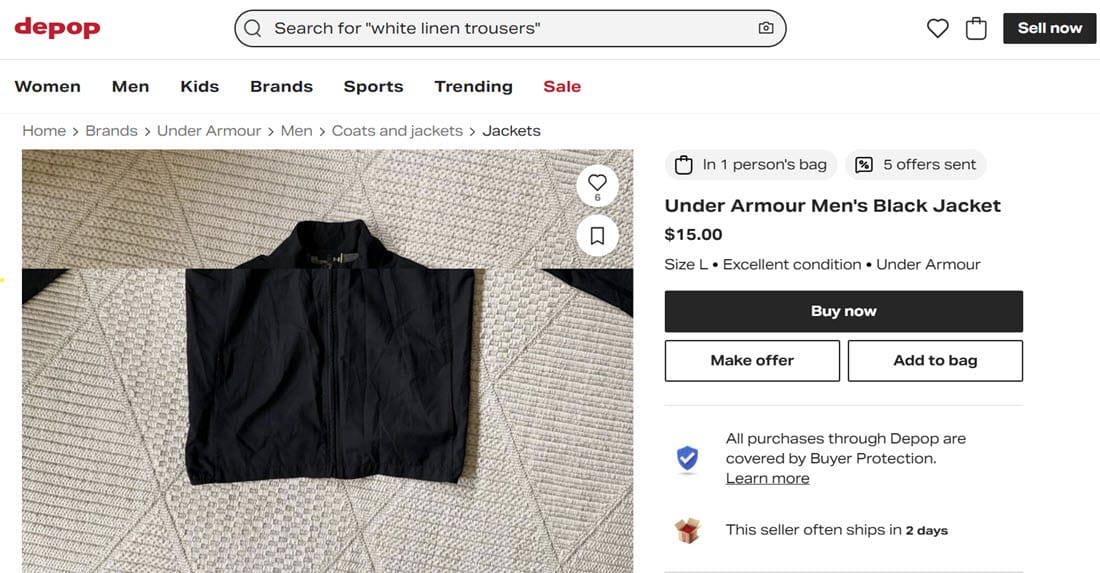
A Depop listing reviewed on September 20 showed a similar pricing pattern. The item was advertised at $15 on the item page with no Marketplace Fee amount or fee-inclusive price displayed, both while logged out and after logging in.
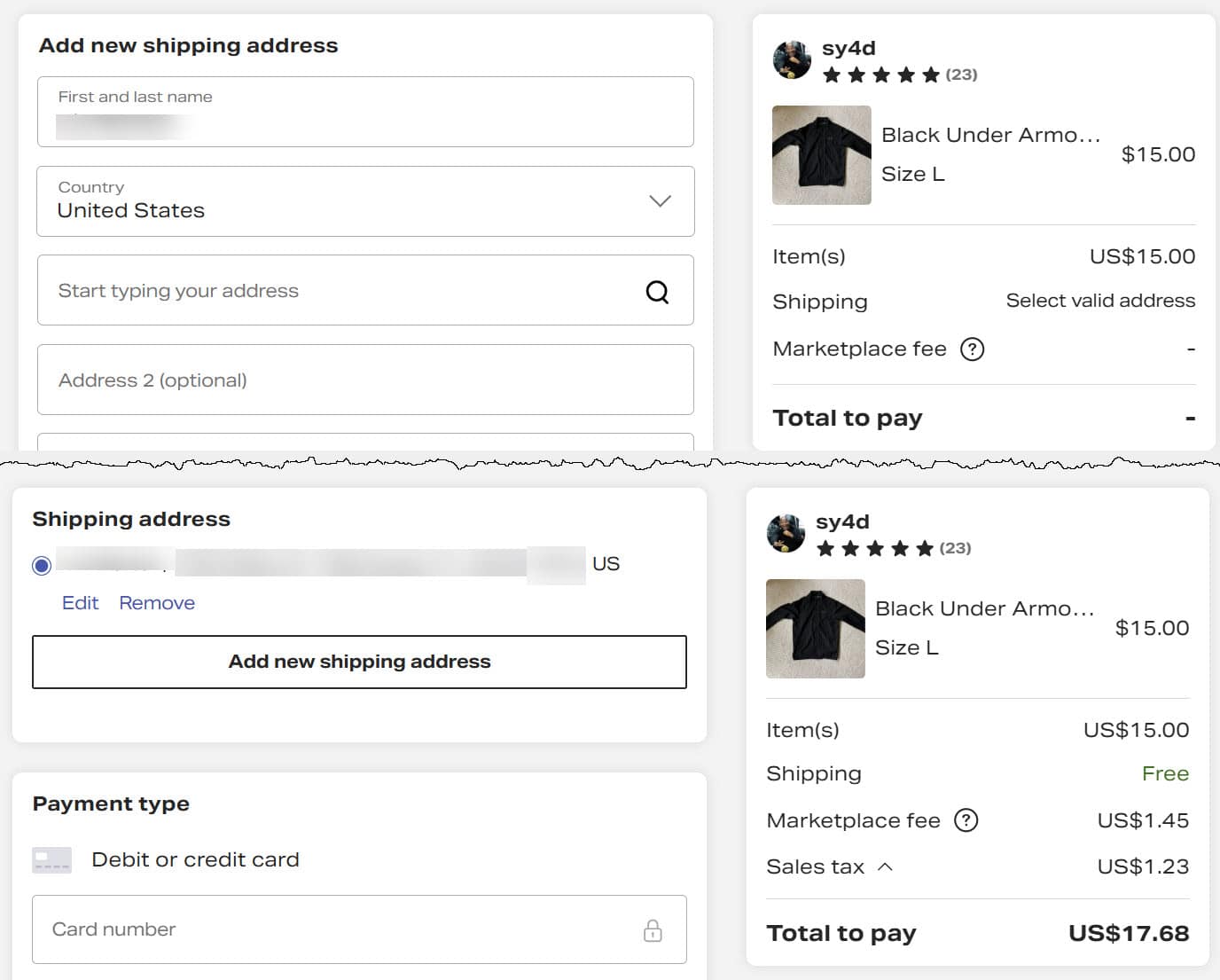
After proceeding to checkout without a valid shipping address entered, Depop displayed a line for the Marketplace Fee but showed only a dash instead of an amount. Once an address was entered, the fee was calculated at $1.45, with $1.23 sales tax bringing the total to $17.68.
Going back to the item page while still logged in did not change the advertised price or add any Marketplace Fee disclosure there.
Depop's own Marketplace Fee policy says the charge is calculated as up to 5% of the item purchase price plus a fixed amount of up to $1, specifically excluding taxes and shipping costs. Depop's terms say sales tax may apply to the Marketplace Fee in the U.S., so a buyer's address may be needed to calculate applicable tax and the final order total. But the company's published policy does not explain why the Marketplace Fee itself is not displayed until after an address has been entered.
Neither eBay nor Depop has responded to a request for comment about why the fee is not displayed earlier in the purchase process or whether the company is testing fee-inclusive pricing.
A similar proposed federal class action was filed in California in February by Linsey Dinh after purchasing a $17 item and being charged an additional $1.55 Marketplace Fee at checkout.
 Liz Morton
That complaint also accused Depop of "drip pricing," but included screenshots suggesting Depop had recently begun showing some buyers an information icon next to the item price stating that the displayed price already included the Marketplace Fee.
The fee-inclusive presentation could not be reproduced at the time, including when using a California address. Instead, the item page and cart continued showing the base price without the fee, with the additional charge appearing at checkout.
It was unclear whether the fee-inclusive pricing shown in Dinh's complaint had been a limited test or whether Depop had reversed the change after the lawsuit was filed. Six months later, the fee-inclusive presentation still did not appear in the latest test.
Dinh voluntarily dismissed her lawsuit without prejudice in July, leaving the underlying claims unresolved. Depop had previously notified the court that another proposed class action filed by Nicole Yuen in California state court involved the same basic allegations and said Dinh fell within the class proposed in that case. At the time of Dinh's dismissal, Depop said mediation had already taken place in Yuen and it expected that case to be resolved "within months."
When Dinh sued in February, Etsy had just announced plans to sell Depop to eBay. That acquisition was completed July 30 for approximately $1.4 billion in cash after purchase price adjustments and interest.
 Liz Morton
Rivera's August 2025 purchase occurred while Depop was still owned by Etsy, but his lawsuit was filed after the eBay acquisition closed and the issue appears to remain in place under its new ownership. eBay already charges a similar Buyer Protection Fee on private and non-Pro sales in the UK and Australia but displays a fee-inclusive item price before checkout.
Rivera seeks to represent a nationwide class of consumers who paid a Marketplace Fee or similar charge on Depop, along with an Illinois subclass, bringing claims under the Illinois Consumer Fraud and Deceptive Business Practices Act and for unjust enrichment. He is seeking damages, restitution, disgorgement and injunctive relief.
Depop has not yet filed a response on the publicly available federal docket. The case is Rivera v. Depop, Inc., Case No. 1:26-cv-11297, in the U.S. District Court for the Northern District of Illinois.
Download the full complaint: