USPS Loses $3.1B To Counterfeit Labels As Crackdown Flags Legitimate Packages

The U.S. Postal Service lost an estimated $3.1 billion to counterfeit package labels over two years while USPS tracking data showed 97% of counterfeit labels were still processed for delivery, according to a new Inspector General audit that also found enforcement efforts mistakenly intercepted about 2 million packages with legitimate paid postage.
The September 10 report provides a much broader look at the problem previously covered by Value Added Resource in April, when online sellers were reporting packages being rejected at drop-off as “unpaid” as USPS rolled out stricter postage verification measures. Those reports included legitimate labels purchased through eBay and other shipping providers being flagged before payment information had fully made its way through Postal Service systems.
 Liz Morton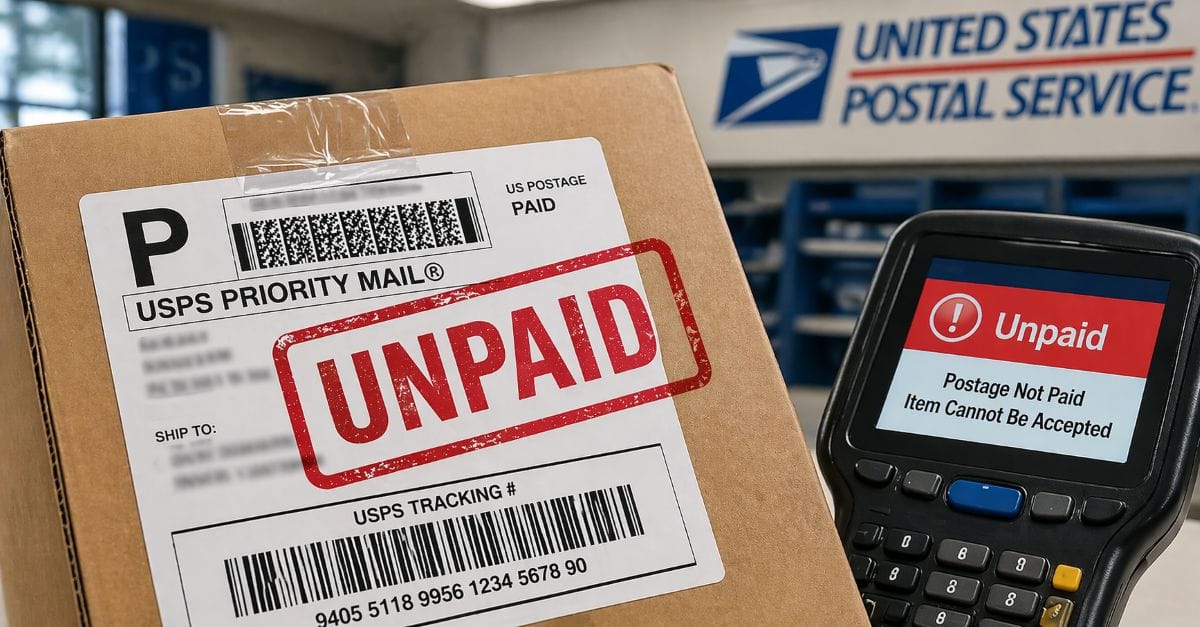
The Office of Inspector General now says approximately 2 million paid packages were mistakenly routed for additional processing from December 2024 through February 2026 because of processing or mail-entry errors.
An internal USPS analysis of April 2026 volume found 47% of those errors were caused by employees or Postal Service technology, while 52% resulted from customers failing to transmit payment records before entering packages into the mailstream. USPS ultimately reprocessed and delivered the packages, but OIG estimates the mistakes cost the agency $7.2 million, with another $11.9 million in unnecessary costs projected through May 2027 if the errors continue.
This audit focuses on unpaid USPS shipping labels and the packages bearing them, rather than counterfeit stamps, which OIG addressed separately. Counterfeit package label volume grew from 9.7 million in October 2023 to a peak of 29.4 million in December 2025, an increase of more than 200%, before dropping in early 2026 after USPS put additional controls in place.
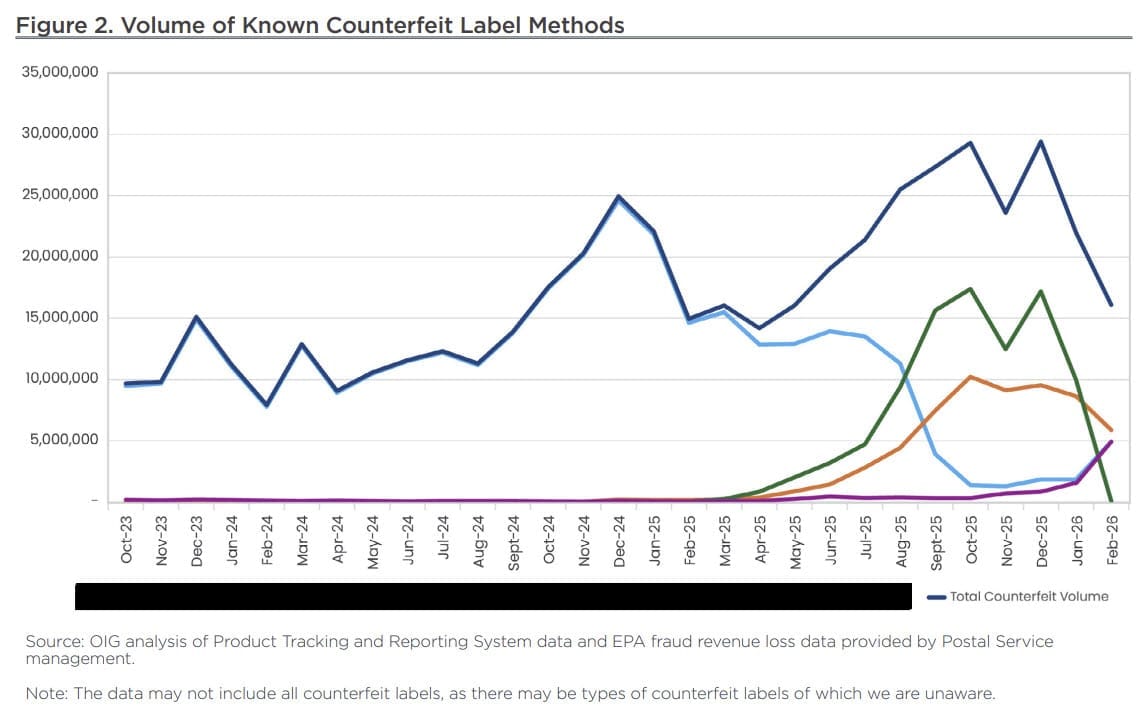
But the systems intended to stop those packages had limited success for much of that period, with Postal Service tracking data showing 97% of counterfeit labels were still processed for delivery from October 2023 through February 2026.
OIG also found weaknesses at the points where those packages entered the network. Management at 10 of the 27 retail and delivery units auditors visited said they were unaware of counterfeit-label activity passing through their facilities, while employees at 20 mail processing facilities had access to scanners with detection capabilities but were not always aware of the functionality or did not always use it.
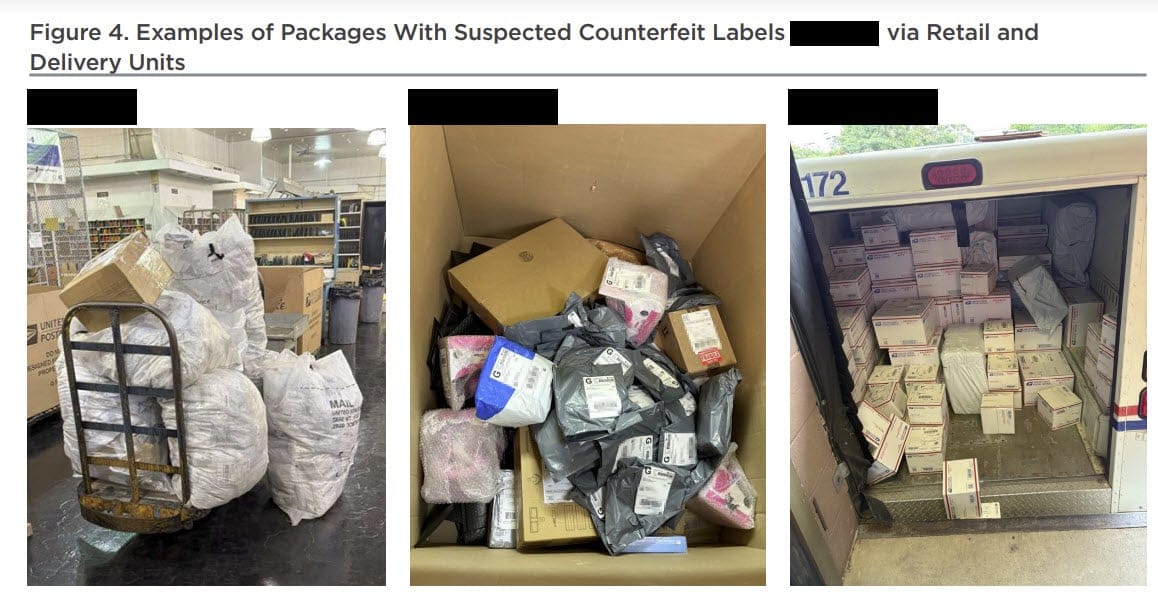
OIG estimates USPS lost $3.1 billion in unrecoverable revenue from counterfeit labels between March 2024 and February 2026 and could lose another $520 million through February 2028, putting the total potential impact at more than $3.6 billion over four years. Counterfeit labels alone accounted for an estimated $1.6 billion loss in fiscal year 2025, when USPS generated $32.6 billion from shipping 6.8 billion packages.
Postal Service systems initially focused on the types of counterfeit labels prevalent when its Intercept Process was created, but fraudsters began exploiting other vulnerabilities around February 2025. OIG identified three emerging schemes that represented most known counterfeit volume by December, though the public report redacts significant details about how those schemes worked and some of the controls USPS is using to stop them.
Internal reporting did not keep pace either. As new schemes appeared, USPS continued relying on weekly reports largely focused on the original type of counterfeit activity, potentially leaving stakeholders with the impression the problem was improving even as total counterfeit volume continued to rise. USPS began updating its fraud dashboards in March 2026 to better track changing patterns and now regularly reports that information to executive leadership.
OIG was particularly critical of how USPS had managed the problem before those changes, finding the agency still did not have a formally approved and funded organization-wide program with clearly defined authority for counterfeit postage decisions. One particularly costly example involved payment fraud vulnerabilities that surfaced in internal meetings as early as January 2025 but were not acted on until fraudsters exploited them, resulting in more than $600 million in losses by February 2026.
USPS management pushed back on some of the OIG's concerns about formal governance, arguing that additional program requirements could amount to “administrative red tape” when fraud threats require quick action, but agreed to make additional changes with a target date of March 31, 2027.
Postal Inspectors have also recovered very little of the money identified in counterfeit-label investigations. Between March 2020 and March 2025, Postal Inspectors presented 44 counterfeit-label cases to the Department of Justice, but only nine were accepted for prosecution, though all nine resulted in convictions. The Inspection Service identified $57 million in losses tied to investigated cases during that period but recovered just $572,250, about 1%.
OIG says counterfeit labels remain widely available for sale through ecommerce websites and social media, often advertised at low prices, but does not identify any of the platforms where those listings were found. The Postal Inspection Service's 2025-2027 strategic plan includes working with ecommerce marketplaces to identify the root causes of counterfeit postage and add warnings and other messaging for customers.
VAR previously documented suspicious deeply discounted Forever Stamp listings on eBay in 2023, despite the marketplace officially prohibiting counterfeit stamps and restricting Forever Stamp sales to eligible sellers.
 Liz Morton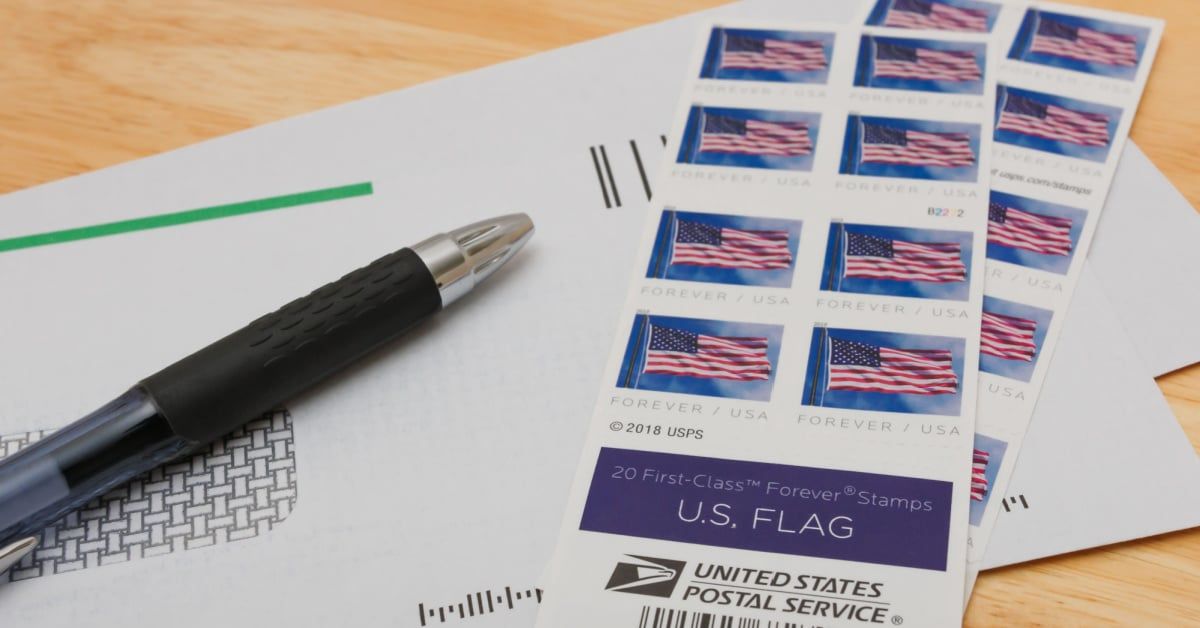
For counterfeit shipping labels, the Inspection Service reported more difficulty getting social media companies to remove listings than ecommerce websites. Management said it has tried to work with social media companies to stop counterfeit-label advertising and sales, but cooperation has been inconsistent.
OIG says the agency has limited legal options when platforms will not voluntarily remove the posts and recommended USPS develop a removal strategy or seek legislative changes. USPS agreed and says it plans to work with internal and external partners on a unified approach, including identifying outside vendors that could conduct site assessments and facilitate administrative removals. The target date for that work is May 31, 2027.
The report also recommended USPS work with industry partners on potential changes to label technology. Companies that sell USPS labels on the agency's behalf expressed interest in additional security measures including more advanced barcodes and RFID technology.
One label provider questioned why USPS had previously required a more advanced barcode and later removed the requirement. USPS says it is evaluating potential technology changes with industry partners based on cost, effort and expected benefits, with that work targeted for August 2027.
USPS is already under significant financial pressure, posting another $2.5 billion net loss in its fiscal third quarter and losing about $5.7 billion through the first nine months of fiscal 2026. The agency has warned it still does not have enough liquidity to meet all of its obligations, make necessary investments and prepare for unexpected costs, with cash conservation measures currently expected to keep operations funded through at least August 2027.
 Liz Morton
Many of the corrective actions in the counterfeit-postage audit extend well into 2027. USPS agreed with eight of OIG's 11 recommendations, while disagreements over prosecution tracking, alternative legal remedies and analysis of counterfeit-postage tips remain unresolved.
Reuters reported this week that Postmaster General David Steiner has told confidants he is deeply discouraged with the job and wants to resign, citing four people familiar with his thinking. The sources said Steiner, who took over USPS in July 2025, has grown frustrated with the agency's long-running financial problems and what he views as insufficient help from Congress and the White House in addressing them. Steiner has not formally resigned.
Download the full OIG report on Efforts to Mitigate Counterfeit Postage