eBay Main Street Touts AI For Small Business, While Sellers Carry The Risk

eBay says its artificial intelligence tools are “leveling the playing field” by giving small businesses access to technology that saves time, improves listings and helps them compete with larger retailers.
A new eBay Main Street blog post tries to make that case through the experience of a featured seller, but the company’s carefully selected example leaves out much of what users have encountered as AI spreads across the platform.

The post quotes MuseumsRock seller Lisa Driskill, who says eBay’s AI photo enhancement feature allows her to create listings from almost anywhere without worrying about finding the perfect background.
“It makes my life so much easier,” Driskill said. “You don’t have to worry about having the perfect background. You can put it on the floor, on a table, even in your car.”
Background removal is a relatively simple and voluntary use of AI that can provide real value. But eBay’s photo enhancement tools have also experienced technical errors that interrupt seller workflows instead of streamlining them.
“At eBay, our focus is on putting practical AI tools directly in the hands of sellers so they can save time, reach more buyers, and grow their businesses,” said Avritti Khandurie Mittal, Vice President of eBay Services Product.
The company says its generative AI descriptions, photo enhancements and pricing insights make listing easier, pointing to more than 10 million sellers who have adopted generative AI features and used them to create over 300 million listings as of 2025.
The scale is significant, but those figures do not show whether the tools produced accurate listings, meaningfully reduced work or helped sellers make more sales.
They also provide no indication of how many sellers continued using the features after trying them. Sellers have repeatedly abandoned eBay’s AI tools after finding them inaccurate, incomplete or broken.
The Main Street post presents Magical Listing as one answer, describing it as creating a “high-quality” listing from a single photograph.
“If there’s one thing we know about small businesses and entrepreneurs, it is that they don’t have time,” Mittal said.
But when Value Added Resource tested the latest version earlier this year, the system failed at the first step: identifying what was being sold.
 Liz Morton
A photograph of a sea turtle mousepad was initially identified as a ceramic decorative plaque. A second attempt classified the same item as a refrigerator magnet. Because the AI started with the wrong product, it generated an incorrect title, category, item specifics and description.
That leaves sellers to catch and correct errors across the entire listing, even though eBay still holds them responsible for its accuracy regardless of whether the information was entered manually or generated by the company’s technology.
eBay says nearly half of sellers using the latest version list more than one item per hour, an improvement over the previous tool.
But that version of Magical Listing is currently available only to new, reactivated or occasional casual sellers using the eBay app, with no announced timeline for broader expansion. That makes it a strange example for a post about supporting small businesses, since established business sellers cannot use the feature being promoted.
Small business sellers have access to a different AI tool that creates listings in bulk from uploaded images.
In practice, the system often fails to identify essential details and core product attributes, leaving sellers to correct multiple drafts manually while remaining responsible for any errors they miss.
 Liz Morton
The description generator first appeared in mobile and desktop listing flows in 2023, only to be removed shortly after launch because of technical problems. It later returned, but still gives sellers little control over the output.
There is no built-in prompt field for changing the length, tone or emphasis, even though sellers frequently complain that the generated descriptions are overly long or filled with flowery language.
That limitation was highlighted during eBay UK’s AI Activate program, where an OpenAI representative demonstrated how ChatGPT could create several product descriptions and revise them through simple follow-up instructions.
Sellers watching the presentation questioned why eBay was directing them to an outside tool capable of performing functions its own built-in generator still lacked more than two years after launch.
 Liz Morton
The Main Street post also promotes eBay’s AI marketing capabilities, including a social caption generator and a tool that turns listing photographs into short videos for TikTok, Instagram and YouTube.
It does not mention that eBay paused the video feature in October 2025 and that it remains unavailable today.
 Liz Morton
Before the pause, the tool offered little more than a slideshow or lighting effect applied to static images, with sellers reporting errors, limited editing options and waits of around three minutes for a 15-second clip.
Nine months later, eBay is still citing the video generator as an example of how it helps small businesses compete, even though active seller accounts still cannot access it.
The Main Street post also supports its “seller-first” argument with eBay’s longstanding claim that it does not sell its own products or compete with sellers.
That claim has become increasingly difficult to sustain. The company’s TCGPlayer subsidiary has sold trading cards directly on eBay under its own account, while eBay has placed Goldin Auctions inventory in search results and directed buyers to complete purchases on Goldin’s website.
 Liz Morton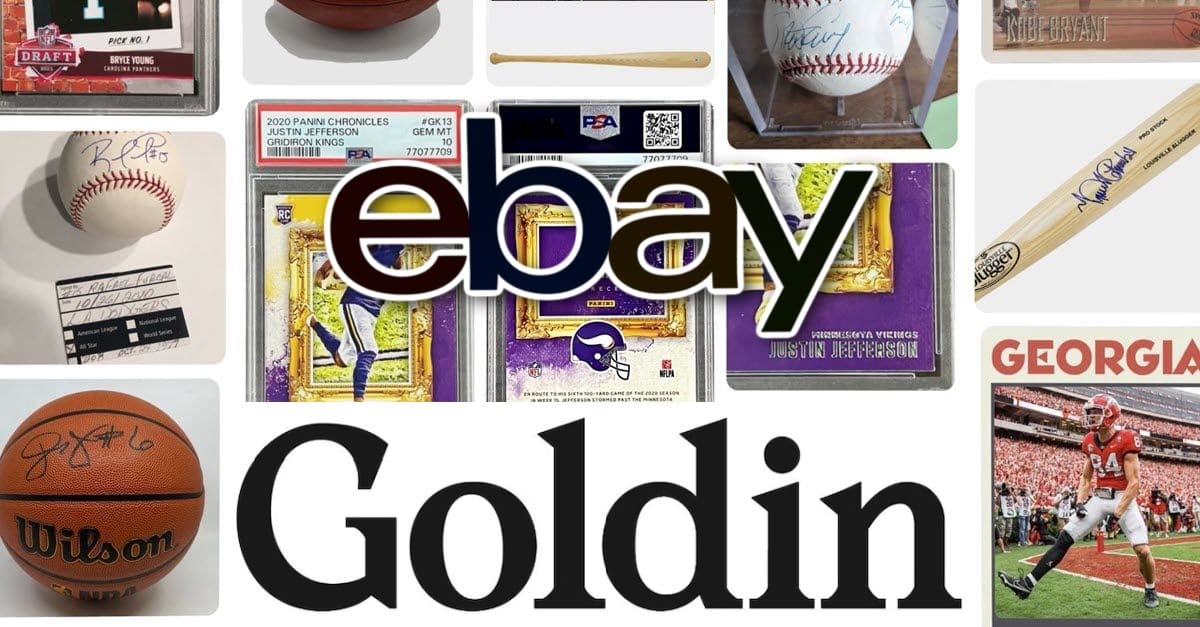
Those practices make eBay’s claim that its business model leads to a “seller-first” approach much harder to accept. The company has also used AI on sellers’ listings without asking them to participate.
Those tests have included AI-generated description summaries, item highlights and fashion model images inserted into listings. Sellers have reported discovering altered pictures they did not create and could not remove, including images where AI changed visible details of the clothing being offered.
In one reported example, the generated image altered the appearance of the sleeves and collar. Sellers had no option to prevent the test from being applied to their listings.
 Liz Morton
eBay has also acknowledged using AI to modify listing images for offsite advertising and external search. Sellers may not know which version of their photograph a buyer saw or whether an AI-generated summary emphasized incorrect information before the sale.
Some of these tools can save sellers time when they work. But the Main Street post uses isolated benefits to suggest eBay’s AI rollout is broadly helping small businesses, while leaving out the errors, abandoned features, limited controls and seller risks that have accompanied it.
That fits a familiar eBay pattern. The company regularly highlights its small business seller base when making the case for its own policies, products and public image, even when the practical consequences for those businesses are far less favorable.
Access to AI does not level the playing field on its own. The tools must reliably reduce work without introducing new inaccuracies, and sellers need control over when the technology is applied to their listings.
When eBay creates or alters listing content and gets it wrong, the company should bear responsibility for the consequences. Until then, sellers will continue carrying the risk behind eBay’s small business success stories.