eBay Quietly Tests AI Fashion Models, Inserts Altered Images Into Seller Listings Without Consent

eBay is testing AI generated fashion models, adding altered images to seller listings without warning or explicit consent.
A post in the r/eBay subreddit shows how the company continues to push AI into their user experience - whether buyers and sellers want it or not - as this seller says an image made with eBay AI was inserted without their permission.
eBay adding AI photos without permission?
I'm sure this is buried in some user agreement somewhere, but I just noticed this AI model photo in my ebay listing.
I did not put it there.
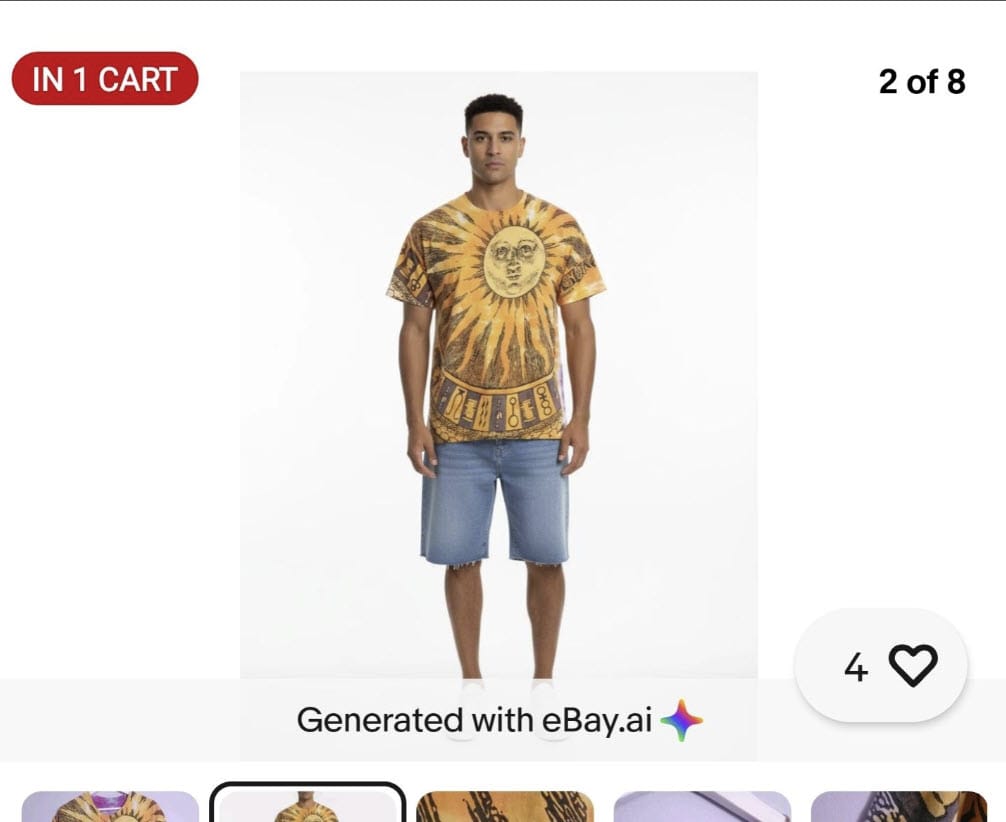
Other commenters confirmed they also saw the AI generated picture on the listing, saying it clearly changed or distorted some parts of item.
Comparing that to the lead listing pic, it's easy to see AI 'filled in' sleeve details resulting in some image distortion because of the way the sleeves draped on the hanger in your first pic. The collar is different, too, along with some other more subtle differences.
At least it has a large AI disclaimer at the bottom. It would be much worse without that, and it would be worse if the disclaimer was smaller and easily missed. In the thumbnails, the AI icon covers most of the image (looking on web at the moment) so that's good, too.
Another seller posted in the eBay community forum, confused why there is a picture on their listing they didn't add.
Unwanted and Unremovable AI Image added to my Listing without my knowledge
I am angry about this. Anyone else?can I get it removed? Where to complain? Thx
Here's what the AI generated image inserted in their listing looks like:
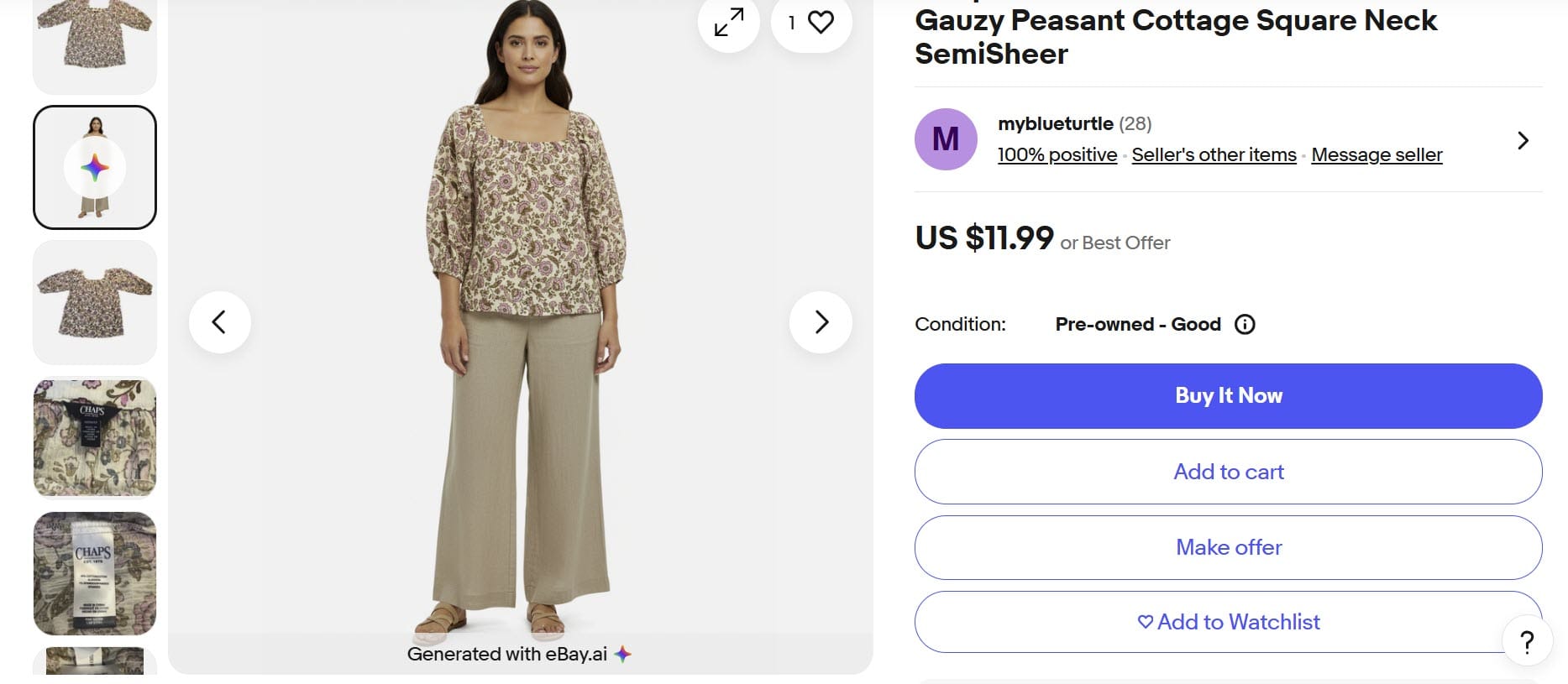
eBay has been editing images with AI to remove watermarks and text for external search engines like Google for some time, but this is the first report I've seen of an eBay AI generated images being added to a listing on the site without the seller's explicit knowledge and consent.
 Liz Morton
While sellers have given mixed reviews to some of eBay's AI tools for messages, descriptions, and "magical listing", those tools are at least voluntary and require the seller to actively choose to use them - or just as easily choose not to use them if they so desire.
But some of the most troubling uses of eBay AI have been features which use the technology to fundamentally alter seller-provided content, serving up sometimes dubious AI generated information to buyers instead, raising concerns about transparency and who is responsible when eBay AI gets it wrong.
Liz Morton
For example, last year, sellers spotted a test which inserted AI generated FAQs directly into search results, pushing some listings further down in visibility on the page.
 Liz Morton
Sellers were also concerned when they started seeing eBay AI generated description summaries appearing for their items shown on Facebook Marketplace as part of Meta partnership announced earlier this year.
 Liz Morton
Those AI generated description summaries have now also started appearing onsite in both the eBay web and app experiences for some users as well.
And eBay has been testing using AI to generate item detail highlights to feature in prominent and highly visible places on the listing page, which has only increased seller fears about potentially receiving claims or negative feedback from buyers who are disappointed if/when the AI doesn't get it right.
 Liz Morton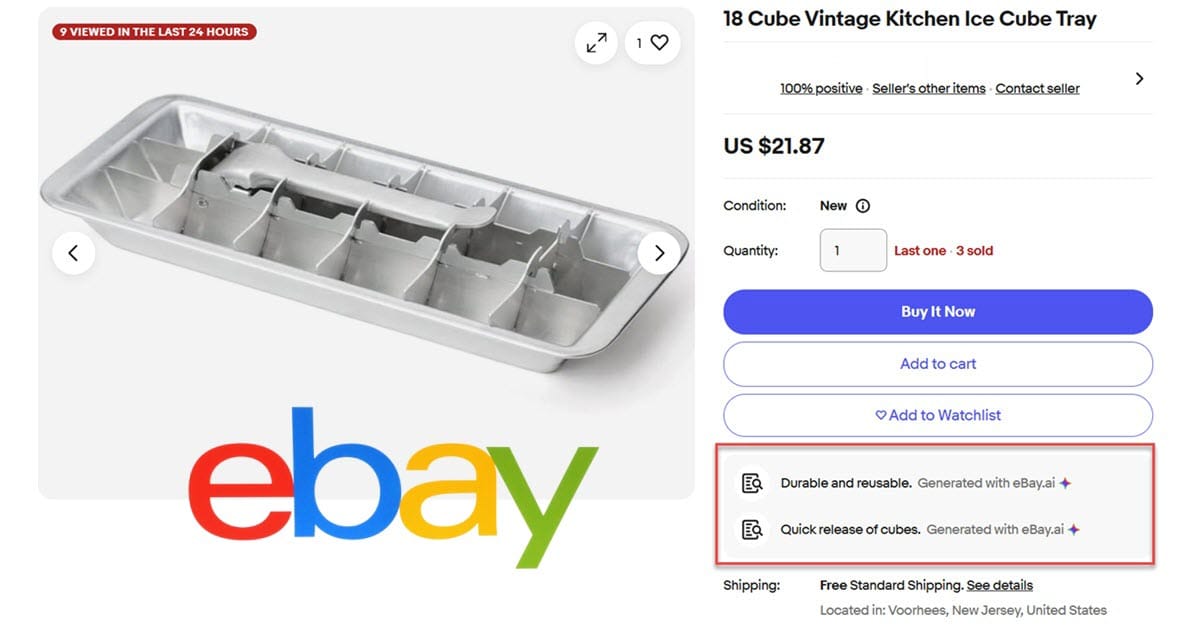
Importantly, sellers have no way to opt out of having these AI tests and features applied to their listings and in fact may not even be aware that eBay is showing their potential buyers AI generated or altered information about the items they have for sale.
And this doesn't happen only to listings that use eBay's AI description generator or Magical Listing experience - every listing on the platform can potentially have these AI features applied.
It's also noteworthy that eBay does not publicly disclose any details of these tests when they are running or proactively advise sellers that these features may change how their listings are shown to buyers- the only reason we even know about them is that sellers discovered them in the wild and shared screenshots in community forums or across social media.
When sellers have raised concerns that eBay's insertion of AI into listings could increase Item Not As Described claims and returns, they've largely been dismissed or simply told to report it to eBay as a tech issue for investigation.
Unfortunately, putting the onus on sellers to report problems is not likely to address the issue, since again, many sellers may not even be aware that eBay is showing AI generated summaries, feature highlights or images in place of or in higher visibility areas than the seller-provided details.
And even if they are generally aware that eBay could be showing buyers AI generated content, that content may display differently for different users at different times since part of the goal of using AI is to try to optimize and personalize the experience for the specific user.
That means sellers likely won't be able to make a direct connection between any particular claim or negative feedback, or provide proof to eBay that the eBay AI generated content was incorrect - unless they happen to get lucky and catch it themselves on their own listings or the buyer is able and willing to provide confirmation the information they viewed said it was generated by eBay AI.
Back in 2024, eBay published their "Responsible AI Principles" laying out ethics and accountability policies the company was committed to adhering to as they develop and deploy this new technology.
 Liz Morton
One of the five key pillars of this AI responsibility pledge is Transparency:
Provide users with transparency into our use of AI
Recent classes of AI technologies, such as Generative AI, make it difficult to understand the reasoning behind an AI system’s output. eBay strives to be transparent to end users about its use of AI.
In some cases, we accomplish this by disclosing information about the type of AI being used within the experience itself, and in other cases, through broader disclosure of our use of AI generally, based on the stage of its lifecycle.
Our transparency approaches will also strive to communicate most effectively given the role of the individuals interacting with or using the AI system.
Given the fact that eBay does not publicly announce any of the testing they have been doing around these features or disclose to sellers that AI may be being used to fundamentally substantially alter pictures, descriptions and other listing details, it would be difficult to give them anything but a failing grade on that point.
And unfortunately, Chief Privacy Officer, VP AI & Data Responsibility Dr. Anna Zeiter left eBay in late 2025 with no successor yet publicly named - leaving leadership of eBay's responsible AI initiatives up in the air.
Liz Morton
If eBay wants sellers to believe they take AI Responsibility seriously they need to provide clear guidelines for how to report errors in eBay AI generated content, proactive protections for when eBay's AI gets it wrong when there is no direct seller involvement, and an easy way for sellers to opt out of having these features applied to their listings - or better yet, make them opted out by default and require sellers to give explicit, affirmative consent before they are enabled.