eBay Depop Deal Delay Could Cost Up To $136M As Regulatory Reviews Drag On

Etsy's planned sale of Depop to eBay is facing a longer and potentially more expensive path to closing as regulatory reviews in the UK and Australia continue to drag out the timeline, prompting the companies to sign a new agreement that could require eBay to pay up to $136 million if the transaction falls apart.
In a new 8-K filed with the SEC, Etsy disclosed it entered into a letter agreement with eBay on May 21, 2026 in connection with the previously announced sale of fashion resale marketplace Depop.
The original deal, announced in February, had eBay agreeing to acquire Depop from Etsy for approximately $1.2 billion in cash, with closing initially expected in Q2 2026.
Etsy later updated that timeline in Q1 earnings, saying the companies now expect the sale to close by the end of Q3 as regulatory reviews remain pending.
 Liz Morton
The deal has already cleared regulatory hurdles in the US and Germany, while reviews in the UK and Australia have continued to put eBay's growing pre-loved fashion ambitions under the microscope.
Liz Morton
Now, with the closing taking longer than anticipated, Etsy and eBay have agreed to additional protections tied to the disruption Depop may face during the extended pre-closing period.
According to the filing, the purchase price remains approximately $1.2 billion, with adjustments up to a specified cap for certain investments Etsy and Depop may make in the business before closing, along with other adjustments laid out in the purchase agreement.
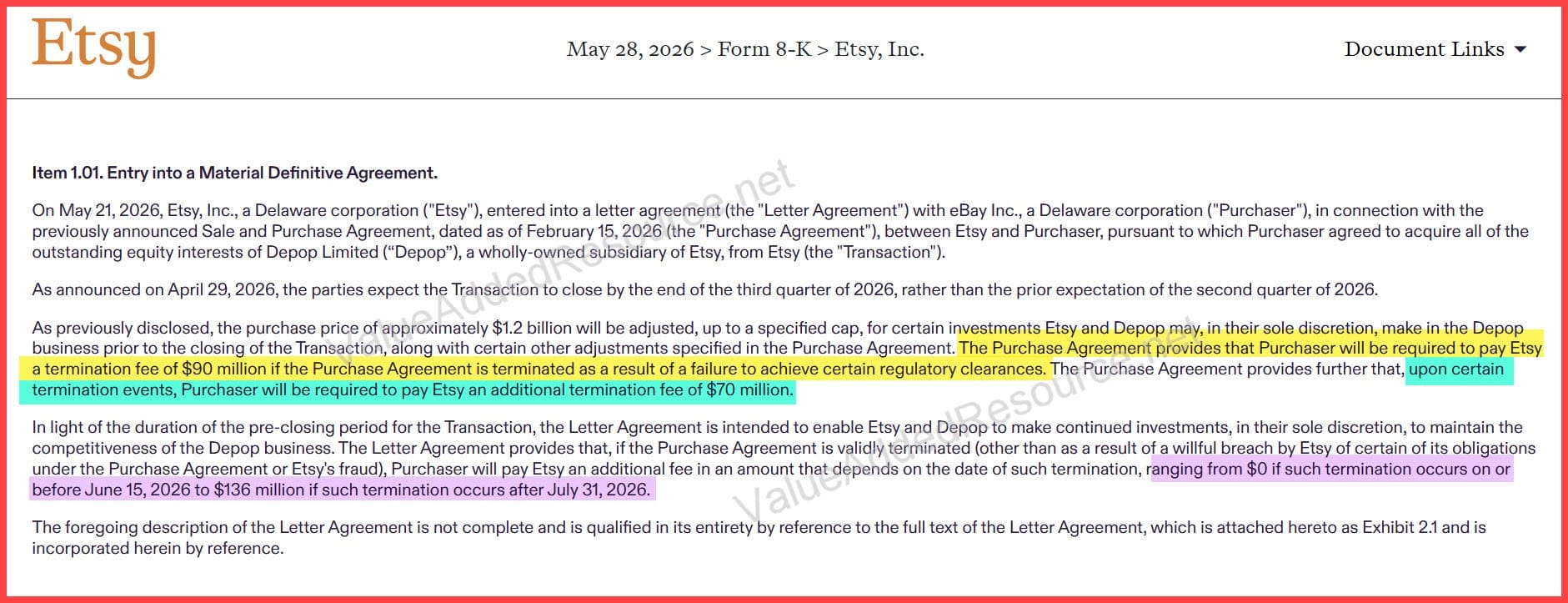
The new letter agreement also adds a separate Business Disruption Fee which may be payable by eBay if the purchase agreement is terminated under certain circumstances after specific dates.
If the deal is terminated on or before June 15, 2026, no Business Disruption Fee would be owed.
If termination occurs after June 15 and on or before June 30, the fee rises to $34 million. After June 30 and on or before July 15, the fee increases to $68 million. After July 15 and on or before July 31, the amount would be $102 million. If termination occurs after July 31, the maximum fee would be $136 million.
The agreement says the fee would be due within two business days after termination, payable by wire transfer in immediately available funds.
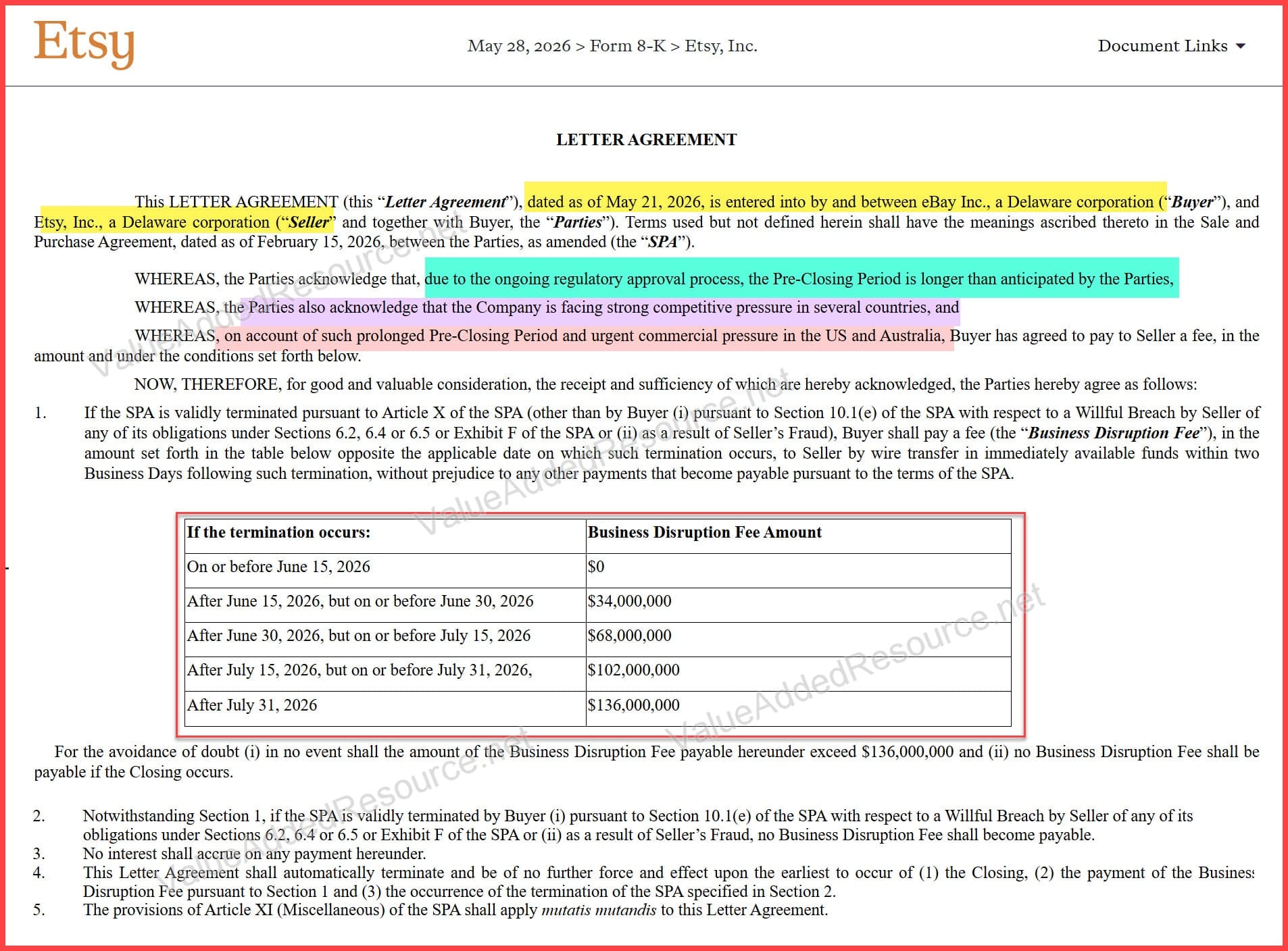
That escalating fee structure appears intended to address the commercial impact of having Depop stuck in limbo while regulatory reviews continue, especially given the strong competitive pressure facing the company in several countries.
The regulatory reviews also come as eBay is building a broader pre-loved fashion strategy, especially with Tise entering the mix
Tise was the first investment funded by eBay Ventures in 2022 before being acquired by eBay in 2025 as part of the company's broader consumer to consumer, pre-loved fashion strategy.
Liz Morton
It then quietly expanded into Australia earlier this year with a soft launch promoted by influencers, raising questions about whether regulators have a complete picture of eBay's growing secondhand fashion footprint in the region as they assess the Depop acquisition.
Liz Morton
Tise follows a similar model to Depop, advertising fee-free selling while charging a service fee to buyers.
eBay has also been moving toward similar fee structures for consumer sellers in key international markets, including Germany, the UK and Australia, further increasing the importance of how regulators define the relevant competitive market.
Liz Morton
The new agreement gives eBay added incentive to close the transaction, while giving Etsy compensation if Depop suffers from a prolonged period of uncertainty and the sale does not go through.
However, the fee is subject to important exceptions. It will not be payable if the deal closes, and it also will not apply in certain termination scenarios tied to seller fraud or Etsy willfully breaching specified obligations under the purchase agreement.
The unsolicited bid from GameStop CEO Ryan Cohen to buy eBay has also raised questions about the future of the Depop deal.
Liz Morton
While eBay has formally rejected the offer, GameStop has continued to increase its position in the company while Cohen has been publicly pressing his case to shareholders by criticizing current eBay management, board oversight, operational execution, and governance failures.
Cohen has also said he plans to take his offer directly to shareholders, setting up the possibility for a protracted fight for the future of the platform.
That fight may not have any direct impact on the current regulatory status of the Depop acquisition, but it could increase scrutiny of how eBay is allocating capital and whether the company’s aggressive push into pre-loved fashion is the right strategic bet at this moment.
Regulators are already reviewing whether eBay should be allowed to take a larger role in resale fashion, while sellers are being pushed toward more buyer fees, shipping mandates and marketplace control.
Now eBay may also have to convince shareholders that spending $1.2 billion on Depop is disciplined capital allocation at the same time Ryan Cohen is arguing current leadership has already wasted too much time and money.
The longer the deal drags on, the harder that case may be to make.