eBay Adds Promoted Offsite Ad Controls, But Sellers Still Can't Exclude Listings

eBay is introducing new optimization options for Promoted Offsite advertising campaigns, allowing sellers to choose between Automatic and Manual optimization and influence which listings receive more advertising exposure on external sites like Google and Facebook, while continuing to restrict their ability to exclude inventory or control individual advertising costs.
 seller_news_team

Promoted Offsite uses a cost-per-click (CPC) advertising model, charging sellers when buyers click their ads regardless of whether a purchase is completed. Previously, sellers had little control over how eBay managed these campaigns beyond setting an advertising budget, with the company automatically determining which eligible listings to promote and how much to charge for individual clicks.
Automatic optimization uses return on ad spend (ROAS) as the primary performance goal, while Manual optimization allows sellers to choose between reaching more buyers, driving more traffic to listings or increasing sales.
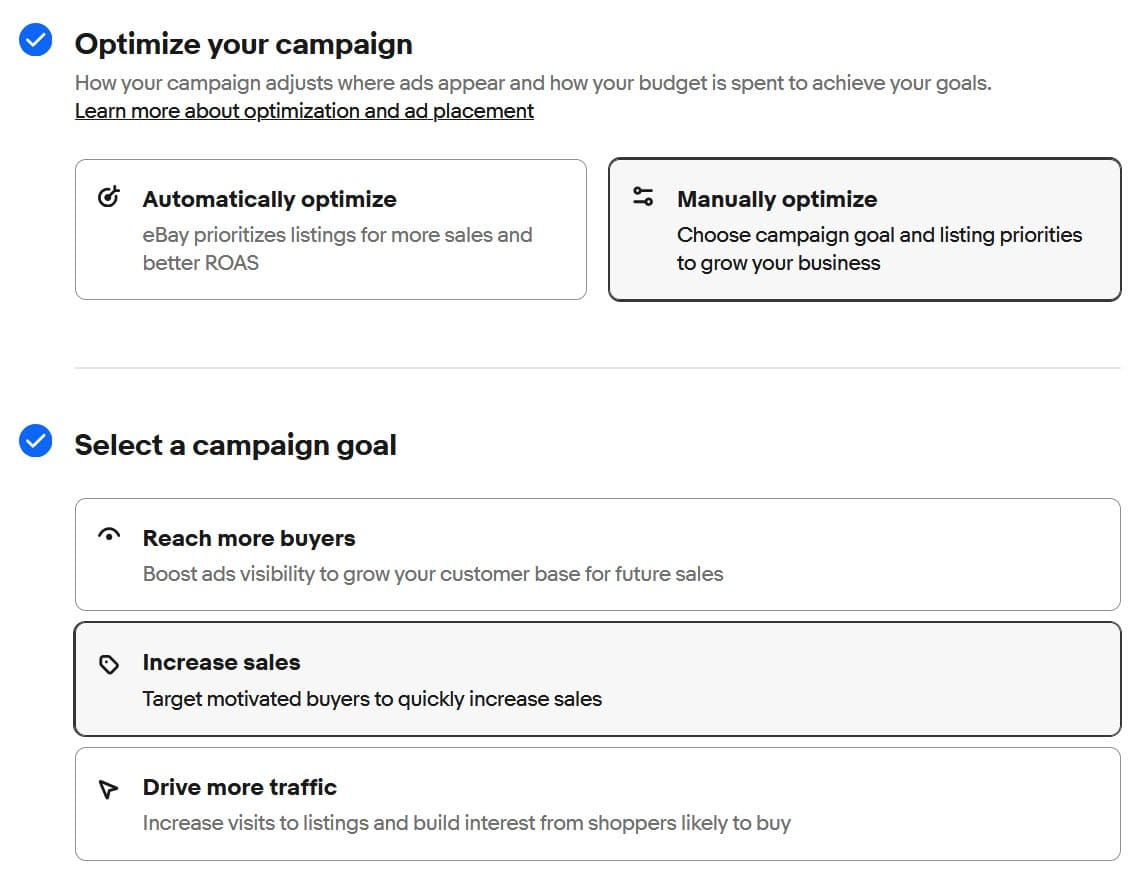
Manual campaigns also give sellers the option to prioritize or deprioritize inventory using five filters: price range, category, condition, days on site and quantity. Multiple criteria can be combined within a rule, with eBay displaying the number and percentage of listings that qualify.
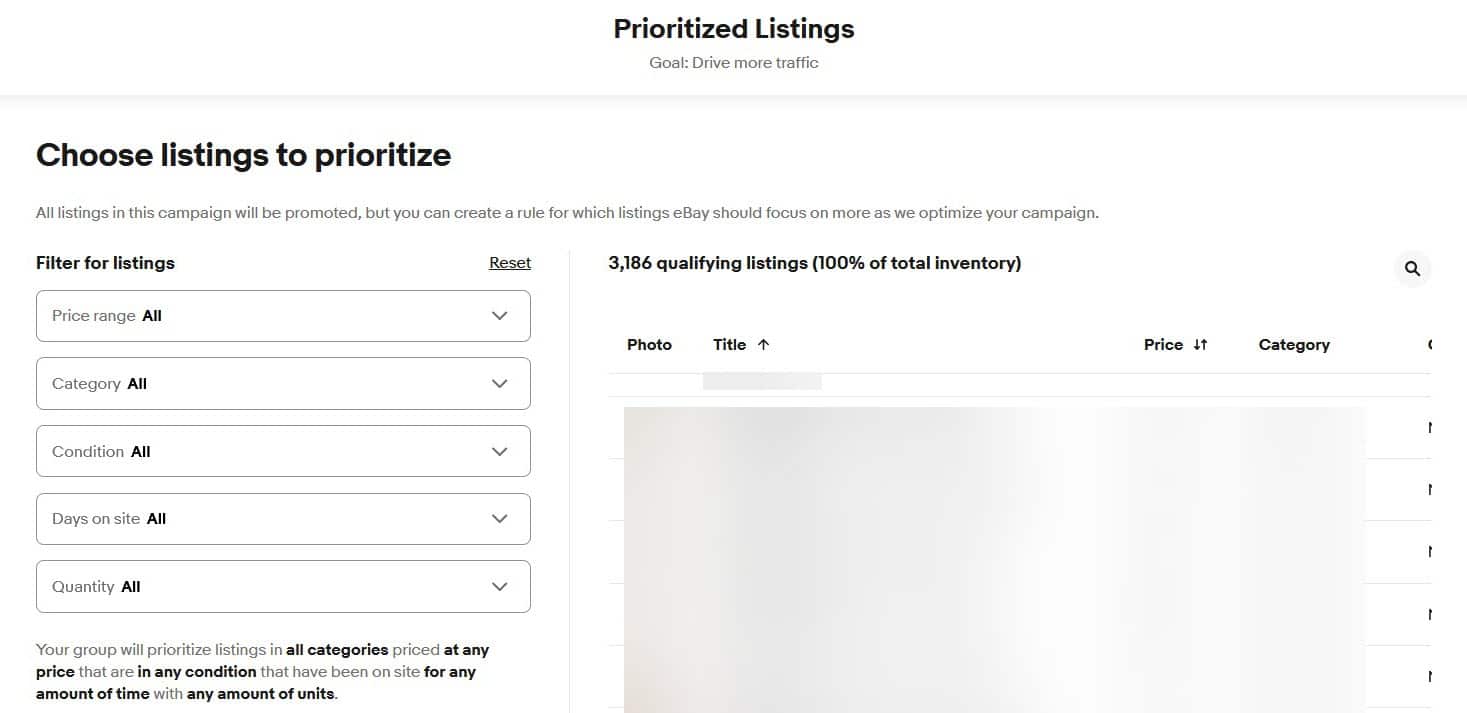
For example, sellers could prioritize higher-priced items listed for more than 30 days while deprioritizing lower-priced inventory or products with limited quantities. However, the interface appears to allow only one rule per group, preventing sellers from creating separate rules for different types of inventory they want to prioritize or deprioritize.
Even listings designated as deprioritized remain eligible for advertising, as eBay makes clear during campaign setup.
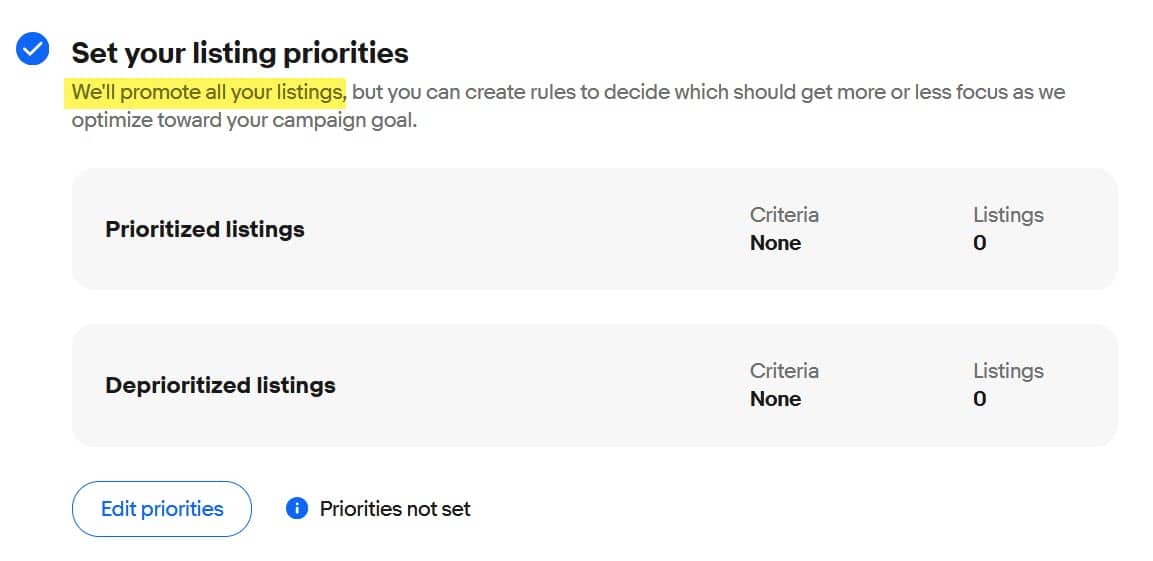
If a listing qualifies for both groups, eBay automatically prioritizes it. Sellers also cannot set maximum CPC bids or specify how much of their budget should be allocated to either group, meaning they could still incur advertising charges on lower-margin inventory or other listings they would prefer not to promote.
Sellers can edit their inventory priorities after launching a campaign, with changes taking effect within 24 hours, but cannot switch optimization methods or change their campaign goal without creating a new campaign.
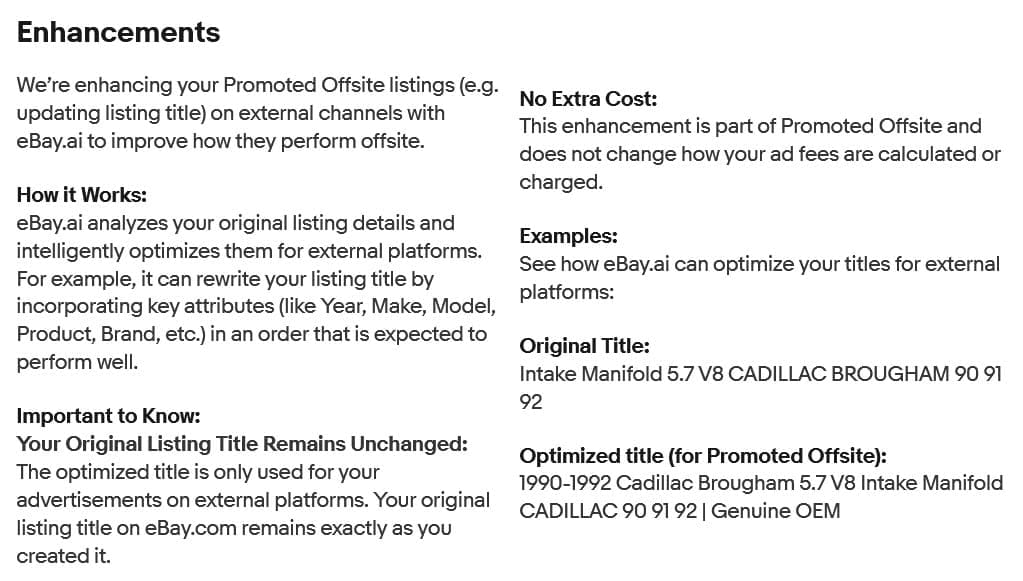
eBay is also using AI to automatically rewrite listing titles for external advertising placements, incorporating product attributes such as year, make, model and brand to improve performance. The changes don't affect the original listing titles on eBay, and the company says there is no additional charge.
In an example provided by eBay, the AI-generated title for a Cadillac intake manifold leads with the vehicle's model years, make and model and includes a "Genuine OEM" designation not present in the example's original title. The interface does not show an option for sellers to disable the AI optimization or review rewritten titles before they appear in external ads.
According to the campaign setup process, CPC rates are calculated using factors that may include external advertising partner charges, historical click prices for similar listings and a service fee. eBay can also spend up to twice a seller's target daily budget on any given day, subject to a monthly spending limit calculated at 30.4 times the daily budget.
The expansion of paid external advertising has also raised questions about whether CPC campaigns could increasingly displace free exposure through eBay's product feeds or cost-per-sale placements that were available before Promoted Offsite launched.
Since eBay generally pays external advertising partners for clicks regardless of whether a sale occurs, Promoted Offsite provides a more direct way to recover those costs by charging sellers per click rather than only when a qualifying sale is attributed. That could give eBay an incentive to favor CPC campaigns, though the company does not disclose enough information about how it allocates external placements to determine whether that is happening.
eBay reported $607 million in advertising revenue in Q3 2026, up 16% year-over-year, including $575 million from first-party advertising products. Approximately six million sellers used at least one eBay advertising product during the quarter, with promoted listings covering roughly 1.3 billion of the marketplace's 2.7 billion listings, excluding Depop.
First-party advertising growth has slowed relative to Gross Merchandise Volume (GMV), outpacing GMV growth by just three percentage points in Q3 compared to ten points in Q2 and fifteen points a year earlier. CFO Peggy Alford attributed some of the slowdown to eBay lapping previous cost-per-sale attribution changes and faster growth in categories with lower advertising penetration.
The new Promoted Offsite options may encourage more sellers to try CPC advertising, particularly those who previously avoided the program because of its limited inventory controls. eBay has not indicated whether campaign reporting will show how much sellers spend on prioritized versus deprioritized listings, making it unclear how sellers will be able to measure the financial impact of their inventory preferences.