USPS Coding Error Missed $22.6 Million In Postage, Blocked $6.1 Million In Refunds

A coding error caused the US Postal Service’s Automated Package Verification system to ignore millions of package measurements for months, allowing some underpaid postage to go undetected while preventing some overpayments from being refunded.
A new USPS Office of Inspector General management alert found the Postal Service failed to add the updated name of its Automated Parcel Bundle Sorter machines to APV’s list of trusted equipment.
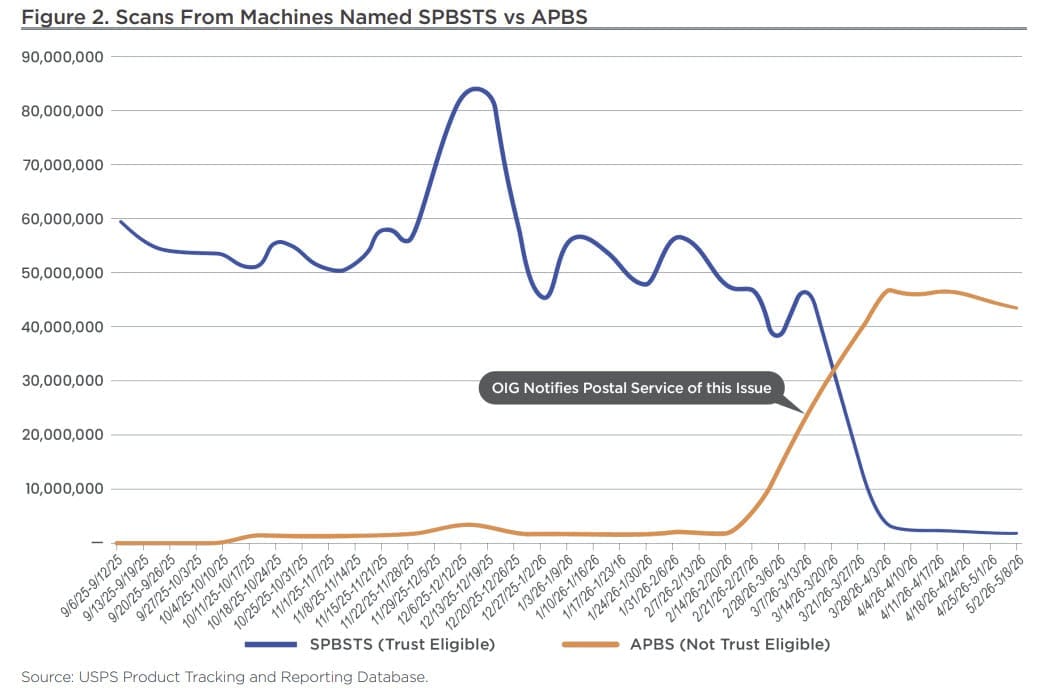
As a result, APV ignored between 30 million and 50 million scans per week beginning in March 2026. The OIG estimates USPS missed $22.6 million in underpaid postage and failed to identify $6.1 million in overpayments from March through May.
The immediate financial impact is modest compared with USPS’s annual revenue, but the error offers a revealing look at its broader operational problems.
The machines are a major part of USPS package processing infrastructure. Automated Parcel Bundle Sorters handled approximately 49% of packages eligible for pricing assessments moving through processing facilities from October through December 2025 and produced about 62% of the trusted weight readings used by USPS.
APV compares the weight and dimensions entered by shippers with measurements captured by Postal Service equipment. It charges additional postage when a package is underpaid and issues refunds when too much postage was purchased.
Since launching in 2017, APV has collected more than $1.4 billion from shortpaid packages and refunded approximately $300 million in overpayments, increasing USPS revenue by a net $1.1 billion.
This problem stemmed from a machine name change that had been years in the making.
The equipment was previously known as the Small Parcel and Bundle Sorter and identified in Postal Service systems as SPBSTS. USPS upgraded and renamed the machines Automated Parcel Bundle Sorters in 2011, but the old name remained in its tracking and verification systems.
USPS began updating those systems to use the APBS name in September 2025 and accelerated the transition in late February. The new name was never added to APV’s trusted machine list.
As more machines switched to the updated name, APV stopped accepting their measurements. By April, almost all APBS scans were being recorded under the new name and could no longer be used for postage adjustments.
The OIG alerted USPS Engineering and APV Development teams to the problem in March. The APV Development team acknowledged it had not been aware of the name change and said the trusted-machine list could be updated to correct the issue.
The problem was still unresolved during another meeting in May. Contractors admitted the change had not been made, even though it required only a simple coding configuration update, while management could not explain why it remained open after the earlier warning.
USPS corrected the programming in June after the OIG raised the issue again. Inspectors confirmed APBS measurements are now being used for postage adjustments.
The OIG estimates the correction will allow USPS to collect $96.9 million in additional postage and issue approximately $36.6 million in refunds from June 2026 through February 2027. Those figures represent future adjustments the system is expected to identify, rather than recovery of the amounts missed during the outage.
Investigators also found USPS had no monitoring process to alert staff when trusted scan volumes changed significantly. Contractors said they would not know about that type of change unless someone explicitly informed them.
The full Package Verification Solutions audit will address contractor oversight issues.
USPS agreed with the findings, monetary impact and recommendations. Management says it will review monthly dashboards and reports for major shifts in trusted scans, with the Manager of Acceptance Technology Services overseeing the process.
Future machine activations will also be tested to confirm their data is properly incorporated into the system before full deployment. USPS expects to implement those controls by January 31, 2027.
The report comes as USPS puts greater emphasis on automated package verification and revenue protection amid continued financial losses.
The Postal Service has expanded efforts to detect counterfeit and unpaid labels, while some legitimate shippers have reported packages being rejected as unpaid when verification systems and payment records do not match.
 Liz Morton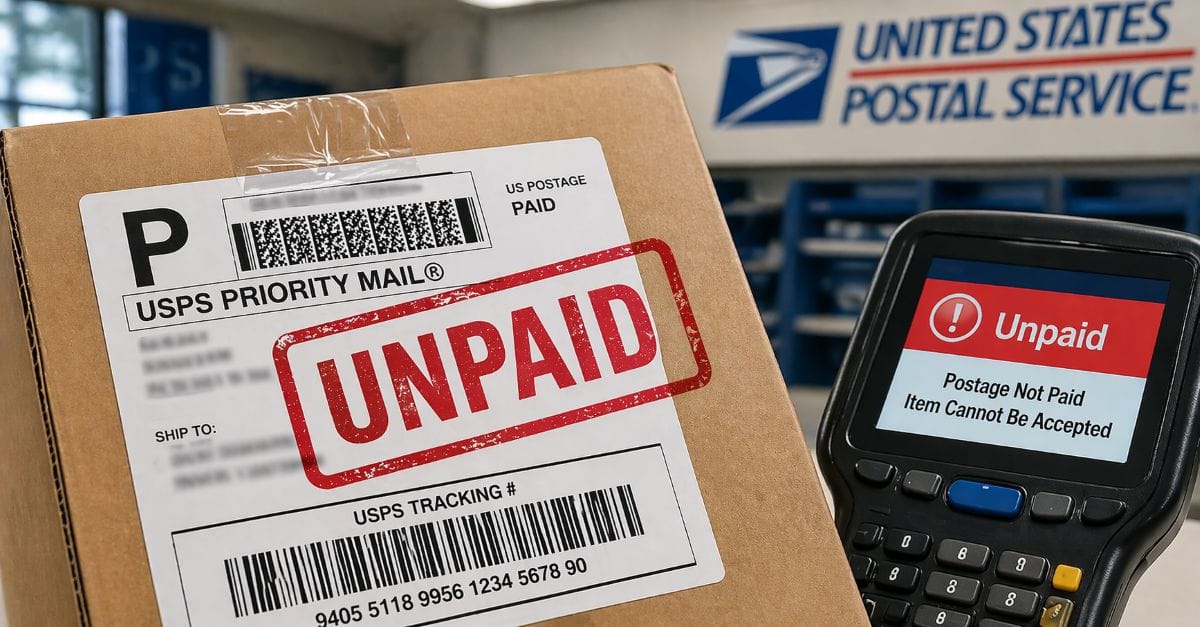
Recent Ground Advantage pricing changes have also shown how closely sellers can be affected by APV. When discounted rates made some 3-pound shipments cheaper than lighter packages, sellers who entered higher package weights to access the lower rate reported receiving adjustments after USPS equipment detected the actual weight.
 Liz Morton
USPS is also requiring accurate dimensions to be submitted electronically for manifested Ground Advantage, Parcel Select, Priority Mail and Priority Mail Express packages. Broader enforcement of its $3 dimension noncompliance fee has been delayed until 2027 while USPS works through measurement and dispute procedures.
 Liz Morton
Those systems are intended to make package pricing more accurate, but the OIG report shows their effectiveness still depends on USPS correctly programming and monitoring its own equipment.
For online sellers, the failure cut both ways. Some underpaid shipments escaped adjustments, while shippers who paid too much did not receive refunds APV should have generated automatically.
Download the full OIG report: