Etsy Bans AI-Generated Patterns, Tightens Listing Photo Rules

Etsy is tightening restrictions on AI-generated products and listing images, banning AI-created craft patterns and other functional instructions, prohibiting fully automated AI listings and requiring sellers to include unedited photos of actual items.
The company announced the changes October 22, updating its policies to address misleading AI-generated content and promising stronger detection and enforcement tools after years of seller complaints about AI products flooding the marketplace.
In a notable admission, Etsy says many active buyers now report being unable to distinguish which items involve AI-generated content, making it one of the top three barriers to shopping more frequently on the platform. James Ossman, Etsy's VP of Customer Operations, also acknowledged the company has not always addressed seller concerns about AI as directly or quickly as they would have liked.
Etsy's updated AI creations policy now explicitly prohibits AI-generated functional instructions, including knitting, crochet, sewing, embroidery, quilting and beading patterns, recipes, woodworking and construction plans, instruction manuals and other guides intended to help buyers complete a specific task.
The company explains that, unlike artwork, these products are supposed to provide usable instructions that produce a particular result. AI-generated instructions may contain errors that buyers don't discover until they've already invested time and materials trying to follow them.
In a video accompanying the announcement, Ossman confirmed the instructions themselves must be the seller's original work, not AI-generated. Under the revised Listing Image Requirements, sellers offering craft patterns, recipes, seeds and similar products must also include at least one real, unedited photograph of a finished result made or grown using the product.
For example, a crochet pattern listing must show an actual completed project, rather than an AI-generated image depicting what the finished item is supposed to look like.
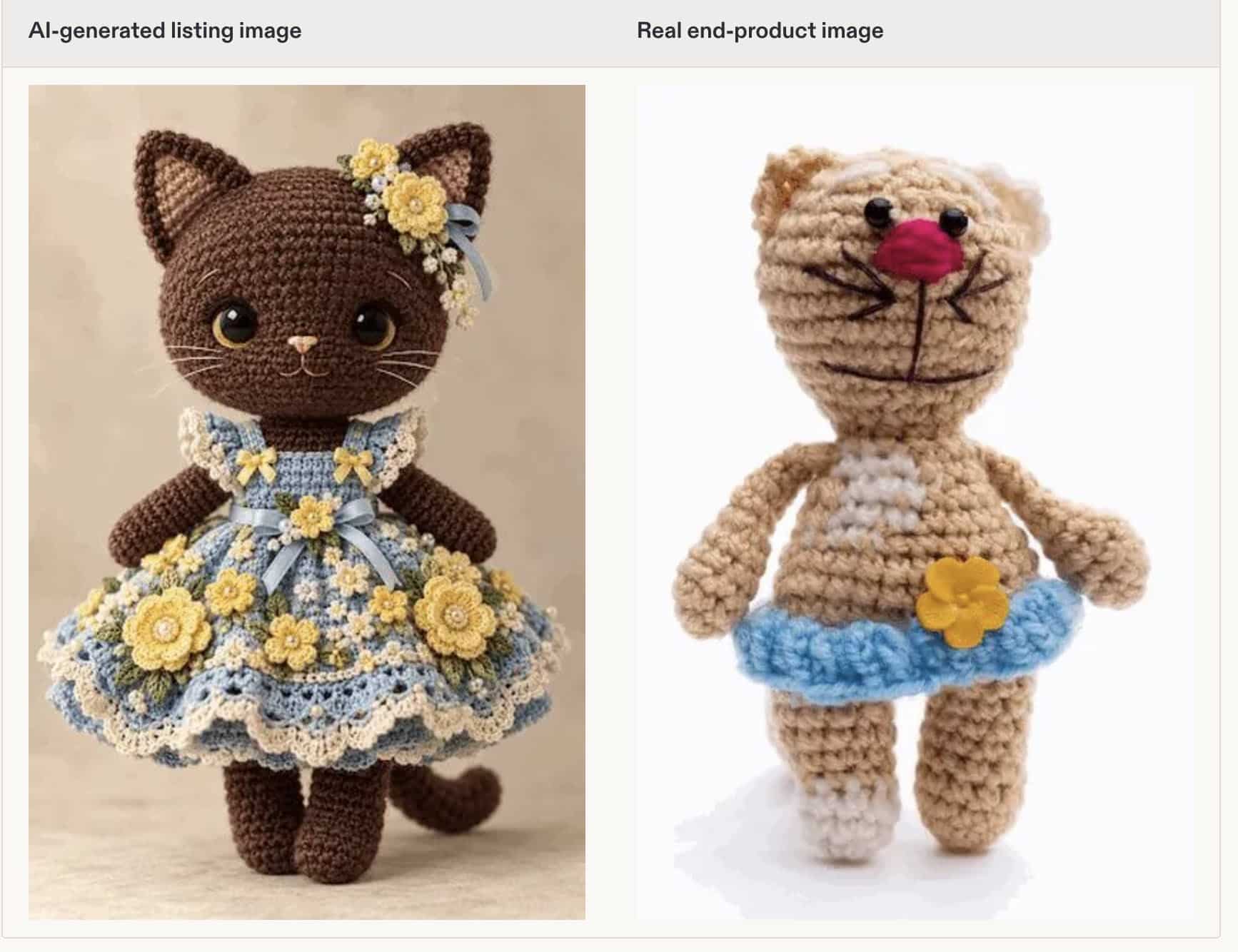
That requirement addresses a specific problem raised during a November 2025 Ask Me Anything event with CEO Kruti Patel Goyal, when sellers criticized AI-generated crochet patterns that could not produce the finished items shown in their listing images.
 Liz Morton

During the AMA, Patel Goyal defended Etsy's decision to allow AI-generated creations alongside traditional handmade products, comparing new technologies to the difference between hand-knitting and using a knitting loom. She emphasized helping buyers understand how products were made and find items that matched their preferences.
Etsy is maintaining that approach for AI-generated artwork, but is now explicitly prohibiting entirely bot-generated content and mass-automated creation of products or listings without individual human creative input and oversight. Sellers can still use AI to create digital art and similar products, provided they disclose AI use and don't misrepresent the work as entirely handmade or their own creation.
The updated policy requires direct, individual prompting, curation and creative input for each item, potentially affecting high-volume digital sellers who rely on automated AI tools to generate products at scale. It does not specify how much human involvement is sufficient or whether the restriction extends to third-party listing creation and cross-listing tools, which Etsy continues to support through its official API. AI prompt bundles also remain prohibited, continuing a restriction established in 2024.
The changes go beyond AI-generated products, with Etsy also imposing stricter requirements on listing photographs that could affect sellers who have never used generative AI in their businesses.
Under the updated Listing Image Requirements, most listings must now include at least one unedited photograph of the actual item against a real background. That means no cropping, resizing, straightening, lighting or exposure adjustments, or background changes, even when those edits would not materially change how the product appears to buyers.
Those techniques are still permitted on additional listing images, including edits made using AI tools, as long as they accurately represent the items being sold. But the new requirement could force sellers to change longstanding photography workflows, and Etsy has not explained how it will distinguish intentional edits from automatic processing or resizing by cameras, phones and other software.
The policy includes exceptions for some print-on-demand products, digital downloads and customized or made-to-order items. Sellers using production partners to print their original designs on standard products like t-shirts or mugs can continue using authorized stock photo mockups, while most digital downloads must include visual previews or excerpts showing what buyers will receive.
Digital products without visual content, such as audio files, may use representative imagery, including AI-generated images, provided it isn't misleading. Sellers making customized products themselves are directed to show real examples of their previous work so buyers can evaluate the quality of what they can expect to receive.
The updated Listing Image Requirements also remove a section of the previous policy that prohibited using blank products or mockups with placeholder text like "Your Text Here" as the primary image for personalized items. Sellers were required to show a finished customized example instead, including for products made by production partners.
Etsy recently partnered with FYUL on a digital-to-print test through its Ventur Editions shop, which has drawn criticism for using similar "Your Design Here" placeholders on personalized print-on-demand products. The new policy no longer includes the explicit prohibition, but Etsy has not clarified whether those images are now permitted as primary listing photos.
 Liz Morton

Etsy also recommends disclosing AI-assisted photo editing in listing descriptions, but that remains a best practice rather than a mandatory requirement. Disclosure is required when AI is used to create the product itself.
Sellers will need to update existing listings that don't meet the new image requirements, but the announcement did not include a deadline or grace period for bringing those listings into compliance. The company warns sellers may be responsible for refunds when buyers open cases because the products they receive are materially different from those advertised. Misleading listings can also be removed, with repeated violations potentially resulting in additional enforcement action, including shop removal.
Etsy is adding guidance to its listing form that will notify sellers when AI-generated images are detected during upload, with plans to extend that guidance to existing listings. The company is also investing in stronger detection and enforcement tools, with plans to expand removals of violating listings over the coming months.
A new reporting option will allow users to flag potentially misleading AI imagery, though reports will initially be used to gather information rather than trigger immediate enforcement.
Etsy says sellers will be able to appeal listing removals through the Policy Violations page in Shop Manager, but has not explained how its systems will distinguish prohibited AI content from permitted uses, including AI-generated artwork and photo editing.
The company has a history of incorrect automated takedowns and sellers struggling to appeal enforcement decisions, leaving sellers with reason to doubt whether those procedures will provide meaningful recourse if the new detection tools make mistakes.
Ossman says Etsy is also developing tools to help sellers demonstrate their authorship, but did not provide details about how those tools will work or what evidence sellers may be required to submit.