ThredUp Calls Rival Resale Spending 'Irrational' As Vinted, Depop Gain Ground

ThredUp is warning that increasingly aggressive spending by competing secondhand fashion marketplaces is putting pressure on its business, estimating that rival peer-to-peer platforms could spend as much as $500 million on marketing and order subsidies in the second half of 2026 alone, plus additional shipping subsidies to attract buyers.
CEO James Reinhart made the comments during the company's Q3 earnings call, pointing to competition from Vinted and Depop as ThredUp reported record buyer activity and merchandise sales but weaker pricing and profitability.
ThredUp reported third-quarter revenue of $88.2 million, up 7% year-over-year, with merchandise sales (GMV) increasing 20% and active buyers reaching a record 1.82 million, up 16%. But shoppers are spending less per item, with average price paid per item falling from $21 to $18 as the company offers deeper discounts, particularly on older inventory.
Net losses widened from $4.2 million to $5.5 million, and gross margin slipped from 79.4% to 78.2%. ThredUp expects fourth-quarter revenue of $77 million to $79 million, down about 2% year-over-year at the midpoint, with adjusted EBITDA expected to turn negative after remaining positive through the first three quarters of 2026. Reinhart estimates competition from peer-to-peer marketplaces will account for approximately $5 million of the expected revenue pressure, alongside weaker consumer spending and aggressive holiday promotions.
Reinhart called the estimated spending "wholly irrational" and offered a particularly blunt assessment of the underlying business models:
There have been peer-to-peer businesses that have come and gone, and none of them have really been able to drive durable unit economics and durable growth. [...] I just think these business models do not work in fashion resale in the U.S. You have low switching costs, you have low margin, it is a race to the bottom, and there are no network effects in these businesses because if there were, companies would not have to spend 50%, 60%, 70% of their revenue on marketing, right?
The minute that these companies pull back on marketing, growth slows, churn ramps up. We built ThredUp very specifically to be different than these business models.
While Reinhart questioned the sustainability of peer-to-peer fashion resale, Vinted reported a €62 million net profit on €1.1 billion in revenue in 2025. Those results reflect Vinted's international operations and do not establish whether its more recent aggressive US expansion is profitable.
ThredUp did not provide a breakdown of its $500 million estimate by competitor or disclose the data used to calculate it, but the company's concerns follow months of aggressive spending and shipping promotions by rival resale marketplaces.
In August, Wells Fargo and Citizens analysts warned eBay investors that growing competition from Vinted could force newly acquired Depop to spend more heavily on marketing than Wall Street had anticipated. Citizens estimated Depop could spend more than $250 million on marketing in 2026, up from $119 million in 2025, while Wells Fargo estimated Depop's July marketing spending was running at three times Vinted's already elevated level.
eBay's Q3 financial filing subsequently revealed a $120 million year-over-year increase in quarterly marketing program costs, primarily related to Depop and eBay Live, though the company did not break out spending for either business individually.
Vinted began offering widespread free shipping in March before shifting most existing US buyers to $0.99 shipping in August. The company introduced more variable rates in September, with SpeedX shipping ranging from $0.49 to $1.49 depending on package size, while USPS and FedEx options start at $0.99 for Small and Medium packages and $3.19 for Large.
 Liz Morton

Depop has also cycled through free and discounted shipping promotions throughout 2026, including widespread free shipping in May, reduced rates beginning in July and another $0.99 offer in September on qualifying purchases under $10. Documents reviewed during the UK Competition and Markets Authority's investigation of eBay's $1.4 billion acquisition of Depop showed Vinted was the closest and strongest competitor monitored by both companies, with its zero-selling-fee model helping it gain significant market share.
Poshmark joined the latest round of discounts November 3, cutting its standard $6.49 shipping charge to $0.99 for eligible US marketplace purchases with no minimum, while offering free shipping on qualifying Posh LIVE orders of $75 or more. The company has not announced an end date for the promotions, which it says will not affect existing seller fees or shipping charges.
Reinhart expects competitive spending to continue into 2027 but questioned how long rivals can sustain the subsidies. "When you are subsidizing shipping transactions and losing money on every order, at some point, it catches up with you," he said, predicting that the market would eventually become more rational, though that could take a few quarters or another year.
Asked by William Blair analyst Dylan Carden how confident ThredUp was in attributing the estimated $5 million impact to specific competitors, Reinhart pointed to changes in market share, saying budget-conscious shoppers were moving toward Vinted and some share was going to Depop, but did not explain how the dollar estimate was calculated. He said the promotional spending has not affected ThredUp's ability to attract sellers and inventory, with Clean Out Kit requests increasing 30% year-to-date through Q3.
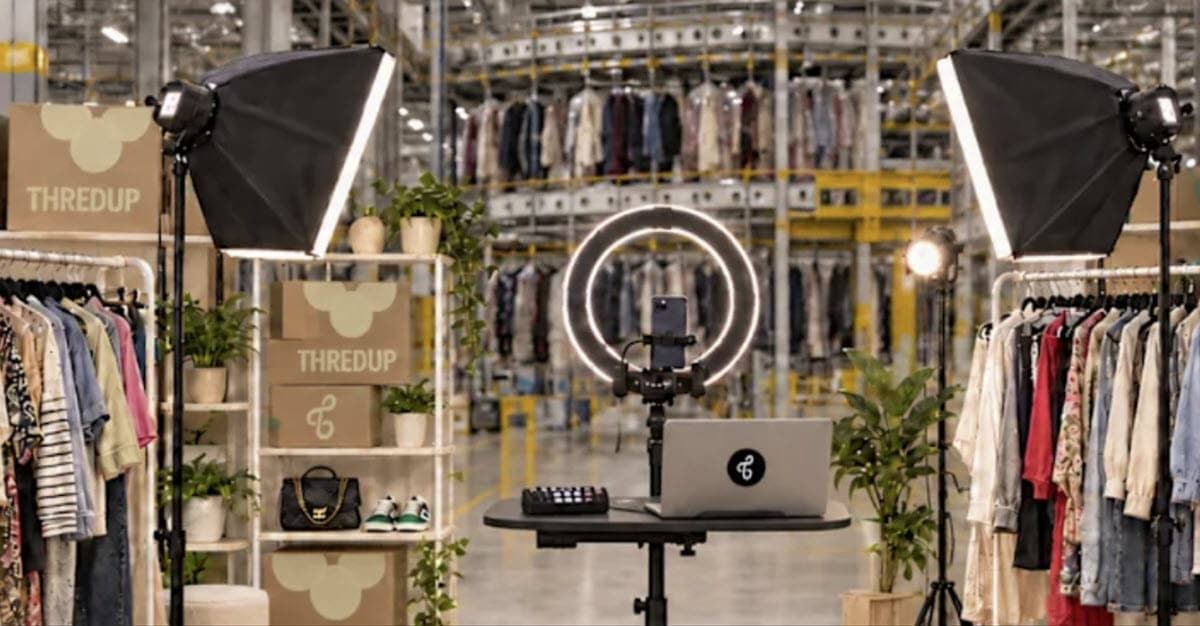
ThredUp is meanwhile expanding its own selling options beyond traditional managed consignment, including an increasingly ambitious live selling partnership with Whatnot that launched September 29 with livestreams originating from its distribution centers in Georgia and Texas.
 Liz Morton
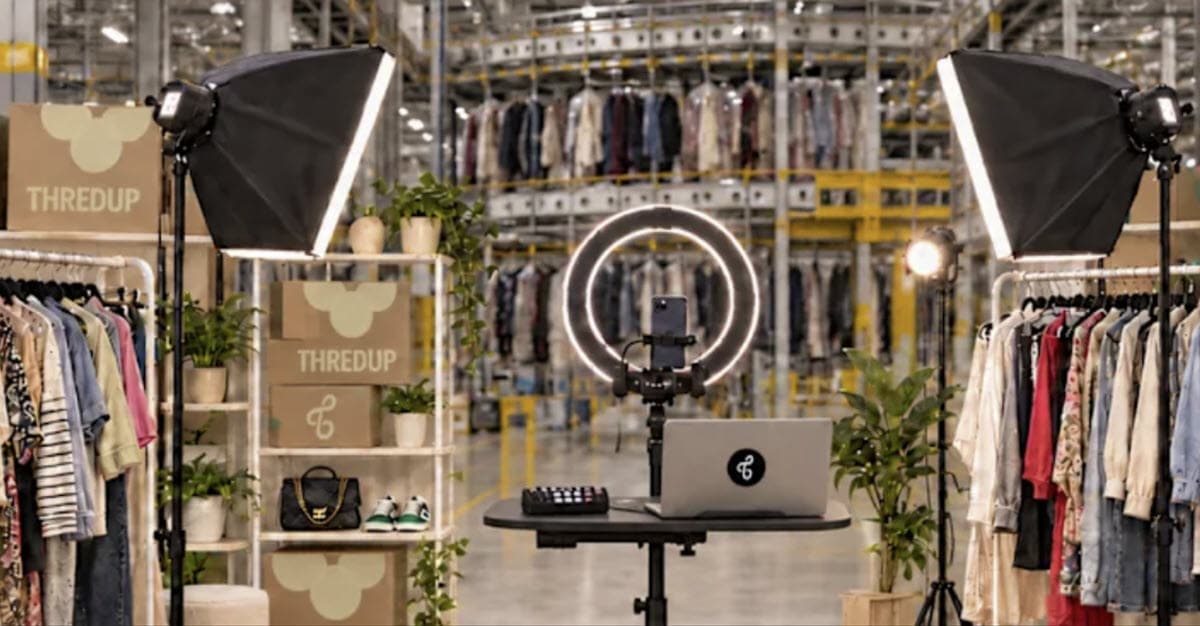
Reinhart said early results show 75% of customers purchasing through ThredUp Live on Whatnot having never previously purchased from ThredUp. The company also reported median selling prices 52% higher on Whatnot than its core marketplace for items of comparable age, with additional benefits from buyers paying shipping charges, fewer returns and fulfillment through ThredUp's existing distribution infrastructure.
Management did not disclose the underlying median selling prices, total transaction volume or GMV generated through Whatnot, making it difficult to determine how much the channel is contributing to the business.
Reinhart said live hosts can generate higher prices by demonstrating products and discussing their details, while buyers who have already paid shipping on one purchase may stay to bundle additional items from the same show. The company plans to expand to dozens of hosts, up to 10 studios and as many as 18 hours of daily streaming across multiple live selling platforms by the end of 2026.
ThredUp and Whatnot are also exploring ways to give independent sellers access to ThredUp inventory, merchandising tools and logistics support, potentially expanding the partnership beyond the company's own livestreams. Reinhart did not provide an update on those plans during the earnings call.
The company's Direct Listing program is also gaining traction, allowing sellers to photograph and list their own items, set prices and ship directly to buyers instead of sending inventory to ThredUp for processing. The company began testing the peer-to-peer selling option in August 2024, initially advertising no selling fees as competing marketplaces including Depop and eBay were reducing or eliminating fees for some private sellers.
The feature opened to a broader audience in June 2026 and has reached an approximately $10 million annualized GMV run rate, with more than 200,000 available listings and average listing prices more than twice those of ThredUp's traditional marketplace. The company did not disclose completed selling prices or revenue generated through the program, and Reinhart said growth was slowed in late August to improve the shipping, cart and checkout experience before another planned expansion during the holiday season.
Reinhart said ThredUp hopes to attract customers who currently use its Clean Out service but sell other merchandise on competing marketplaces, arguing that its existing returns management, authentication and customer support infrastructure give it an advantage over other peer-to-peer platforms. Other investments include opening ThredUp's product catalog to AI shopping agents and developing automated secondhand affiliate storefronts that creators can populate using their own style profiles and social media content. Approximately a dozen creator storefronts are already live, with a goal of more than 100 by the end of the year.
Despite the expansion plans, CFO Sean Sobers said the company's newer initiatives are still too small to make a material contribution to its preliminary 2027 outlook. ThredUp currently expects low single-digit revenue growth and relatively flat adjusted EBITDA margins next year, assuming competitive spending and consumer conditions remain at current levels, with more detailed guidance planned for its fourth-quarter earnings call in March.