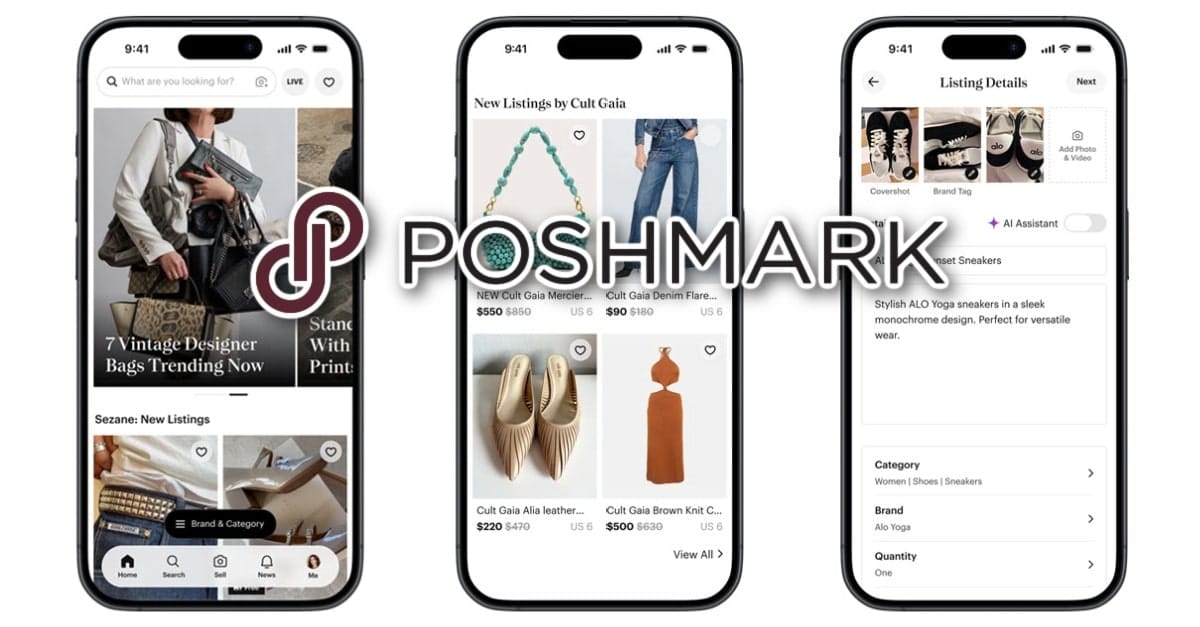
As Poshmark Courts Brands and Retailers, What Happens to Its Core Sellers?

As Poshmark looks to woo more brands, retailers, and larger enterprise sellers to the platform, are casual consumer sellers being left behind?
When the second-hand fashion site launched in 2011, it started as a social marketplace aiming to turn closets into storefronts while removing traditional barriers to entry for consumer sellers.
But since being acquired by Korean search giant Naver in 2023, things have been changing and that pace of change has picked up rapidly in the last year with founding executives have left the company and new executives have been brought in to "enhance the commercial performance and profitability of the platform."
 Liz Morton
Those changes have also brought controversial updates like the Excessive Listing Removal policy, feed visibility and discovery changes, new cancellation policies, and a reimagined app.
But the move that has received some of the most vehement pushback is Poshmark's recent partnerships giving big brands a boost in official employee-run Posh Shows that compete directly against third-party sellers on the site.
 Liz Morton
Sellers called Poshmark out for exploiting an unfair advantage with these shows and expressed concerns about how this self-preferencing may hurt smaller sellers on the platform.
Unfortunately, it appears that those concerns have fallen on deaf ears as a new job listing for a Director of Supply Partnerships makes it clear that Poshmark is doubling down on brand, retailer, and enterprise seller partnerships to drive revenue and Gross Market Volume (GMV) growth.
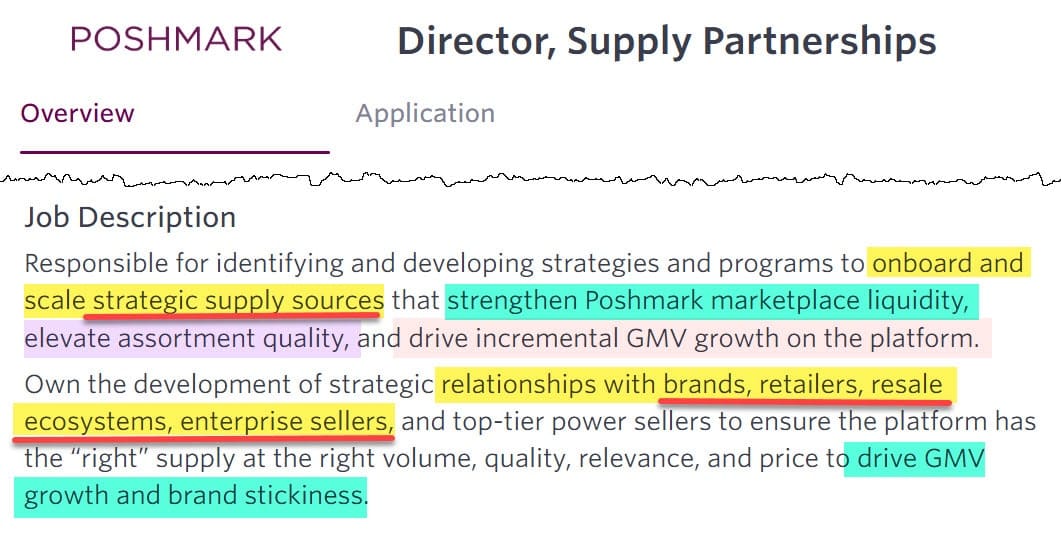
The ad goes on to read like a laundry-list of corporate speak - a far cry from the more community-focused, micro-business roots that Poshmark was founded on.
For example, the Director of Supply Partnerships duties include (but are not limited to):
Supply Growth and Partner Strategy
- Define and execute the enterprise and strategic supply roadmap across brands, retailers, consignment partners, and large-scale sellers
- Identify category opportunities
- Build models for partner sourcing, programming, onboarding, enablement, retention, and expansion
Commercial Ownership
- Own partner acquisition targets, GMV contribution growth, and take rate
- Structure and negotiate commercial terms
- Track partner performance across key metrics, including listing quality and activation, sell-through speed, pricing alignment, returns, cancellations, and disputes
- Manage relationships and contracts
Key Metrics for Success
- Incremental GMV from strategic supply
- Liquidity and sell-through speed in priority categories
- Partner retention and satisfaction
- Listing quality and pricing alignment
- Reduction in issues, returns, and cancellations from managed supply partners
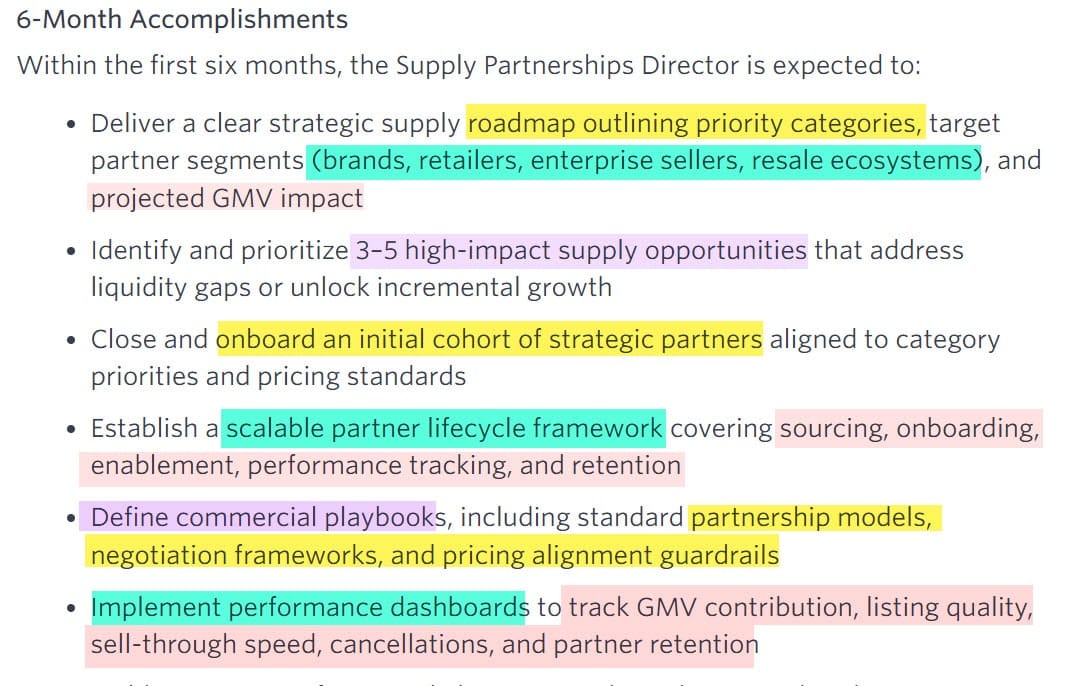
The ad also lays out ambitious goals they expect this role to have accomplished by the 6 and 12 month marks.
In the first 6 months, Poshmark wants this person to prioritize "3-5 high-impact supply opportunities that address liquidity gaps or unlock incremental growth", define the commercial playbook and create dashboards to track partner performance.
By 12 months, the company expects to see measurable GMV growth and improved liquidity while establishing Poshmark as a preferred marketplace for select brands, retailers, and enterprise sellers.
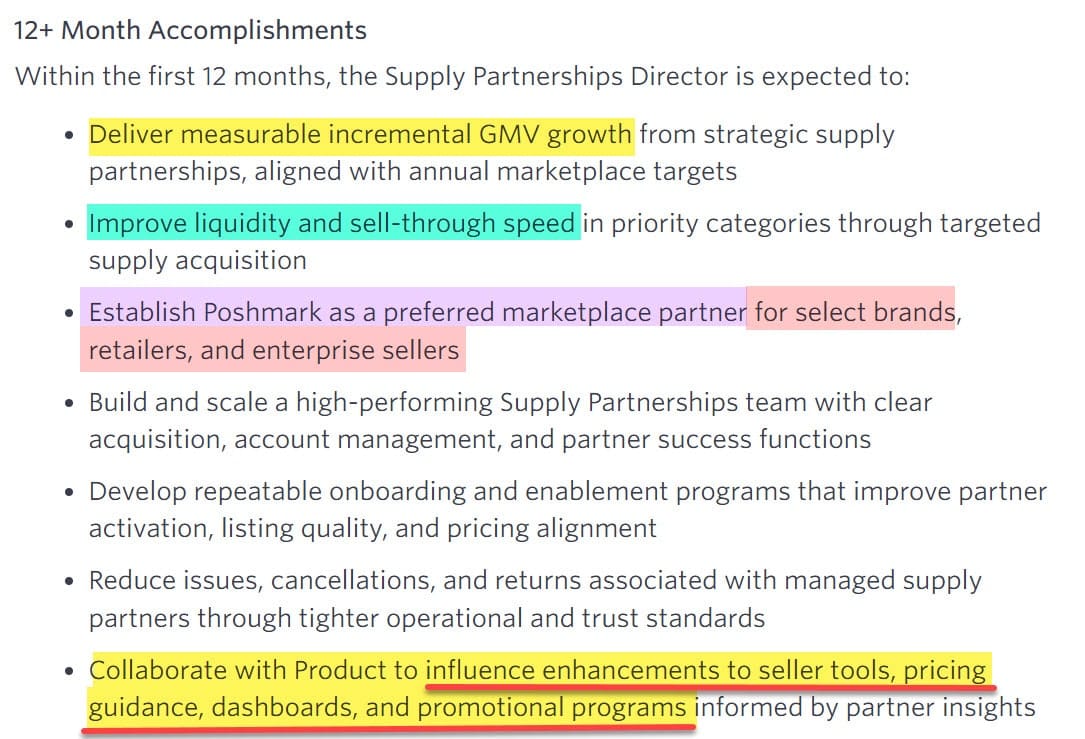
And not only will existing consumer sellers face increasing competition from these new retail and enterprise partners, they'll also likely see "enhancements" to seller tools, promotional programs and policies created around the needs of those partners filter down into the broader marketplace as a whole.
These changes point to a clear shift in priorities for Poshmark. The platform is moving beyond enabling peer-to-peer resale and toward actively shaping its supply mix in pursuit of greater scale, consistency, and monetization.
But that shift comes with tradeoffs. As Poshmark leans further into managed, high-volume supply, it risks sidelining the independent sellers who built the marketplace and who still drive a meaningful share of its demand.
Sellers aren’t just supply - they’re also buyers, community members, and the engine behind the platform’s growth. If that cohort starts to disengage, the impact won’t be limited to one side of the marketplace.