eBay Launches Item Compare in Search - Early Testing Points to Ad Revenue Over Buyer Experience

eBay is introducing Item Compare in search, allowing buyers to compare up to three listings without leaving the results page. But early testing shows inconsistent data pulls and limited functionality, raising questions about whether the feature is intended more to drive seller ad revenue than meaningfully improve the buyer experience.
The new feature is initially rolling out in electronics categories, but Value Added Resource testing shows it's still largely a manual process that appears to have limitations or technical problems accurate pulling and displaying data from listings.
Here's how it works:
When the buyer does a search for an Electronics item, eBay adds a "Compare" toggle at the top of the results.
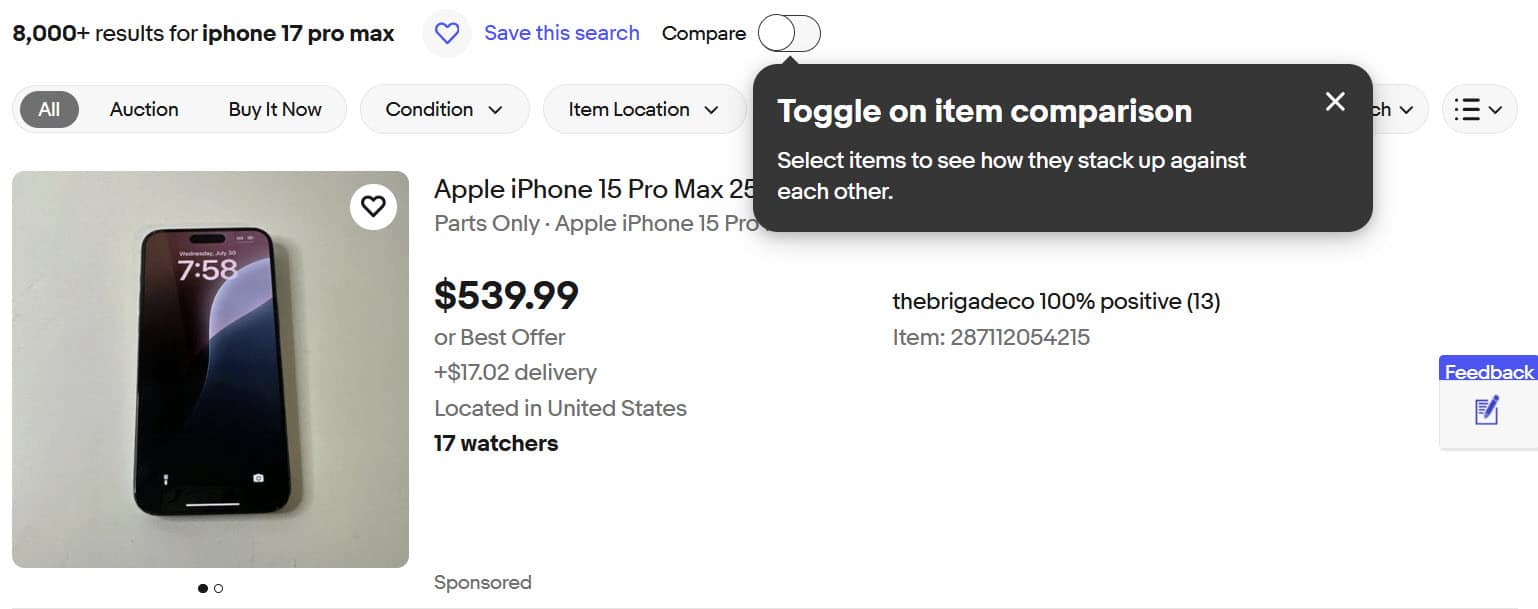
When the toggle is switched "on", a module pops up with spots to add up to 3 items with check boxes on the right side to select listings to compare.
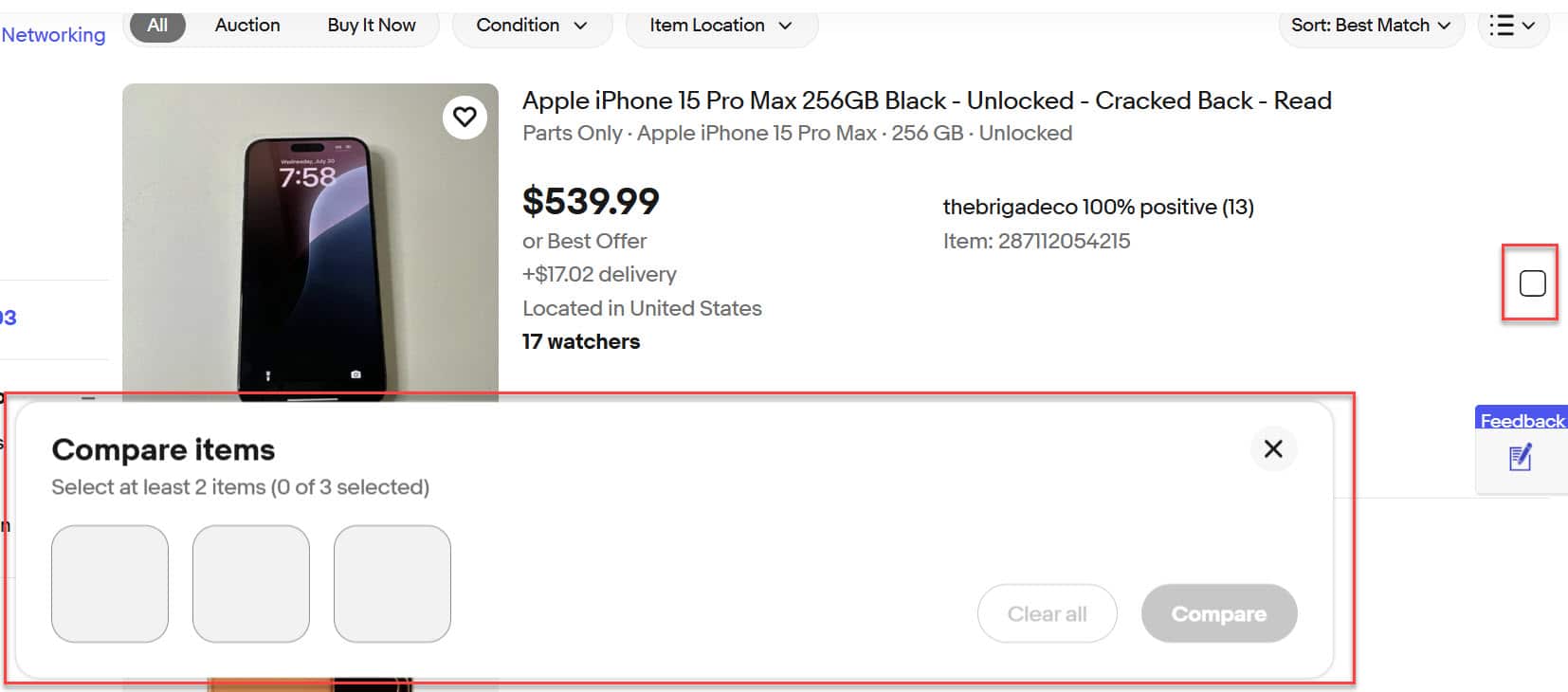
Once you populate 2-3 items and click "compare", a pop up screen shows details from all the items side by side. From this view, if you click on one of the item thumbnails it will take you to that specific listing if you want to see more or purchase the item.
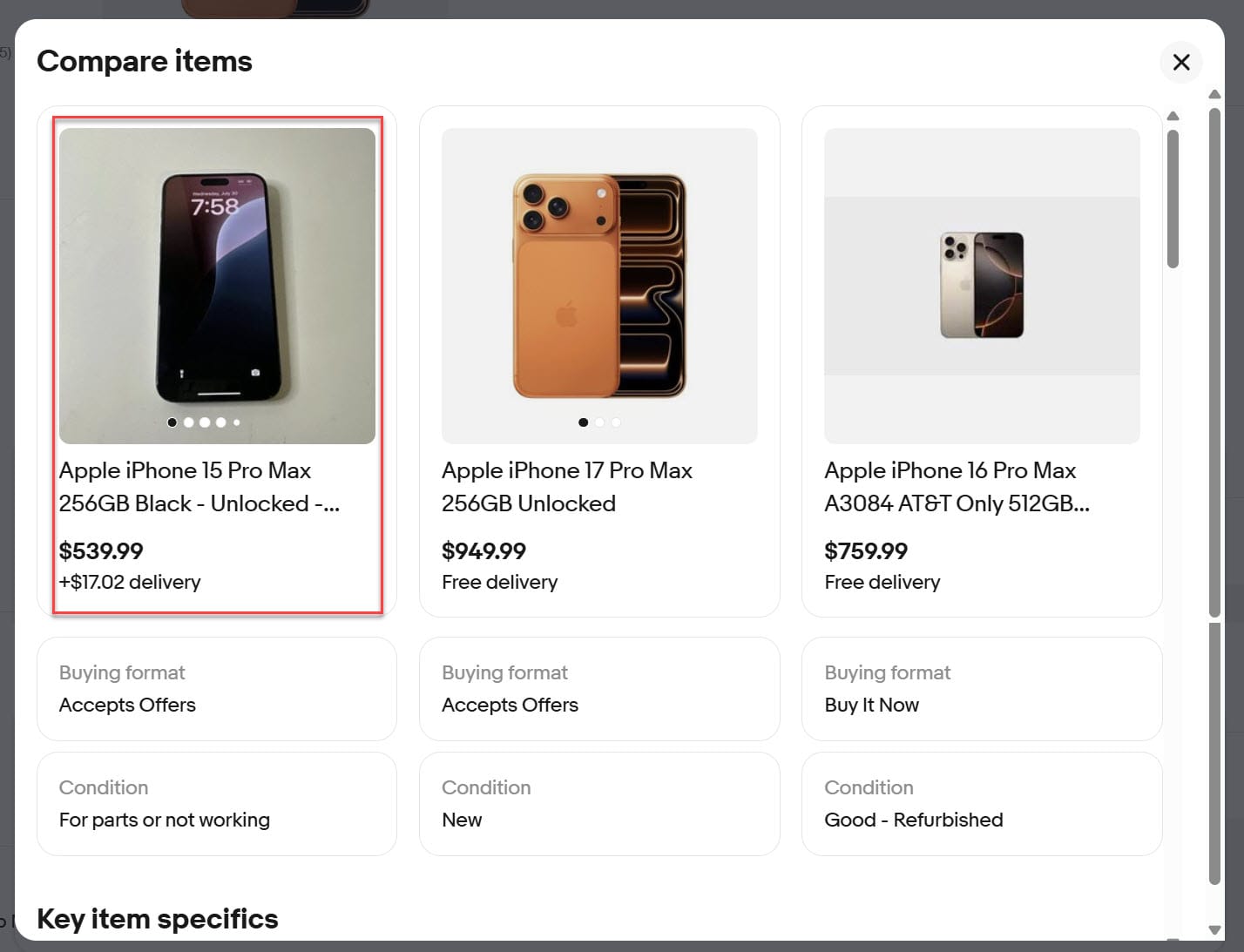
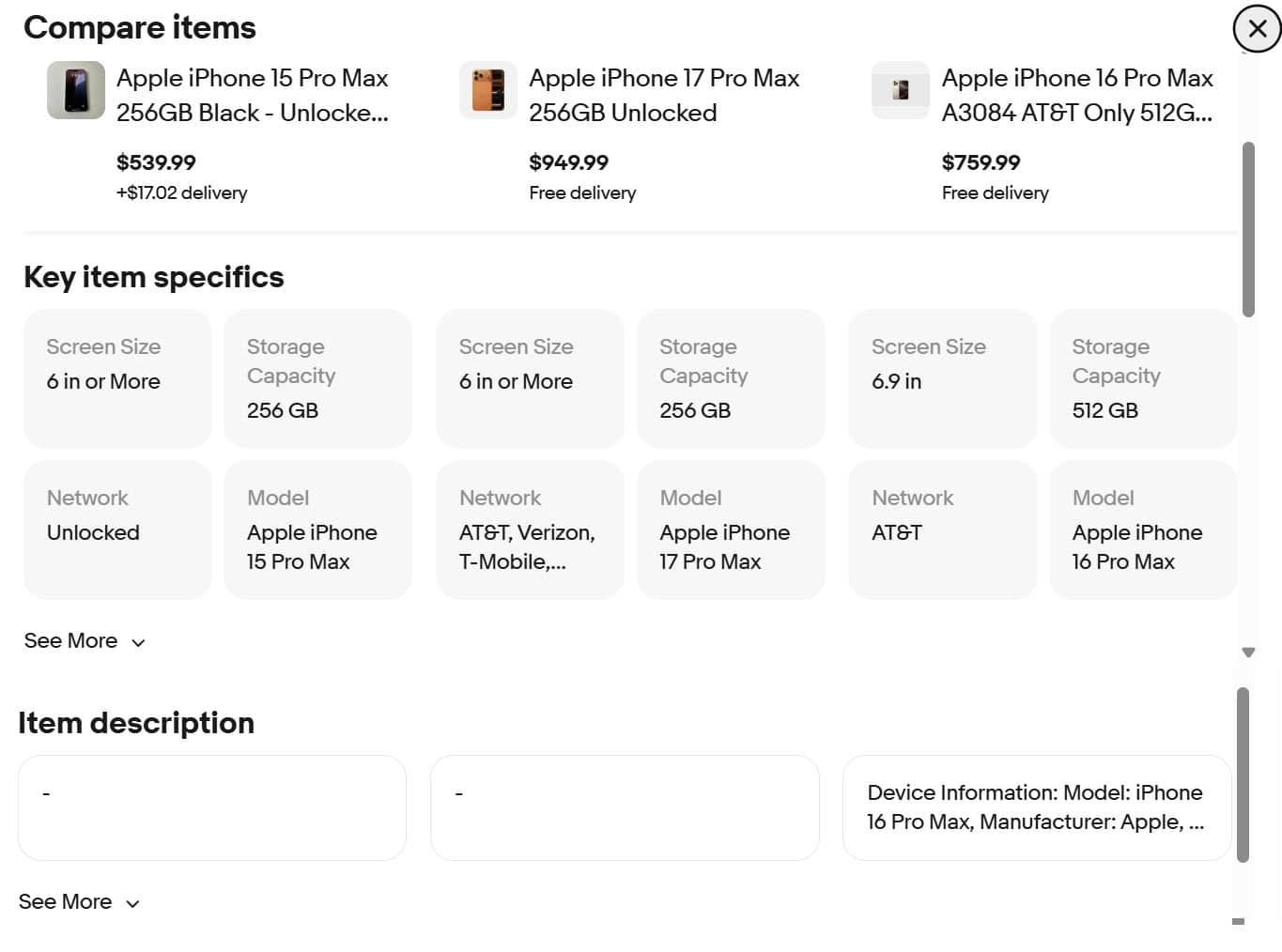
The first problem I've found is that eBay is not consistently able to pull seller provided description information from listings.
In this example, the first 2 items don't show any description in the Compare module.
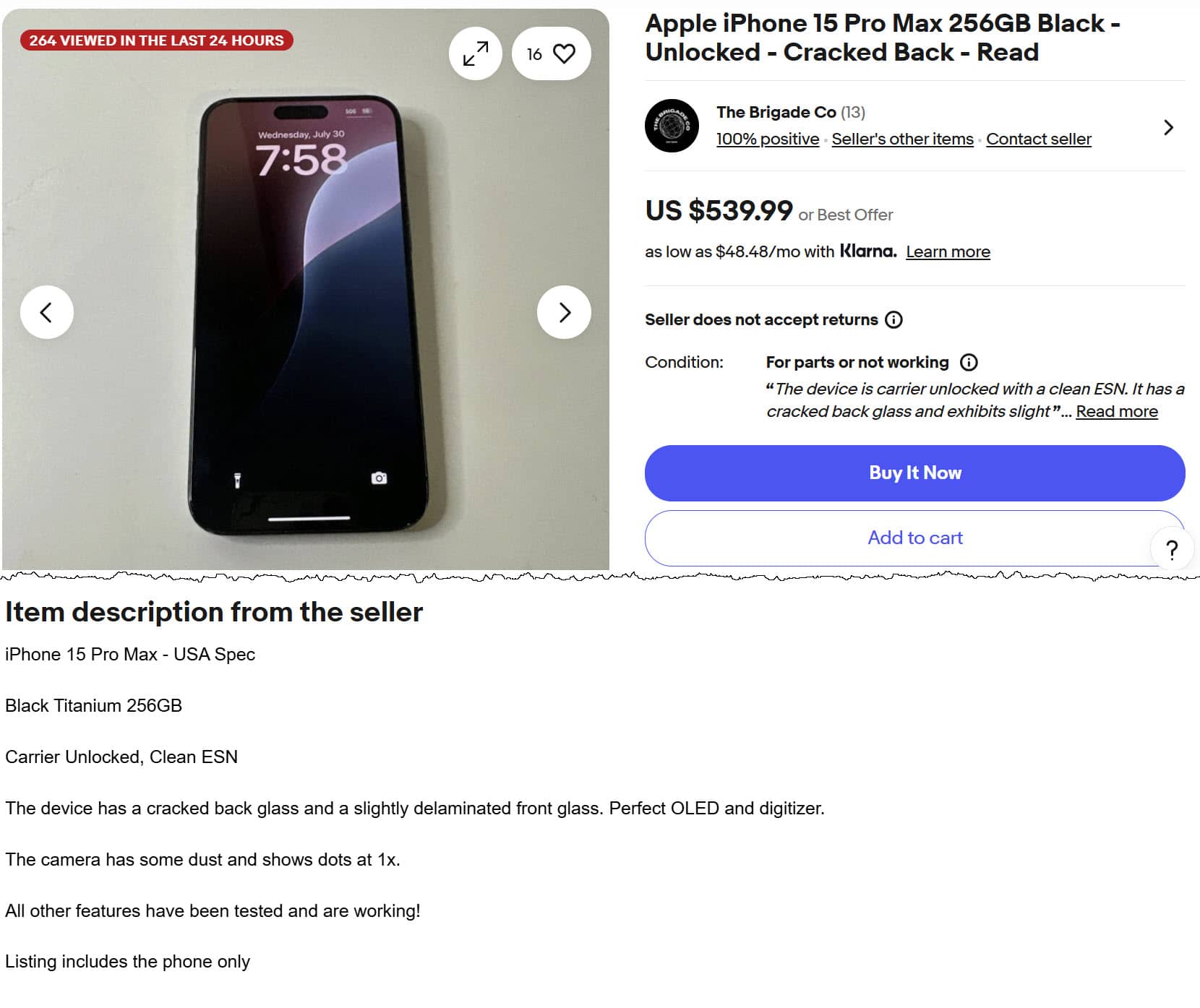
However, if you click through to those listings, the do have descriptions, so it's not entirely clear why eBay is able to pull the data for some items but not others.
The same holds true for other data points - for example, when it comes to returns, items that do not allow returns simply have a "-" rather than saying no returns accepted.
Of course, buyers will have no idea what the means, so they'll have to click through to each listing to see that information.
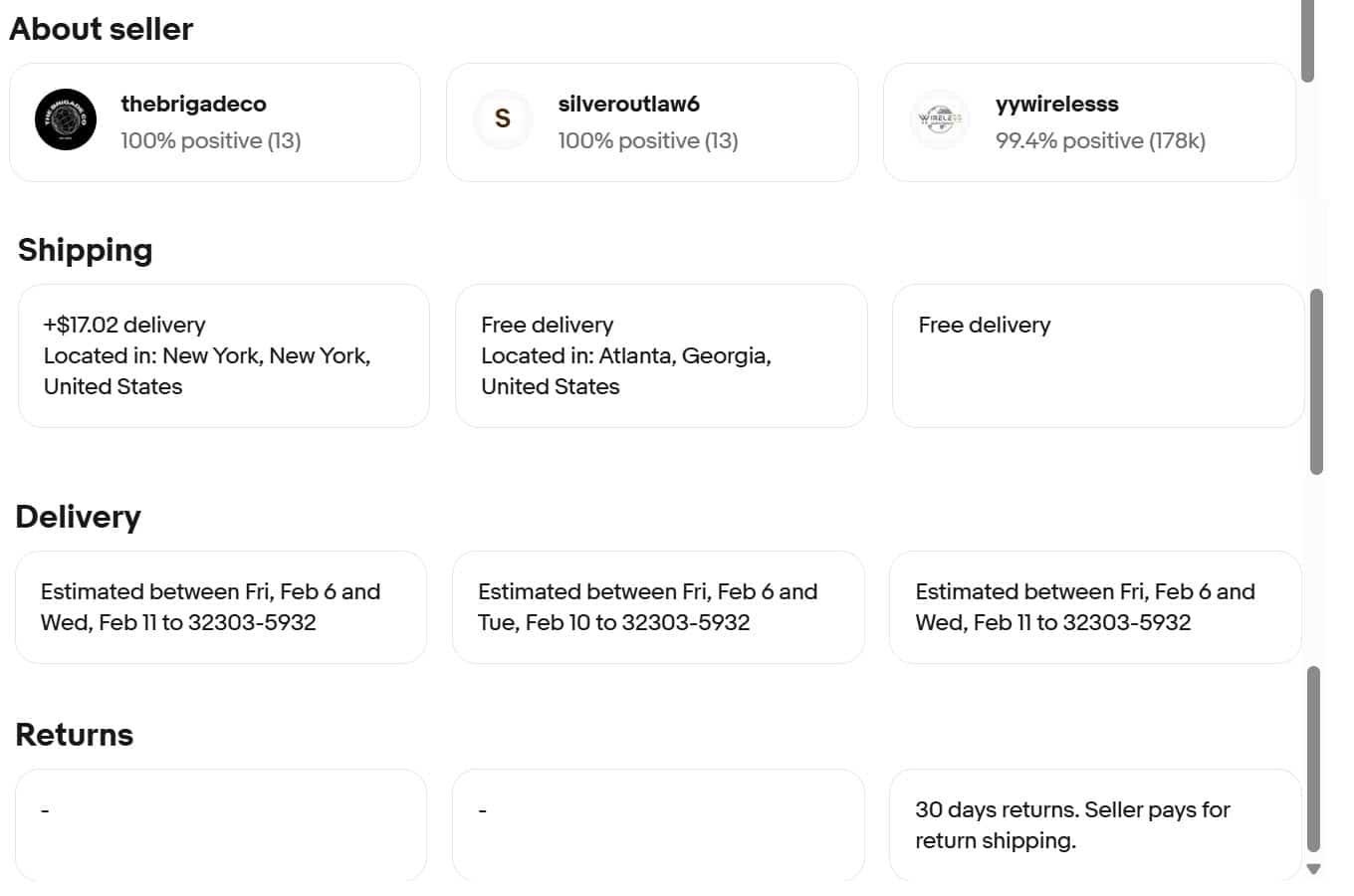
Keeping in mind this is still an early version of the feature, it's still incredibly disappointing that the best eBay could apparently come up with is something that required buyers to manually select items and still not be able to see all of the relevant data displayed in one place.
When I saw the first hints of this feature in yesterday's Marketing Terms update, I hypothesized that eBay may be looking to add product comparison into it's Agentic AI experience for buyers - a natural use case for AI that is already being deployed by competitors.
But seeing Item Compare live makes it clear that not only is eBay still lagging far behind other marketplaces when it comes to product discovery, they clearly have not solved basic problems of data analysis and mapping to identify and display the correct information in a side by side comparison across multiple listings.
That could mean that eBay's Agentic AI ambitions, which have been in a tightly controlled very small beta test since May 2025, are still a long way from being ready for wider distribution and daily use.
Aside from questions about how their data might be displayed (or not), sellers should be aware of one other major concern with this new Item Compare module - according to yesterday's Marketing Terms update, buyers interacting with your items in this way will also trigger attribution for Promoted Listings, resulting in ad fees being charged.
 Liz Morton
Here's what the new terms say:
...a click includes (without limitation) any interaction with your Ad (e.g., add to watchlist, add to cart, quick view, item compare, or other interactive functionality).
And here's what that means in practice:
Promoted Listings Priority Cost Per Click
For items using Promoted Listings Priority cost per click ads, if your item is shown in search as Sponsored and a prospective buyer clicks the checkbox to put it in this "compare" module with other items - that will count as a "click" and you will pay whatever ad rate is applicable, even if the buyer never actually views your full item listing page.
Promoted Listings General Cost Per Sale
For items using Promoted Listings General cost per sale ads, if your item is shown as Sponsored and a prospective buyer clicks the checkbox to put it in the "compare" module - that click will start the 30 day timer for the new "any sale" attribution model that went into effect January 13, 2026.
 Liz Morton
That new attribution policy states:
eBay will report an Attributed sale from a general campaign when a buyer purchases the same item that was featured in the ad that was clicked on by any buyer in the most recent 30 days.
The ad fee is charged when a buyer purchases the promoted item from a general ad that any buyer clicked on in the most recent 30 days. The item must be promoted at the time of click and the time of sale. The ad fee is based on the ad rate in effect at the time of the sale.
So if a user clicks the check box on your Sponsored/Promoted item in search to add it to this "compare" module, you will be charged the ad fee if the item sells within 30 days of that click - even if the actual eventual buyer never saw or clicked on the ad (assuming the item is still enrolled in Promoted listings at the time of the sale.)
It also appears that eBay may be testing a feature that allows the buyer to scroll to view an additional thumbnail within search - and that would likely fall under the "other interactive functionality" part of the policy to count for ad attribution.
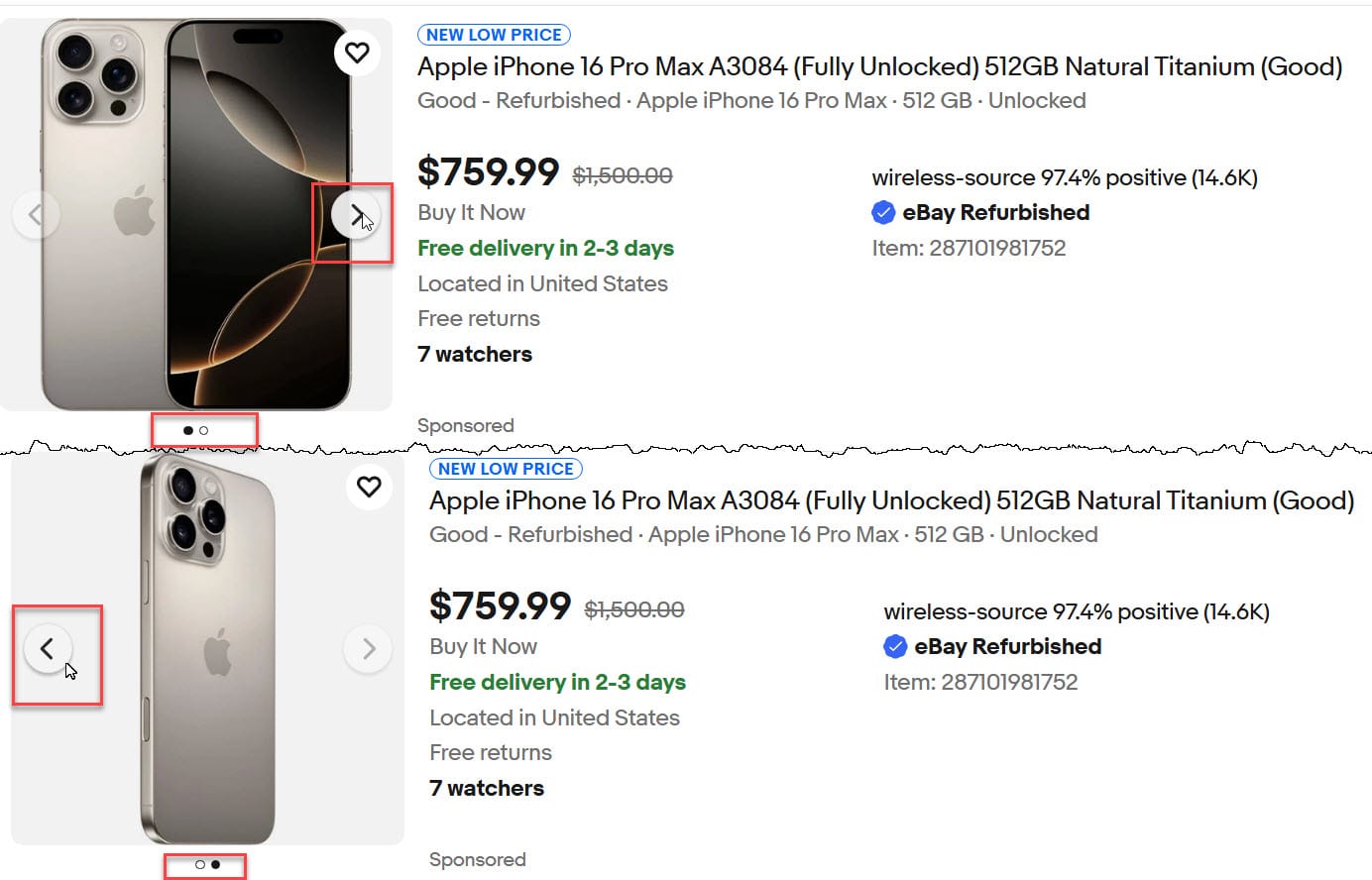
Taking the lack of innovation with this new feature along with the implications of the Marketing Terms update, it would appear that eBay is more concerned with how they can use "Item Compare" to squeeze more ad fees out of sellers rather than improving the buyer experience.
But that strategy could eventually have unintended negative effects since as ad fees continue to rise and eat into profit margins, sellers will likely bake some or all of that increased cost into their product prices - causing average prices on eBay to become uncompetitive with other marketplaces and chasing buyers away.
At Investor Day in 2022, eBay forecasted they expected to double ad revenue to $2 Billion by 2025 but they've struggled to meet that goal despite resorting to significant discounting tactics to counter lagging seller adoption of cost per click ads while many categories appear to be reaching a saturation point for Promoted Listings General cost per sale ads.
As of Q3 2025, eBay had reported ~$1.37B in first party ad revenue (total of all Promoted Listings ad offerings), meaning they'll have to have brought in ~$630 Million in Q4 to make that Investor Day 2022 prediction - which is unlikely.
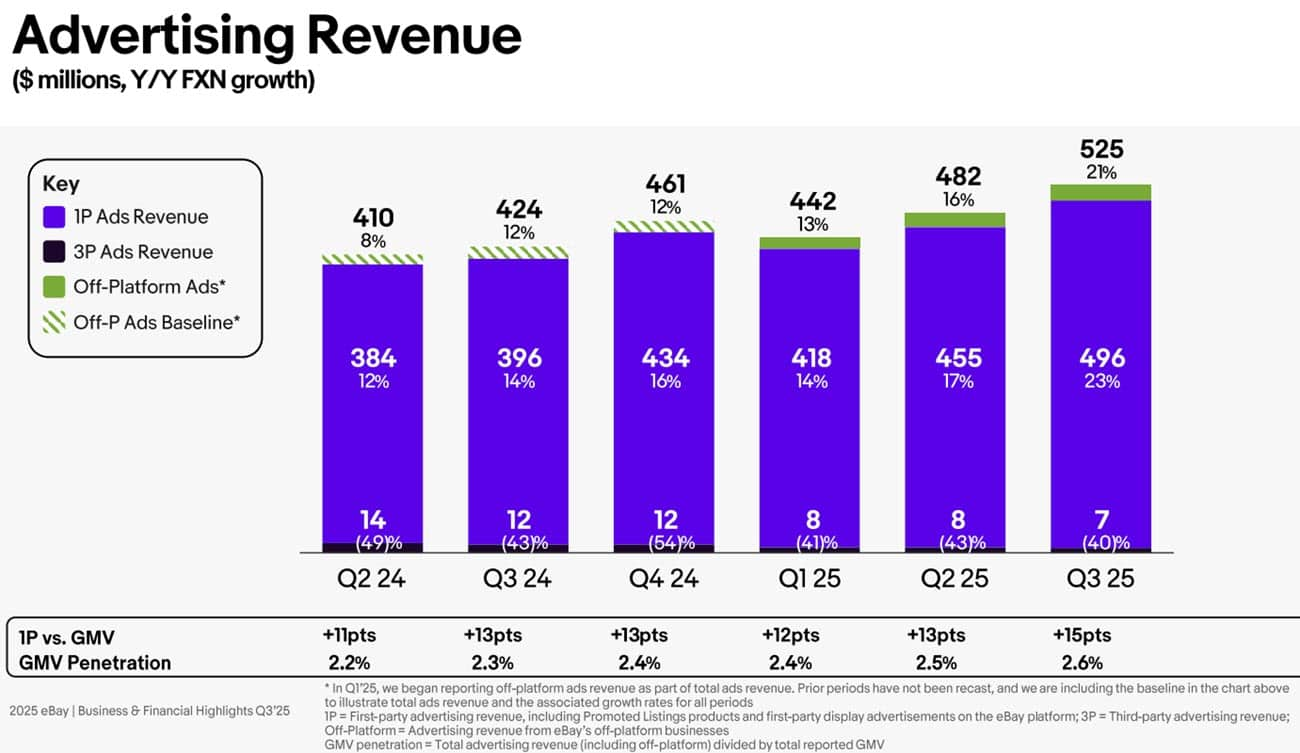
If eBay misses that $2 Billion ad revenue projection, it could spook investors - for example, Jefferies downgraded the company to "underperform" from "hold" in December 2024, citing concerns about slowing ad revenue growth and possible headwinds in cross border trade from China.
 Liz Morton
The stock has rebounded since then and recently hit a new all time high in August 2025, but if Q4/full year results are less than impressive when eBay reports in mid to late February, that trajectory could reverse quickly.
Confusing new attribution policies and finding new ways to turn existing clicks into ad fee generating activity may provide a short term revenue boost for eBay, but that could backfire long term if sellers revolt and pull back on ad spending or the higher prices needed to absorb those costs cause buyers to abandon the platform all together.
What do you think eBay's new "Item Compare" feature? Let us know in the comments below!