Congress Weighs Sunsetting Section 230, Putting eBay, Amazon, Etsy & More In Potential Liability Crosshairs

Congress considers sunsetting Section 230 with focus on social media platforms, but proposed legislation would also impact online marketplaces, removing "get out of liability free" card for Amazon, eBay, Etsy and more!
Section 230 of the Communications Decency Act of 1996, the so called "26 words that created the internet," provides broad immunity to online platforms for content posted by their users, stating:
No provider or user of an interactive computer service shall be treated as the publisher or speaker of any information provided by another information content provider.
Some legislators and regulatory agencies have been considering reworking or sunsetting Section 230 completely, with the Trump administration indicating earlier this year it could take steps to accelerate action on Section 230 as Federal Communications Commission Chair, Brendan Carr pushed for reforms largely aimed at Big Tech battles over social media censorship.
 Charles Gasparino
Carr, who wrote the Project 2025 chapter on the FCC, has said, “The FCC should work with Congress on more fundamental Section 230 reforms that go beyond interpreting its current terms. Congress should do so by ensuring that Internet companies no longer have carte blanche to censor protected speech while maintaining their Section 230 protections."
The issue has been brought to the forefront once again last week as US Senate Democratic Whip Dick Durbin (D-IL) and US Senator Lindsey Graham (R-SC) introduced the Sunset Section 230 Act, which would repeal Section 230 two years after the date of enactment.
Additional sponsors of the bill include Senators Chuck Grassley (R-IA), Sheldon Whitehouse (D-RI), Josh Hawley (R-MO), Amy Klobuchar (D-MN), Marsha Blackburn (R-TN), Richard Blumenthal (D-CT), Ashley Moody (R-FL), and Peter Welch (D-VT) with the legislation being positioned as a necessary step to protect Americans from online harm at the hands of large tech companies.

“Children are being exploited and abused because Big Tech consistently prioritizes profits over people. Enough is enough. Sunsetting Section 230 will force Big Tech to come to the table to take ownership over the harms it has wrought. And if Big Tech doesn’t, this bill will open the courtroom to victims of its platforms. Parents have been begging Congress to step in, and it’s time we do so. I’m proud to partner with Senator Graham on this effort, and we will push for it to become law,” said Durbin.
“I am extremely pleased that there is such wide and deep bipartisan support for repealing Section 230, which protects social media companies from being sued by the people whose lives they destroy. Giant social media platforms are unregulated, immune from lawsuits and are making billions of dollars in advertising revenue off some of the most unsavory content and criminal activity imaginable. It is past time to allow those who have been harmed by these behemoths to have their day in court,” said Graham.
While lawmakers are intensely focused on social media companies, it's important to remember Section 230 applies to many different kinds of websites and online content - including news sites and blogs as well as individual ecommerce shops and popular online marketplaces like Amazon, eBay, Etsy and more.
The idea of marketplace liability is nothing new of course - since the dawn of the internet and ecommerce, legislators and regulatory agencies across the globe have wrestled with the subject, especially when it comes to sites like Etsy and eBay which historically have leaned on the fact they are "just a venue" for items sold by third party sellers.
While that "just a venue" stance is no longer true for eBay, it didn't stop them from forwarding that argument to defend themselves against a lawsuit brought by the US Department of Justice on behalf of the Environmental Protection Agency in 2023, seeking to hold the company liable for illegal chemicals, pesticides and emissions control cheat devices sold on the platform.
U.S. District Judge Orelia Merchant agreed with eBay, dismissing the case in a ruling stating that Section 230 of the Communications Decency Act of 1996 protects eBay from liability for items sold by 3rd parties on their site and the DOJ dropped their plan to appeal earlier this year.
 Liz Morton
Section 230 also shields marketplaces from accountability for fraud and criminal activity on their platforms, as we saw in one recent lawsuit regarding Organized Retail Crime and triangulation fraud perpetrated through Walmart Marketplace.
 Liz Morton
And lawmakers have also raised concerns about how tech companies may practice discrimination, retaliation or censorship on political grounds under the guise of 230, like when Paypal made updates to their Acceptable Use Policy in 2022 that would have allowed them to fine users $2,500 for sending, posting or publication of content deemed "harmful" or Etsy policy updates in 2024 aimed at political activism and giving the platform wider latitude to remove items that it deems "violent, degrading, or hateful."
 Liz Morton
Just days before that update, Etsy was explicitly name-checked in Supreme Court arguments about content moderation laws passed in Florida and Texas in response to concerns that social media companies were censoring their users, particularly those with conservative viewpoints.
The laws contained provisions that limited decisions social media companies can make about how and which user-generated content is presented to the public, and others that required social media platforms to provide individualized explanations to users about their editorial choices.
 Brian Fung, John Fritze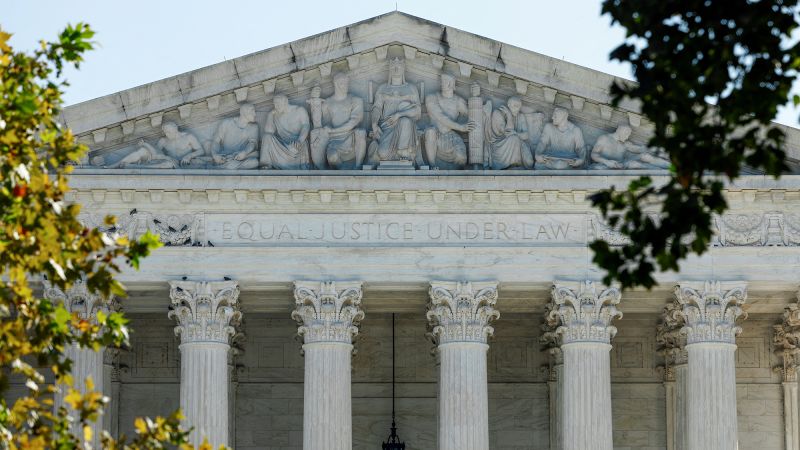
While much of the conversation centered around more traditional social media like Facebook, YouTube and Twitter/X, several Justices opened their thoughts up to how the laws could have a broader impact on companies like Uber and Etsy.
Conservative Justice Amy Coney Barrett said, “Florida’s law, so far as I can understand it, is very broad. We’re talking about the classic social media platforms, but it looks to me like it could cover Uber. It looks to me like it could cover Google’s search engine. Amazon Web Services. And all of those things would look very different.”
Liberal Justice Sonia Sotomayor observed that the Florida law “is so, so broad, it’s covering almost everything” on the internet, including Etsy listings and the website’s own recommendation engine.
Florida Solicitor General, Henry Whitaker stumbled a bit before being forced to acknowledge that the law likely would cover Etsy's services - "I’m not sure to what extent it actually would apply to Etsy. I guess it would apply somewhat, [because] people are uploading user-generated content in connection with the sale of goods.”
With Section 230 as it is currently applied and interpreted by the courts, corporations have very little incentive to do anything beyond Minimum Viable Compliance box checking exercises when they know they are legally insulated from liability and can afford to keep litigation tied up for years should anyone try to challenge the status quo.
But increasing use of LLMs and other AI technology to create description summaries and product highlights, alter seller-provided images and other content without their knowledge, and control search and discovery experiences for consumers could pose interesting legal questions about how far Section 230 protections stretch.
 Liz Morton
In those contexts, the AI generated content is not a verbatim usage of third party seller-provided information but rather new/distinct content created by LLMs or other technology the company has put in place between sellers and buyers on their platforms, which could potentially make the marketplace the publisher of that content and possibly liable for any resulting consumer harm - even if Section 230 is not abolished.
State-level legislative efforts to address consumer harm from fraud, counterfeits, and stolen items sold via online marketplaces have so far been largely unsuccessful as they bump up against federal Section 230 protections, leaving it up to Congress to tackle the issue and come up with a solution.
 Liz Morton
Of course, any efforts to reform or sunset Section 230 will face massive pushback from industry lobbyists, so it's unsurprising to see TechNet, a "national, bipartisan network of technology CEOs and senior executives" whose Executive Council now includes soon to be ex-Etsy CEO Josh Silverman, coming out swinging against the proposed bill.


Responding to the announcement, TechNet President and CEO Linda Moore said:
“Section 230 has been a cornerstone of the modern internet — enabling American innovation, supporting millions of jobs, and allowing businesses of all sizes to connect with customers, share ideas, and grow online. It has helped fuel the economic growth and global competitiveness that define the U.S. technology sector."
“Repealing Section 230 would create uncertainty, disproportionately harm entrepreneurs, and make it harder for startups and emerging companies to compete. A repeal would also have serious unintended consequences — fundamentally changing how people communicate online, reducing access to information, and making it more difficult to protect users, including children and vulnerable communities. We urge Congress to reject efforts to repeal Section 230 without a clear, workable alternative that protects consumers, preserves free speech, and ensures the United States remains the global leader in innovation.”
Interestingly, just days after this bill was introduced, Etsy has filed suit against the Cashmere & Camel Hair Manufacturers Institute, asking the Court to affirm Section 230 protections against false advertising claims for 3rd party marketplace seller listings.
 Liz Morton
In a Fox News opinion piece posted earlier this year, eBay's head of North America Criminal and Regulatory Investigations, Christian Hardman, urged Congress to pass the Combating Organized Retail Crime Act (CORCA) which would focus scrutiny on brick and mortar shoplifting while ignoring larger online fraud and digital theft problems that plague the marketplace.
 Liz Morton
Hardman says eBay's PROACT (Partnering with Retailers Offensively Against Crime and Theft) department works diligently with law enforcement to tackle Organized Retail Crime, but these efforts need additional help from lawmakers, conjuring up frightening images of smash and grab looting and offering a carefully crafted message aimed at only one specific type of Organized Retail Crime.
We’ve all seen the videos on our local news of shoplifters brazenly grabbing goods off store shelves, filling up garbage bags and running out of a store. As a result, it has become increasingly common to find locked plastic cases lining the aisles of our favorite stores, making it harder to grab a razor, medicine or even soap.
While waiting for an employee to dispense your razor is just a minor inconvenience – the costs of organized retail theft (ORC) are a much bigger deal. Hundreds of millions of dollars of inventory are lost to theft each year. To combat this growing problem, retailers are spending more on security, technology and insurance – costs that are all passed on to consumers...
...Retailers, law enforcement and online marketplaces, such as eBay where I work, must partner to find and implement a solution that makes organized retail crime a thing of the past....
...Our industry-leading initiative, Partnering with Retailers Offensively Against Crime and Theft (PROACT), facilitates cooperation and partnerships that enable more effective investigations and prosecutions of those suspected of retail crime. In 2023 alone, we helped prevent an estimated $50 million from being stolen at CVS locations in 2023 through PROACT.
This experience has shown us that we cannot solve the problem alone. Successfully stopping organized retail crime requires collaboration between e-commerce companies, retailers, law enforcement and even Congress. Law enforcement and prosecutors need the tools to go after the sophisticated criminal syndicates behind organized retail crime.
Fortunately, Iowa Republican Senator Chuck Grassley and Nevada Democrat Senator Catherine Cortez Masto introduced the Combating Organized Retail Crime Act (CORCA), to address the escalation in theft, fraud and other property crimes against retail stores and elements of the supply chain.
Keeping the focus on this narrow definition of Organized Retail Crime also conveniently helps divert attention from the massive amounts of digital fraud, theft, counterfeits and other illegal activity being funneled through the eBay marketplace while Hardman's PROACT turns a blind eye - with Section 230 as their shield from liability.
 Liz Morton
Importantly, it's not just the spectre of direct fines or lawsuits that has marketplaces clamoring to hold onto Section 230 protection at all costs - if that protection goes away, it could also expose just how much of their publicly reported Gross Merchandise Volume or Sales come from illegal activity, potentially impacting stock prices and leading to shareholder action and/or SEC investigations.
 Liz Morton
In the end, Hardman may be right that eBay and others need Congress to "help" in the fight against organized theft and crime - but it may not come in the form that they want if the Sunset Section 230 Act passes, finally forcing marketplaces to take accountability for cleaning up the massive amounts of fraud, counterfeit, stolen and illegal goods flooding their sites or pay the price in potential fines and liability lawsuits.