Whatnot Acquires Shaped As AI Push Expands Across Live Selling

Whatnot has acquired machine learning company Shaped as the livestream shopping platform looks to improve search, recommendations and personalization across its rapidly expanding marketplace.
Shaped builds real-time ranking systems used by marketplaces and content companies to determine which products, sellers or other content should be shown to each user.
Founder and CEO Tullie Murrell, a former Meta engineer, will join Whatnot with nearly a dozen engineers and researchers to form and lead a new applied AI research group. Financial terms of the deal were not disclosed.
Whatnot says the acquisition will initially focus on matching buyers with relevant live shows, sellers and products as inventory and activity change in real time.
That's a particularly difficult problem for a marketplace where shows can last hours or end within minutes, products may be listed and sold almost instantly, and thousands of viewer interactions constantly reshape demand.
Whatnot says its systems already process more than half a million hours of live video every week, along with millions of real-time interactions used to improve recommendations.
Cross-category buying has increased 170% year over year, while Whatnot added more than 35 categories last year and another 45 during the first half of 2026.
The Shaped acquisition comes as Whatnot is also trying to solve a basic limitation of live selling: most listings contain very little useful product data.
 Mackenna Huntley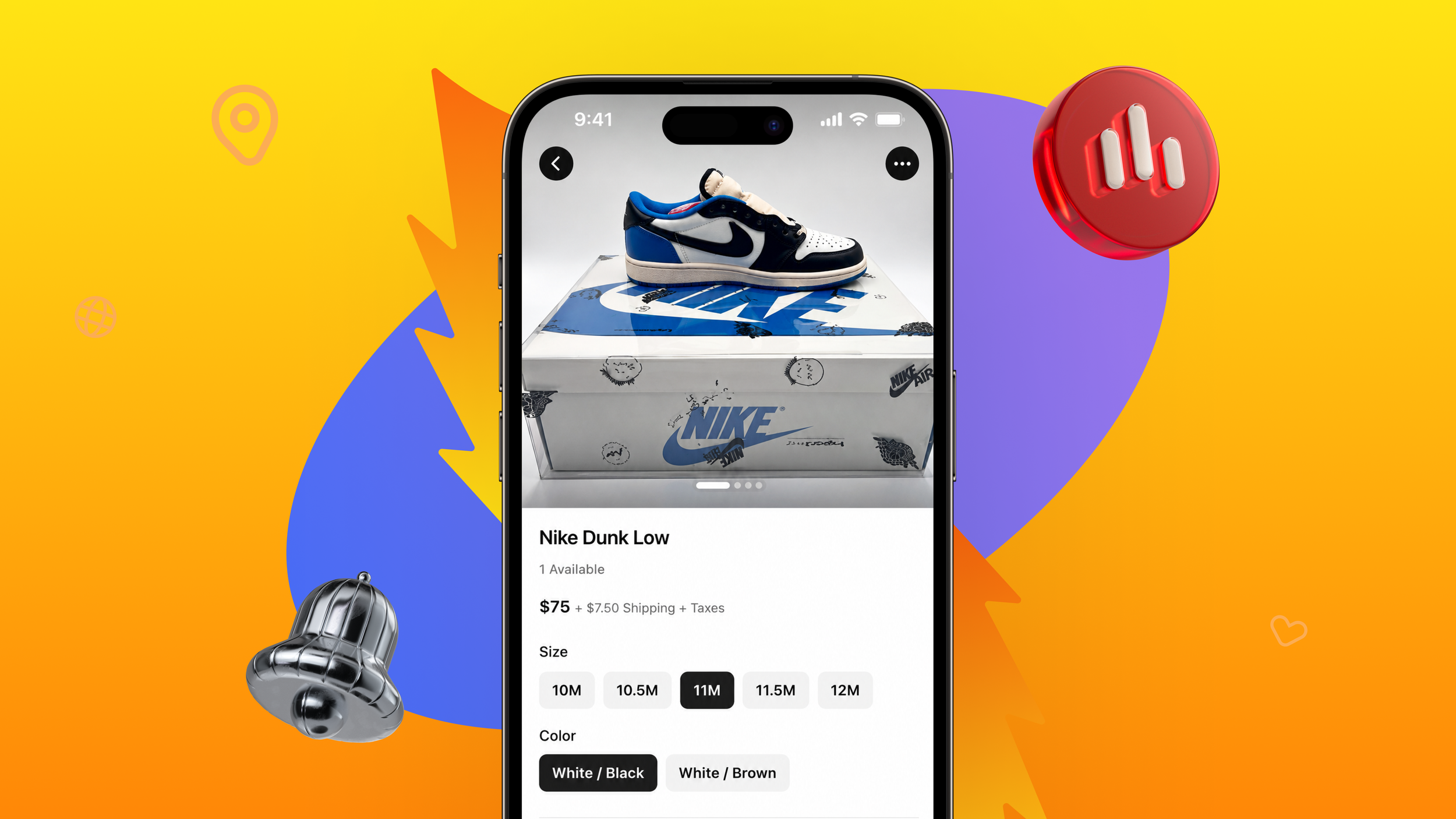
Whatnot grew to $8 billion in live sales in 2025 despite most listings relying on generic descriptions such as “item as shown,” “random pull” or “listen for size.”
That format lets sellers move quickly through inventory, saving an estimated eight million hours last year, but it limits search, recommendations, shipping accuracy and purchases made before or outside a live show.
Whatnot says 91% of new buyers made their first purchase through a non-generic listing, even though detailed listings represented only a small share of inventory.
Pre-bids have more than doubled over the last year, and orders with a pre-bid generate approximately 45% higher average order value. Generic listings often cannot support those purchases because buyers do not know what item will be offered.
The gap is especially notable in fashion, now Whatnot’s largest category by order volume but one that converts at roughly one-third the rate of sports cards and memorabilia.
Whatnot is responding with listing templates that allow sellers to create reusable product groups with attributes such as brand, size and color, then select the specific details while an item is running.
Those details can appear on screen during the auction and carry through to receipts, packing slips and shipping workflows.
The company says future AI features could use that data to suggest titles, categories, shipping profiles and pricing guidance based on previous sales and buyer behavior.
Whatnot is also developing native listing variants, allowing sellers to group sizes, colors or other options under one product instead of creating separate listings.
That work builds on Whatnot’s recent Shopify integration, which allows merchants to import products, variants and inventory while syncing orders and stock across both platforms as part of a broader effort to attract larger brands and merchants managing inventory across multiple sales channels.
 Liz Morton
Whatnot is also working on an inventory API for warehouse management systems and third-party logistics providers, along with dimensional shipping profiles and an AI-powered drop-off scanner designed to verify package weight and dimensions.
The company says sellers have reduced carrier adjustment costs by as much as 83% after replacing generic shipping profiles with more accurate product information.
Another recent feature, Top Trends, uses approximately 900,000 daily searches to show sellers what buyers are looking for across the marketplace.
Sellers can view popular searches and categories along with recommendations based on their own activity, giving them a more immediate view of demand.
Interestingly, Whatnot is also advising sellers against using AI-generated show thumbnails, saying authentic photos of actual inventory generally perform better with buyers.
 Mackenna Huntley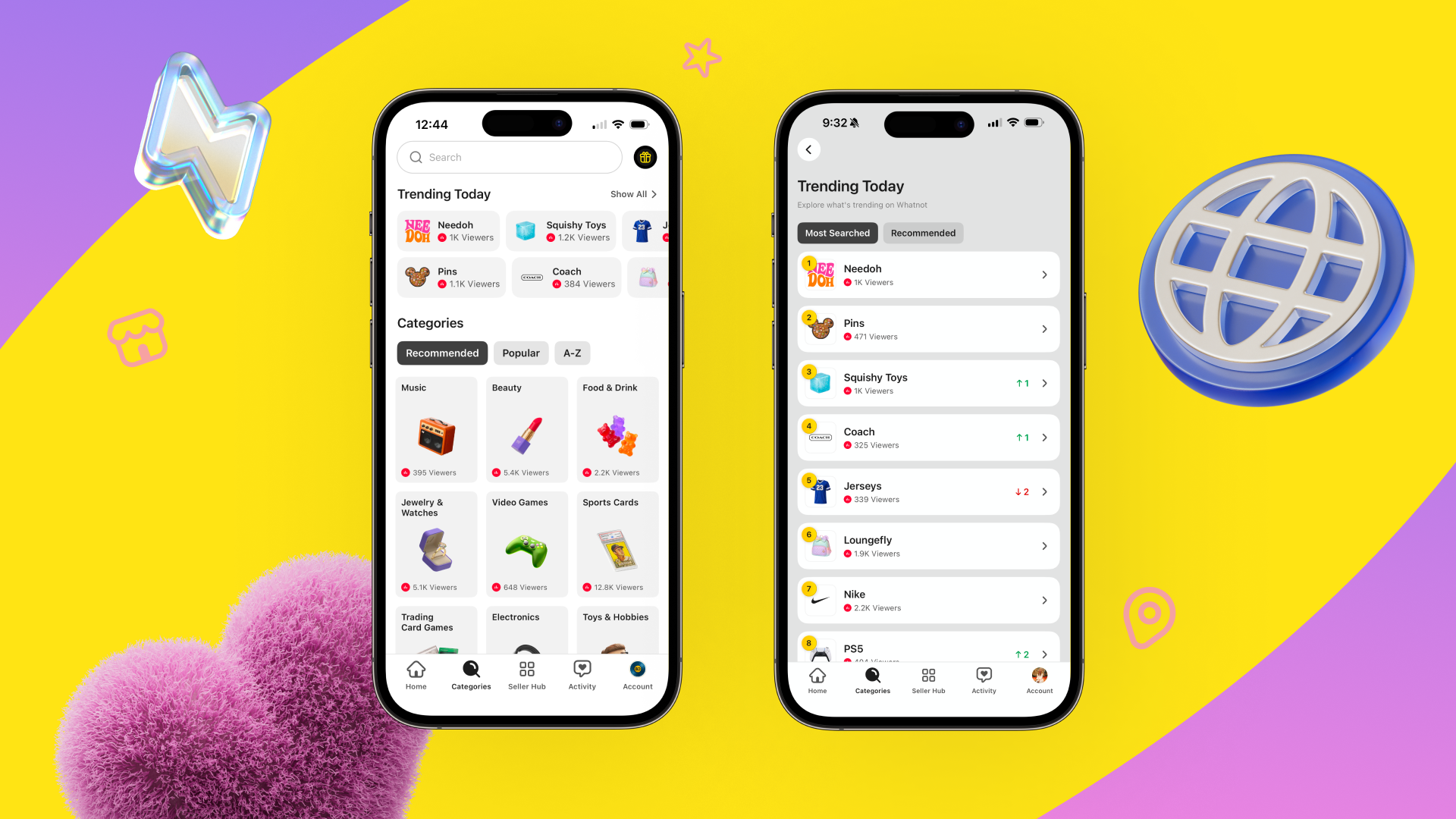
The acquisition also provides an interesting comparison with eBay’s approach to AI, live shopping and marketplace investments.
eBay has continued expanding eBay Live, recently adding livestream events to the eBay Partner Network and introducing new tracking fields allowing affiliates to earn commissions for driving viewers and sales to live shows.
eBay is adding live commerce to a marketplace built around structured listings. Whatnot is adding structured ecommerce tools to a marketplace built around live video.
Recent eBay Ventures investments also show interest in technology that could improve authentication, sourcing and resale inventory.
 Liz Morton
Alitheon uses ordinary photographs to identify individual objects through unique surface characteristics, potentially supporting authentication without serial numbers or physical tags.
Fleek uses smartphone images and automation to help grade and price secondhand clothing moving between wholesalers and resellers, while Whering allows consumers to catalog what they own, potentially providing insight into when items may be ready to return to the resale market.
Those investments give eBay exposure to technology across the resale cycle while Whatnot’s Shaped acquisition is more directly tied to its own marketplace operations, bringing the team and technology in-house to improve real-time ranking and recommendations.
As Whatnot adds more structure and automation, sellers may gain better tools for reaching buyers while becoming more dependent on systems deciding which shows, products and accounts get surfaced.
On a platform built around live interaction, visibility may increasingly be determined before a seller ever goes live.