A Seller’s Guide To Speaking Up: How To Report eBay’s New Ad Policies To The FTC & State AGs

With eBay’s new ad attribution rules set to reshape Promoted Listings on the platform, sellers don’t have to stay silent. Here’s how you can bring attention to potentially misleading and harmful business practices to proactively advocate for change with effective, impactful reports to consumer protection agencies.
Sellers have been taking to the eBay community forum and social media to express their outrage over Promoted Listings attribution policies slated to take effect in January which will massively expand the number of sales on which eBay will collect ad fees, without offering any significant increase in sales or return on investment.
 Liz Morton
eBay staff have also been appearing in Seller Circle events and YouTube interviews, offering sellers the opportunity to ask questions and provide feedback about the new policy.
 Liz Morton
Sellers should absolutely take these opportunities to engage directly with the company, but historically, eBay has been much more likely to be swayed by public efforts to advocate for change outside of corporate controlled "walled-garden" forums and events.
While posting on social media and making YouTube videos can be a great way to bring attention to these policy changes, my number one suggestion to sellers who are looking for ways to push back against eBay's ad attribution updates is to report their concerns to the Federal Trade Commission and their state Attorney General's office.
These agencies are tasked with enforcing consumer protection laws and monitoring online marketplaces like eBay for practices that might harm sellers or buyers, such as misleading advertising, unfair fees, or policy changes that reduce seller rights.
However, their ability to take action depends deeply on reports from individuals to help them spot harmful trends, investigate patterns, understand and assess impact, and enforce rules.
Most sellers are not lawyers or experts on what constitutes deceptive, consumer harming or unfair business practices - and most lawyers and FTC commissioners are not experts on all the nuances of how eBay ads work or how they impact sellers and consumers.
But sellers are experts on how these changes will impact their businesses and can provide essential data and insights into issues that regulators may not otherwise catch - every report adds up and every voice matters.
To file a report with the Federal Trade Commission, go to:
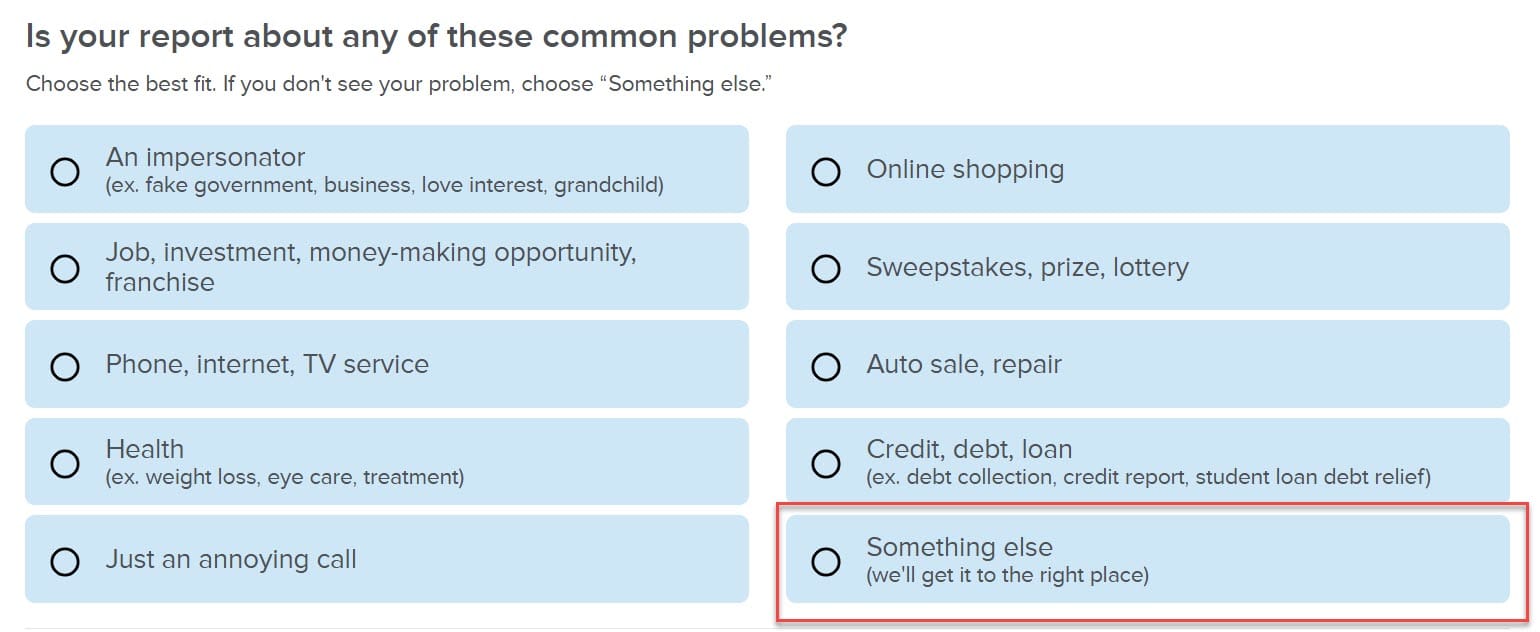
Don't be thrown off by the form and website mentioning fraud - you can select "something else" as the reason for your report and then give details about why you believe eBay's ad practices should be investigated for potentially misleading or bad business practices.
Sellers can also contact their state Attorney General's offices and/or consumer protection divisions - if you don't know who to contact for your specific state, you can find that information:
Pro Tips For Reporting eBay's Ad Practices
-
You are protected: The FTC does not share identities of those who file reports and you can request confidentiality in reports to AG's offices as well - tell them "I have an active eBay seller account” and request anonymity if you have concerns about retaliation.
-
Stay calm and factual: Regulators notice transparency issues before they notice outrage. Provide as much detailed data as possible about the estimated impact these changes will have on your specific business.
-
You don't need to be a lawyer or expert in applicable laws or regulations: The goal of your report is simply to inform and educate these agencies about how eBay advertising works/what impact it has on sellers and let them take the ball from there.
-
Support and encourage fellow sellers: Encourage other sellers who will be affected by these changes to also file their own reports and share examples to help them get started!
On that last point, a Value Added Resource reader very kindly sent copies of letters they have written to the FTC and their state AG about this issue, with permission to share them publicly for other sellers to use as an example.
Disclaimer: these letters are provided for educational, informational purposes only and do not constitute legal or financial advice. Sellers should personalize them to fit their specific business circumstances and are solely responsible for the content of any report they may submit.
You can download the full letters here:
And here are a few excerpts that may be particularly helpful for sellers looking to write their own reports.
First, this seller provided a summary of the changes that are happening and included links with more information - while I appreciate the link to VAR, you could also use links to eBay's official announcements and policy pages, YouTube videos from sellers talking about the new policy, community forum or social media posts etc.
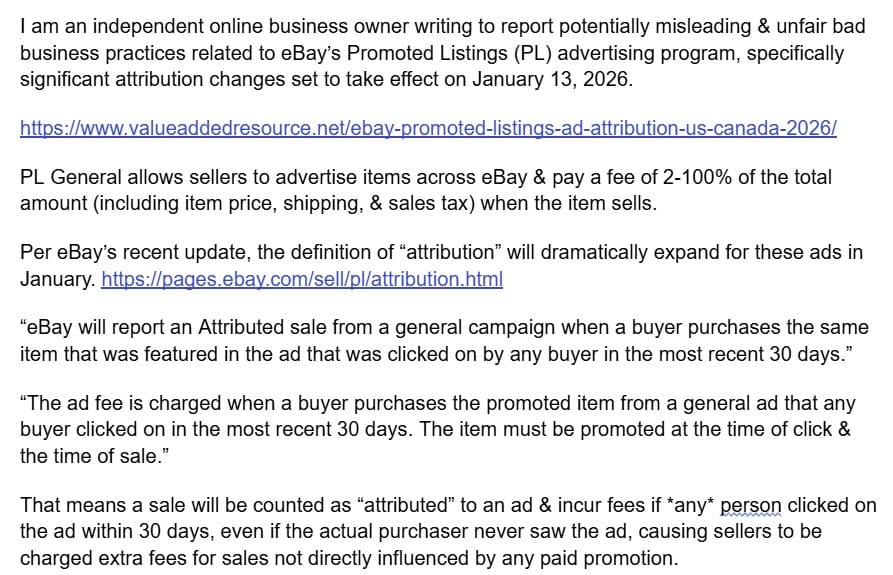
The seller also gave specific examples of parts of the policy they believe may be misleading.
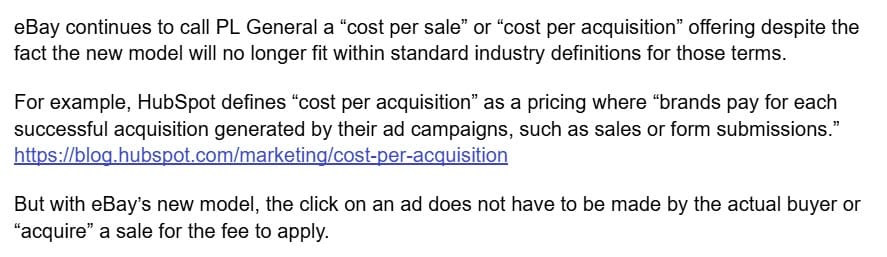
This letter was written before the recent Seller Circle event where eBay candidly admitted that their justification for the new policy is that clicks on Promoted Listing ads also impact Organic performance due to eBay's black box ranking algorithms.
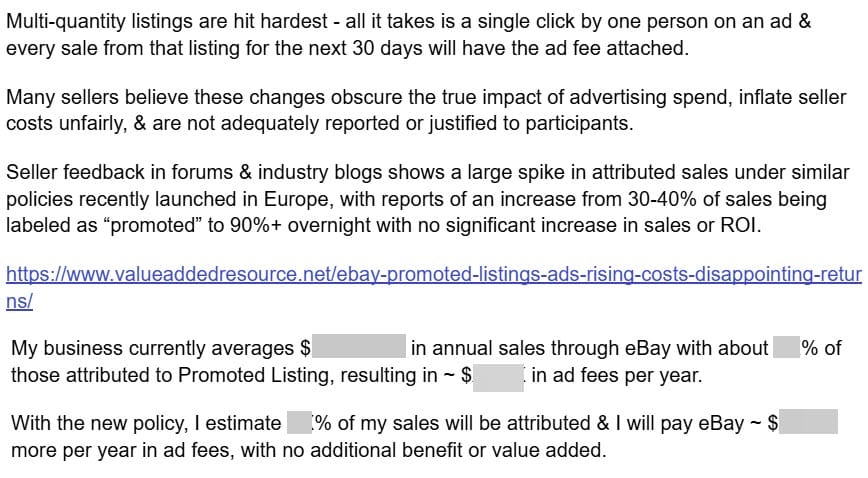
Anyone writing a similar letter today may also want to add any concerns they may have about potential algorithmic manipulation to their report, as well as often cited questions about how eBay is planning to protect sellers from competitors maliciously clicking on their ads to trigger ad attribution.
The seller then went on to explain what the estimated impact will be both generally for most sellers and specifically for their own business.
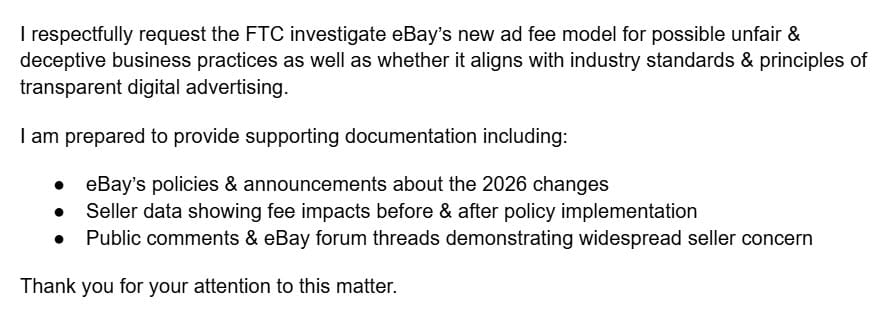
And finally, they closed with a clear and direct request for specific action - investigating eBay's ad practices - and an offer to provide additional information that may be helpful to an investigation.
For the report to their Attorney General's office, they repurposed much of the same letter but made certain sections more State specific.
As part of the section on potential impact to sellers, they added a few sentences about how this new policy will likely drive up prices on the platform as sellers bake in additional margin to cover not just the ad fees, but also the Final Value Fees that eBay will take on the increased product price plus shipping and tax.
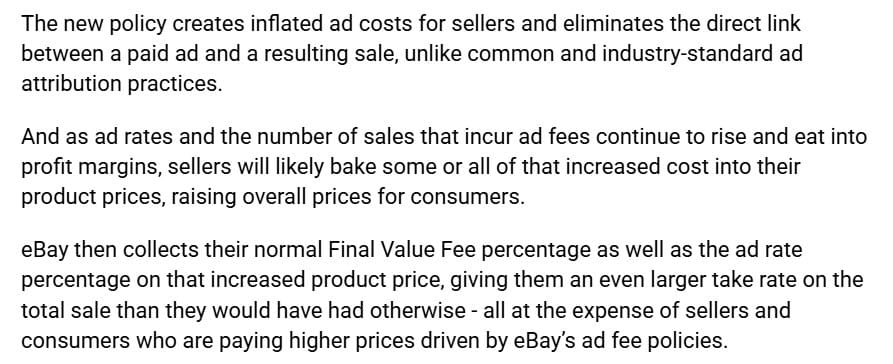
That's a smart move since the Attorney General's office is likely to be interested in how these new policies may harm consumers as well as sellers.
Sellers in Washington and Texas may also want to include something about how they will face rising costs of doing business from these changes now that the selling and advertising fees they pay to eBay may be subject to sales tax.
 Liz Morton
Sellers could also point out the obvious self-preferencing and double standards in play with the differences between how eBay handles attribution for their Ambassador affiliate program compared to Promoted Listings campaigns.
 Liz Morton
In addition to providing the same detailed information about estimated impacts as they had in their FTC letter, the seller also included their concerns about transparency and how the new model undermines their ability to predict costs for their small business.
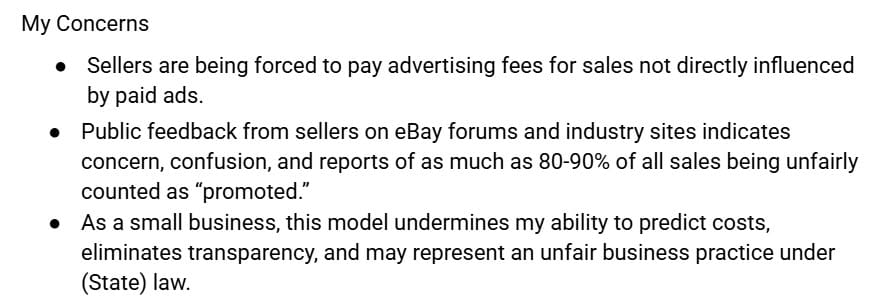
And finally, their closing includes the same direct ask for an investigation but also adds in a request for guidance for how affected sellers in their state can take action or pursue remedies to prevent unfair charges.
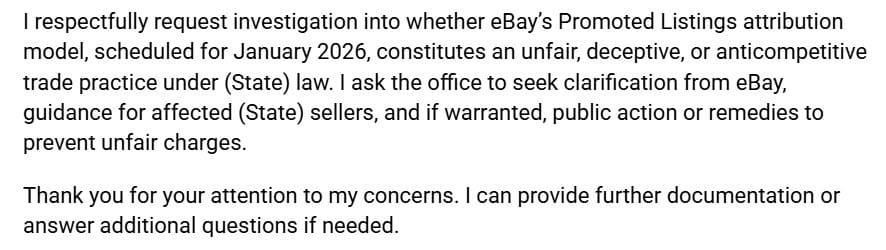
These same letters can also be repurposed for outreach to your state and federal political representatives, small business associations, or submitted as letters to the editor or sent to journalists and media outlets as a tip or story idea.
Sellers in the UK, Europe, and Australia who already have this new attribution model can also tweak these letters to send to whatever the appropriate trading standards or consumer protection agencies are in their countries.
Thanks again to this seller for being willing to share an example for others to follow and remember - the more sellers who file reports, the more reasons these agencies will have to possibly investigate and take action.
Beyond that, I'm currently working on other potential actions sellers can take to pushback against eBay's ad attribution overreach.
If you are an active eBay seller who is willing to go on the record about how these changes will impact your business or you wish to send in your own example as an open letter/letter to the editor, I'd love to speak with you! Contact VAR