Mercari Expands Japan Authentication To US, Taiwan Buyers Through Global App

Mercari is bringing its Japanese authentication service to US buyers through the Global App, adding both optional and mandatory authenticity checks for trading cards, sneakers and luxury goods as cross-border business continues to expand.
The company announced October 27 that the service began rolling out to buyers in the US and Taiwan on October 21, with availability expected to expand through November.
Mercari is making authentication mandatory at no additional charge for qualifying purchases of $300 or more, while buyers of lower-priced eligible items can opt in for $11.90 per trading card, $12.90 for sneakers or $29.90 for fashion and luxury goods.
The program extends Mercari's existing Japanese authentication service, first introduced in March 2024, to international shoppers. Items are sent to an authentication facility in Japan for physical inspection before being shipped overseas, with the additional review typically adding three to five business days to delivery. Purchases that fail authentication or cannot be reviewed are automatically canceled and refunded.
There are limitations to which products qualify, particularly for collectibles. Mercari's eligibility policy allows certain raw and graded trading cards but excludes sealed packs and boxes, as well as cards graded by companies outside its approved list. Fashion and sneaker authentication is also limited to eligible brands and items that meet the company's inspection requirements.
Mercari explicitly states that passing authentication does not guarantee an item's authenticity, despite charging buyers for the service or requiring it on qualifying higher-priced purchases. Independent authenticators examine products using category-specific criteria, including materials, logos, printing and other identifying characteristics, but Mercari says the reviews involve individual judgment and authentication decisions are ultimately made at the company's discretion.
Buyers who receive an item that passed authentication but later believe it is counterfeit can still submit a claim under Mercari's Refund Policy, which allows refunds for items determined to be counterfeit through Mercari's review. However, claims generally must be submitted within 14 calendar days of delivery, with supporting evidence required, and Mercari retains discretion over whether the claim qualifies for a refund.
The authentication service is separate from the basic item inspection already included with Mercari Japan Buyer Protection, which checks whether a product generally matches its listing without specifically verifying authenticity. Unlike the existing Mercari Authenticate program on the domestic US marketplace, which uses third-party reviewers to examine photos submitted by sellers, the Global App service involves physical inspection of items in Japan before international shipping.
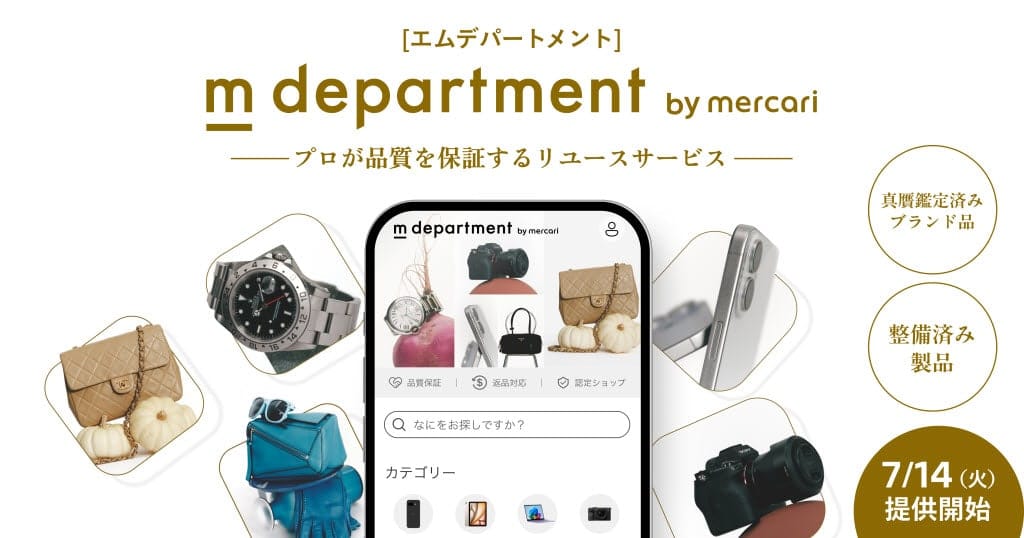
The international rollout follows Mercari's July launch of m department in Japan, a separate marketplace offering authenticated luxury goods and refurbished electronics from approved business sellers, with additional warranties and return options.
Research Mercari conducted ahead of that launch found approximately 70% of respondents had concerns about buying secondhand luxury goods or electronics, with counterfeit risk among the leading concerns for luxury purchases.
 Liz Morton
Mercari partnered with BEENOS in 2024 to make Japanese inventory available to US buyers through its existing marketplace before launching a standalone Mercari Global App in Taiwan and Hong Kong in September 2025.
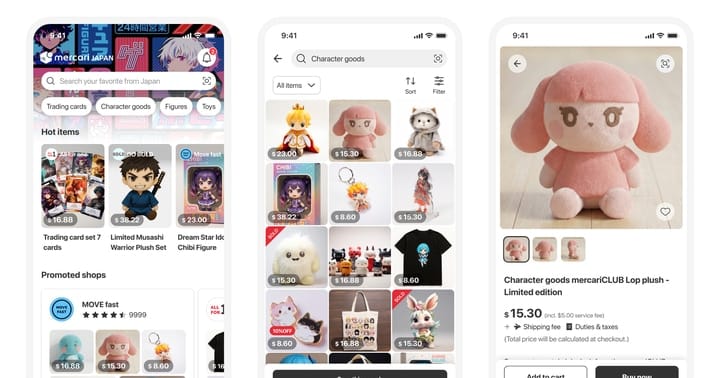
The app expanded to the US in June 2026, giving American buyers a separate way to shop listings from Mercari and Mercari Shops in Japan, with AI translation, local currency payments and Mercari handling international payment, shipping, tracking and inspection.
 Liz Morton
Cross-border GMV reached ¥112.2 billion for the fiscal year ended June 2026, approximately 19 times the amount recorded four years earlier, with entertainment and hobby categories helping drive international demand. Those figures cover Mercari's broader cross-border business, including purchases through partner services, rather than sales made exclusively through the Global App.
The Global App also surpassed 1 million cumulative registrations as of August 28, although Mercari has not disclosed how many represent active buyers or US users. Mercari also confirmed plans to bring auctions to the Global App, after introducing the feature in Japan in January 2025.
 Liz Morton

Mercari's existing US marketplace operates separately from the Global App, and the company has not announced plans to make US seller inventory available to international buyers through the app.