Are Your eBay Images Being Altered By AI Without Your Knowledge?

Sellers left eBay Open 2025 with more questions than answers after discovering that the company may be quietly using AI to alter their product images. The revelation, shared during the “Search Best Practices from eBay & Google” session, caught many by surprise and sparked fresh concerns about transparency, control, and how much say sellers really have over their own listings.
 Liz Morton
Senior Manager eBay Advertising, Alan Feder, took a question from an audience member asking how they could still protect their intellectual property rights and prevent theft or misuse of their images while avoiding being blocked in external search since Google does not accept images with watermarks.
Not only did his answer not address the actual question, it stunned sellers who had no idea their images might be being altered using AI without notice or disclosure, presenting potential IP violations and Item Not As Described issues if the altered image doesn't exactly and precisely represent the actual item being sold.
We're actually trying to leverage some AI technology between both Google and eBay to say like well if you guys submitted a bunch of pictures with watermarks, we don't want to go back and ask you to correct them, can we correct them ourselves? We keep the watermark version on eBay and then we have a non-watermarked version that we send to Google, so that doesn't get rejected.
So we're trying to mitigate that, but it's absolutely a huge issue with watermarks, logos, text, brand names...anything that's not a picture of the item just don't put on there.
Attempts to get further clarification on the subject from eBay had not been successful until yesterday, when CEO Jamie Iannone quietly confirmed they do in fact use AI to alter images for external search and offsite ads while speaking at Goldman Sachs Communacopia + Technology Conference 2025.
 Liz Morton
When asked about ads, Iannone said (emphasis mine):
We have the original format we launched ten years ago—promoted listings general, our CPA continues to be our largest contributor to growth. We’re leaning into new formats like promoted stores and promoted offsite, helping drive new growth.
It's another area where we're able to leverage AI to drive the experience. For example, we're using AI in recommendations and search technologies to drive more relevant listings.
We're able to use it to actually change images for promoted offsite, putting more compelling and compliant images out there to help our sellers promote offsite - buying ads on third parties like Google through eBay - because they're able to leverage all our AI expertise.
Watermarks on photos have been a contentious issue on the platform over the years, with eBay's official Picture Policy page explicitly prohibiting the practice.
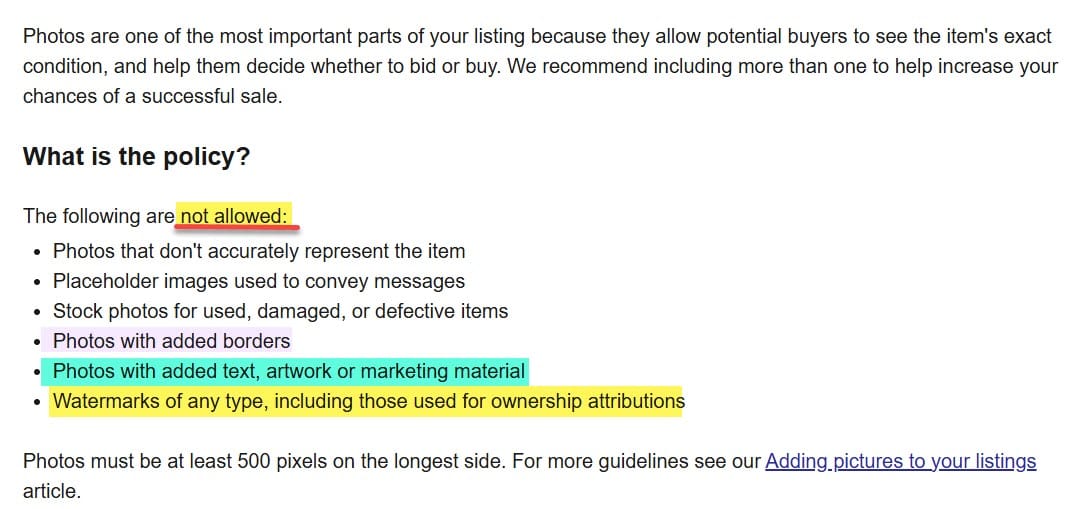
However, when eBay tried to enforce that policy in 2018, they were quickly met with massive backlash from sellers who said it would be detrimental to their businesses to have to edit all their images to remove existing watermarks, so eBay backed down and said while it was staying on the policy page as an official "recommendation", compliance would not be forced at that time.
Watermark Removal Policy Enforcement Update
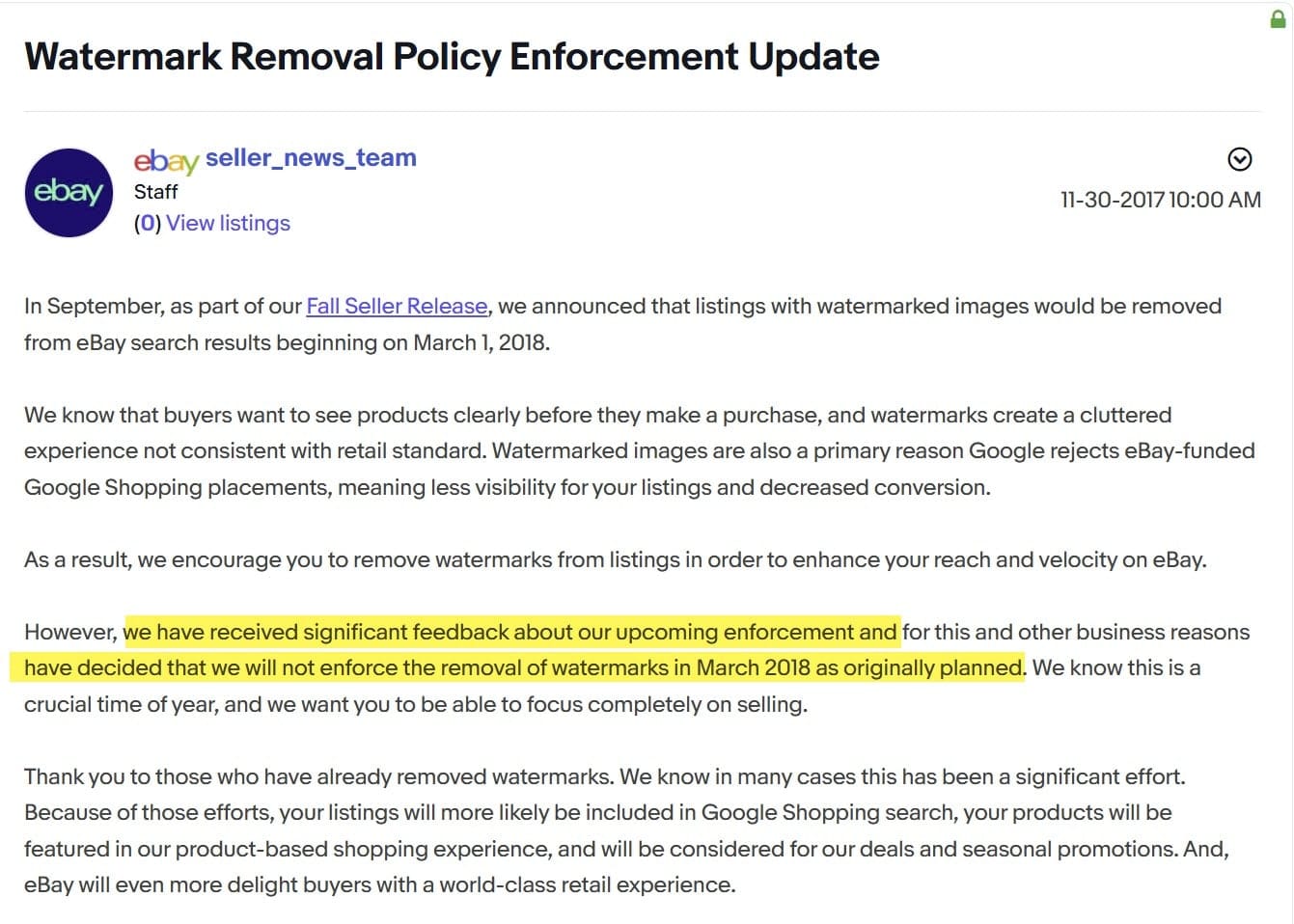
What that announcement doesn't say is the "other business reasons" they cited for stalling enforcement was that most of the pushback at that time came from Motors Parts and Accessories sellers, which is one of eBay's top categories bringing in over $10B in GMV every year - so they couldn't risk chasing those sellers away by enforcing this new photo watermark mandate.
So it sounds like eBay has simply decided to give up the fight on their own site while trying to "fix" the issue to comply with Google requirements for external search and ad placements.
Just to test it out, I found an item that has a watermark on the image on eBay, but no watermark when that eBay listing is shown on Google.
We can see this item has all of the seller created watermarking and added text still visible on the item page.
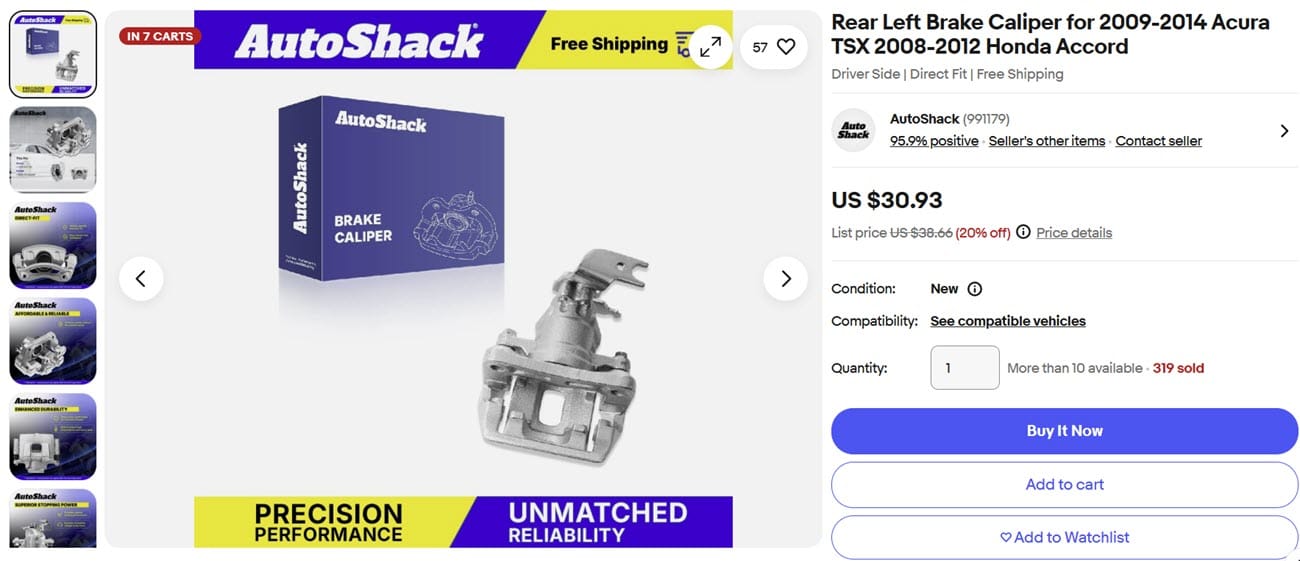
And it's also still visible within the onsite eBay search results.
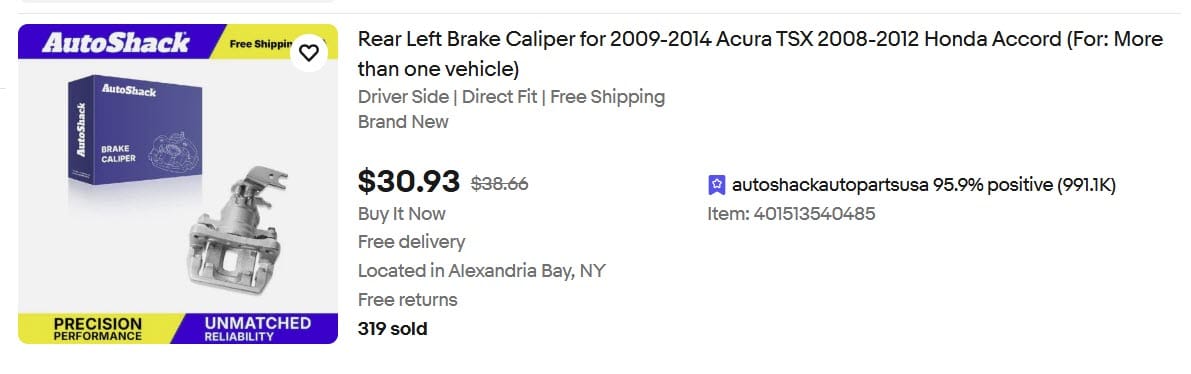
But if you find that same exact listing shown in Google Shopping, it does not include that part of the picture.
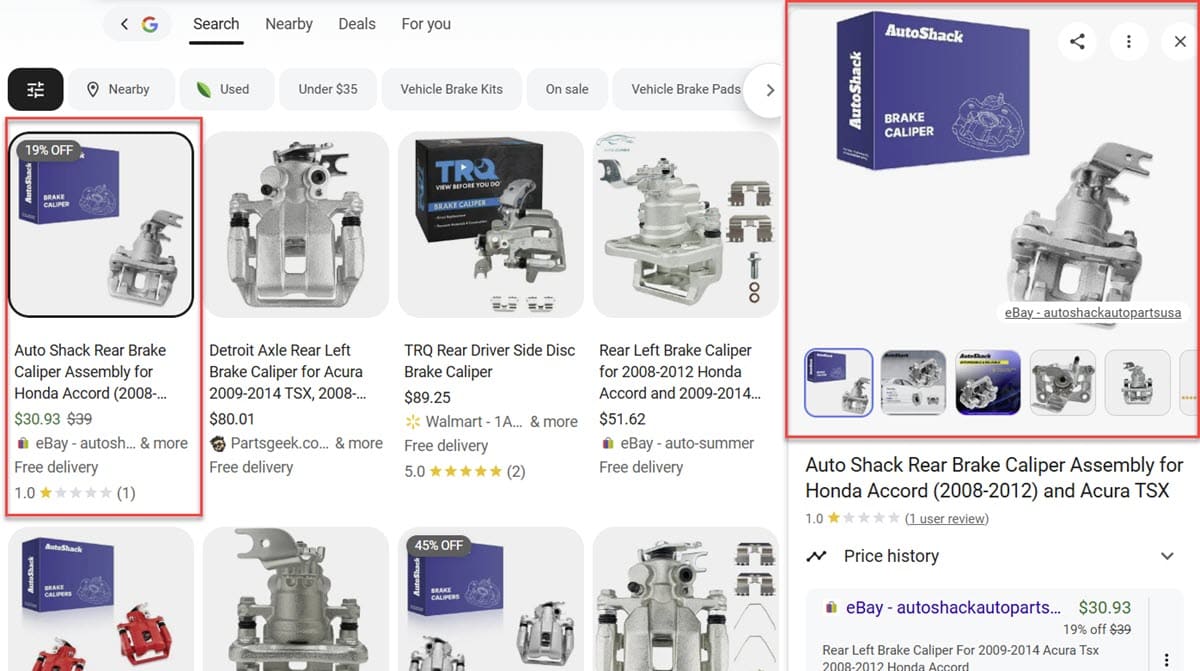
At first I thought maybe they just cropped the image to remove the watermarking and text above and below the product, but comparing them side by side shows other changes - like the shadow from the box in the original image that is not shown in the Google image.

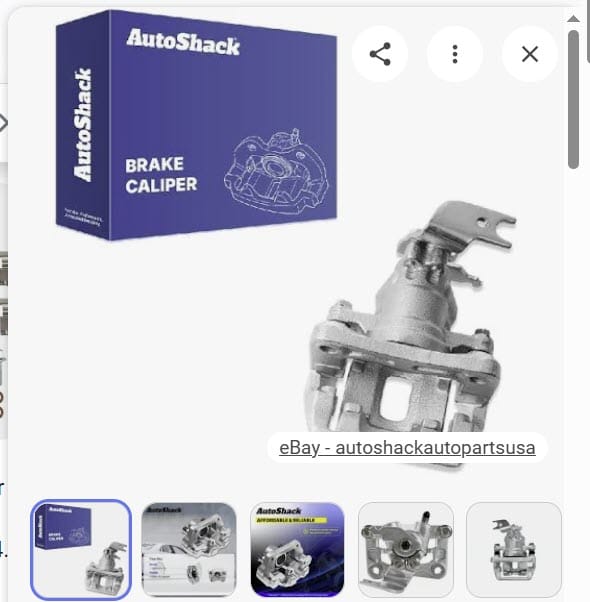
eBay Image vs Google Image
While it's impossible to know if eBay used AI to clean up the image, it's at least very clear that they have edited it and that the image being shown on Google is not the exact image that was provided by the seller when creating the listing.
The differences in this example are so minor that it would likely not cause an issue, but that's little comfort to sellers who will understandably be concerned about the possibility of not as described claims or negative feedback if the differences are ever more significant.
And those concerns are bound to be even greater as eBay is increasingly using AI to alter seller-provided information in ways that sellers never asked for and may not even be aware is happening - like AI product highlights description summaries.
 Liz Morton
On the third day of eBay Open, Product Marketing Manager and Seller Advocate Chuck Van Pelt and Product Marketing Manager Jonathan Chard conducted a seller feedback session about AI Tools, so I took the opportunity to ask: will eBay protect sellers from Not As Described Claims in situations where eBay.AI has generated and displayed incorrect information to buyers through no fault of the seller?
Chuck didn't have a specific response but acknowledged eBay will likely need to have an official policy for this in the future if it becomes an issue and for now, sellers who believe they are experiencing negative impacts from eBay AI should reach out with details of the specific situation.
I don't know what our official policy is on these AI descriptions and whether they're accurate or not...what I would suggest is if you have a dispute, follow the channels that we have in Seller Help to engage with us and explain the problem.
It's not been my experience, I've not heard from a lot of sellers that it's been a problem. If it becomes a bigger issue and we see it more, I think we'll probably have to come out with some official statement and the reason I'm hesitant to answer is because I just don't have an official answer for you and I don't want to speak out of turn.
Unfortunately, putting the onus on sellers to report problems is not likely to address the issue, since again, many sellers may not even be aware that eBay is showing AI generated summaries, feature highlights or altered images in place of or in higher visibility areas than the seller-provided details.
And even if they are generally aware that eBay could be showing buyers AI generated content, that content may display differently for different users at different times since part of the goal of using AI is to try to optimize and personalize the experience for the specific user.
That means sellers likely won't be able to make a direct connection between any particular claim or negative feedback, or provide proof to eBay that the AI generated content was incorrect - unless they happen to get lucky and catch it themselves or the buyer is able and willing to provide confirmation the information they viewed said it was generated by eBay AI.
Unfortunately, for images in external Google placements specifically, it does not appear that eBay puts any kind of disclaimer alerting the potential buyer that the image shown on Google has been edited at all (whether by AI or not), which also raises significant consumer protection and liability concerns in addition to seller concerns about claims and feedback.
From a legal perspective, eBay is likely covered by the vague language which grants them certain rights to listing content, including but not limited to this section of the User Agreement which states:
"Content that violates any of eBay's policies may be modified, obfuscated, or deleted at eBay's sole discretion."
That sheds even more light on why eBay has kept the policy page prohibiting watermarks active despite previous announcements they would not be enforcing it - as long as it's still officially on the books, it provides CYA for if/when they decide to exercise that User Agreement clause to modify, obfuscate, or delete content.
But just because they may be legally in the clear, that doesn't mean altering seller images to remove watermarks without providing explicit and direct notice is right, ethical or in line with eBay's Business Code of Conduct or "Responsible AI Principles" published in 2024, laying out accountability policies the company was committed to adhering to as they develop and deploy this new technology.
 Liz Morton
One of the five key pillars of this AI responsibility pledge is Transparency:
Provide users with transparency into our use of AI
Recent classes of AI technologies, such as Generative AI, make it difficult to understand the reasoning behind an AI system’s output. eBay strives to be transparent to end users about its use of AI.
In some cases, we accomplish this by disclosing information about the type of AI being used within the experience itself, and in other cases, through broader disclosure of our use of AI generally, based on the stage of its lifecycle.
Our transparency approaches will also strive to communicate most effectively given the role of the individuals interacting with or using the AI system.
Given the fact that eBay does not proactively disclose to either sellers or buyers that the images shown on Google may be altered, it would be difficult to give them anything but a failing grade on that point.
If eBay wants users to believe they take AI Responsibility seriously, they need to provide clear notice to buyers and sellers when images and other listing data has has been edited, summarized or altered in any way, along with transparent guidance and processes to report when/if AI generated or altered content contains errors or inaccuracies.