eBay’s New “Finances Copilot” AI Shows Promise But Stumbles on Real Seller Questions

eBay rolls out Finances Copilot, an AI chat feature to answer seller's questions about holds, fees, payouts, and earnings - here's what happened when one seller took it for a test drive.
The chatbot was first demoed at eBay Open 2025, promising to give sellers the ability to customize natural language queries to customize data by time period, order type, and buyer region for instant answers to financial questions.
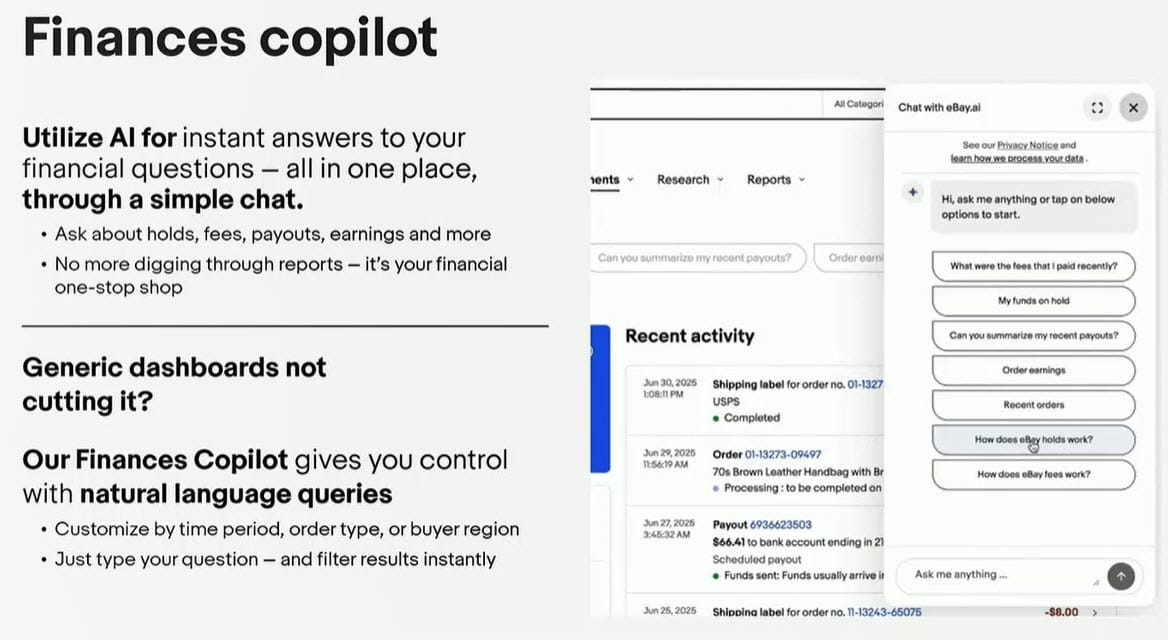
Now Finances Copilot is coming out of beta testing and rolling out to more sellers, with Product Manager Soumya Chanduri providing more details in the recent Stores and AI Seller Webinar.
Note: eBay Finances Copilot is unrelated to Microsoft Copilot - it's an internally developed AI tool created by eBay that just so happens to have a name that makes it easy to confuse with other popular AI products.
A Value Added Resource reader who has access to Finances Copilot was kind enough to offer a glimpse into how it works - here's what testing showed.
First, once your account is enabled, you'll see "Ask eBay.ai" icons showing on the summary page under the Payments tab in Seller Hub along with some suggestions you can click on to get the conversation started.
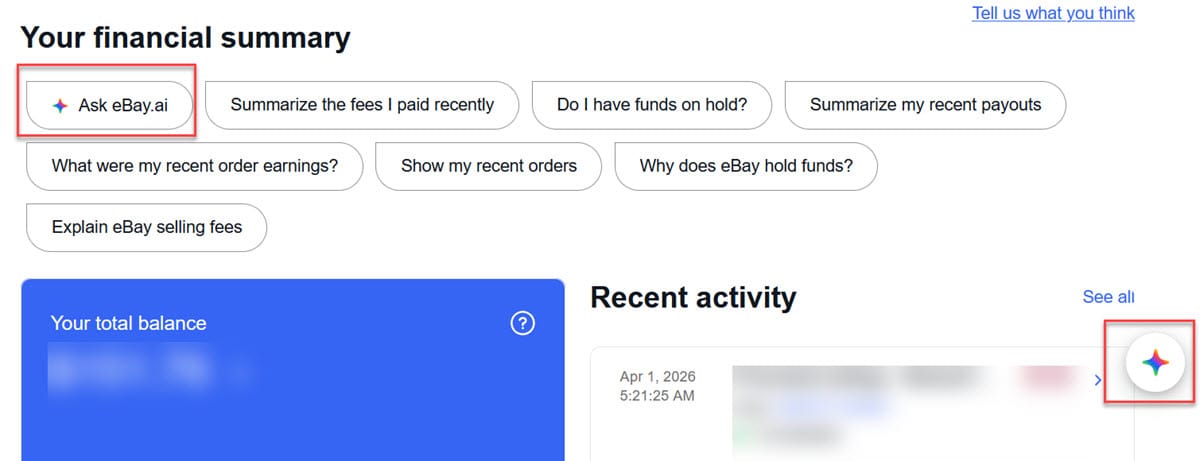
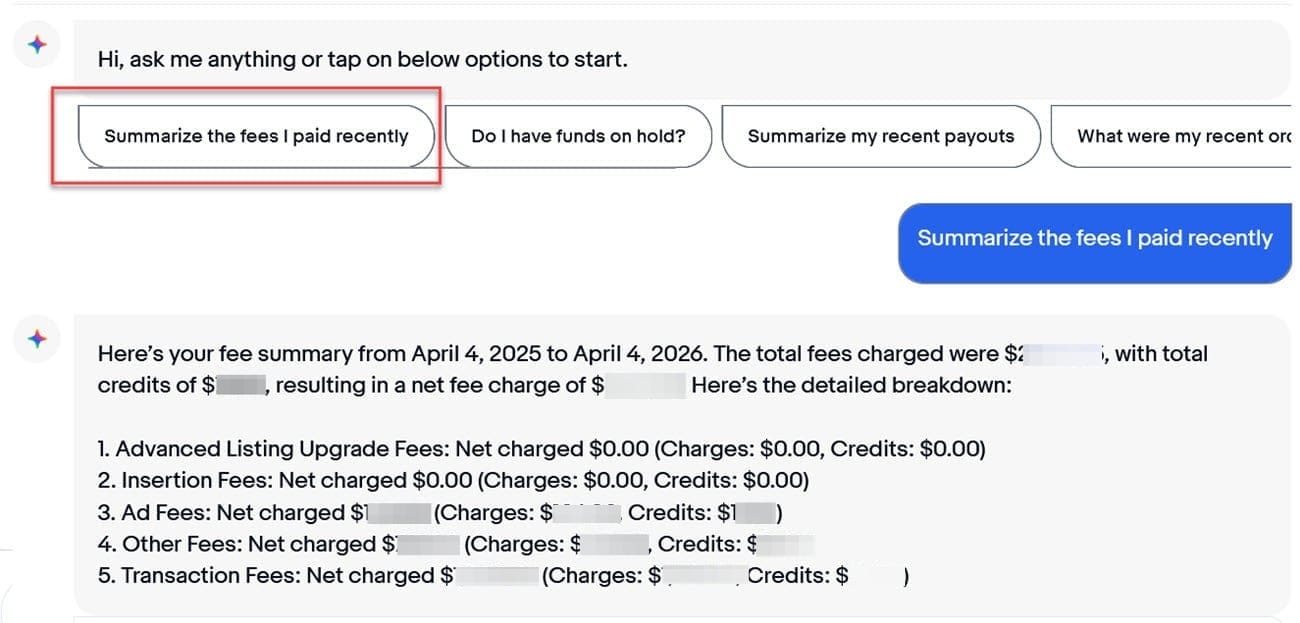
The test started with some of the suggested prompts and while the data was accurate for this account, sellers may have a different definition of "recently" than eBay - by default apparently "recent" means the last year.
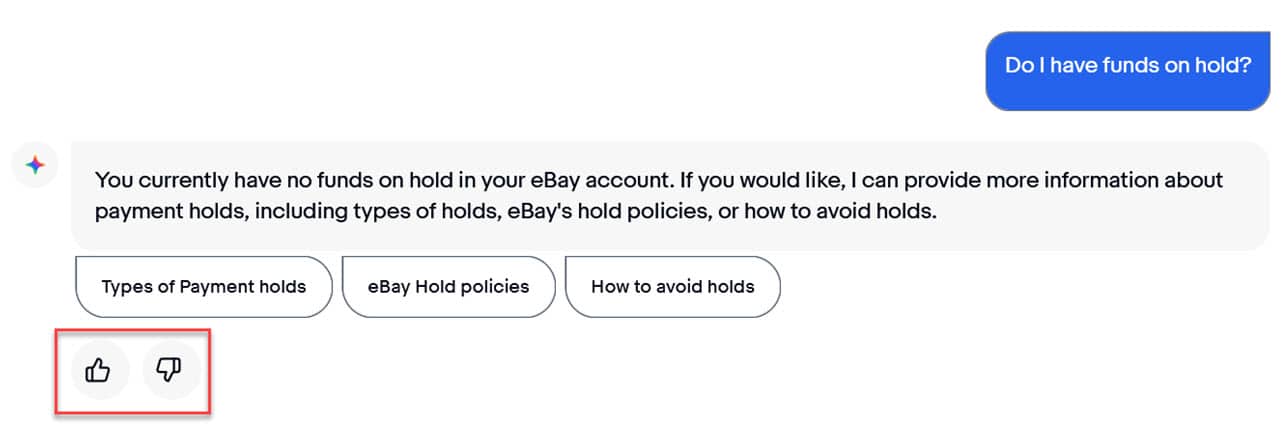
Sellers can also give eBay in chat feedback on the AI generated information by selecting a thumbs up or down on each answer.
Unfortunately, the test quickly showed Finances Copilot's limitations once the seller started asking their own questions rather than selecting eBay's default suggestions.
The seller wanted to know if eBay.ai could help them to look at how changes to Promoted Listings General attribution policies that took effect in January 2026 might have affected how much they are paying in ad fees.
So they asked what percentage of orders had incurred ad fees since the new policy took effect - but Finances Copilot said it couldn't provide that information and offered to provide a general summary of ad fees instead.
When the seller agreed and asked for the general summary that had been offered, Finances Copilot's answer said "here's a summary" without actually providing any of the data.
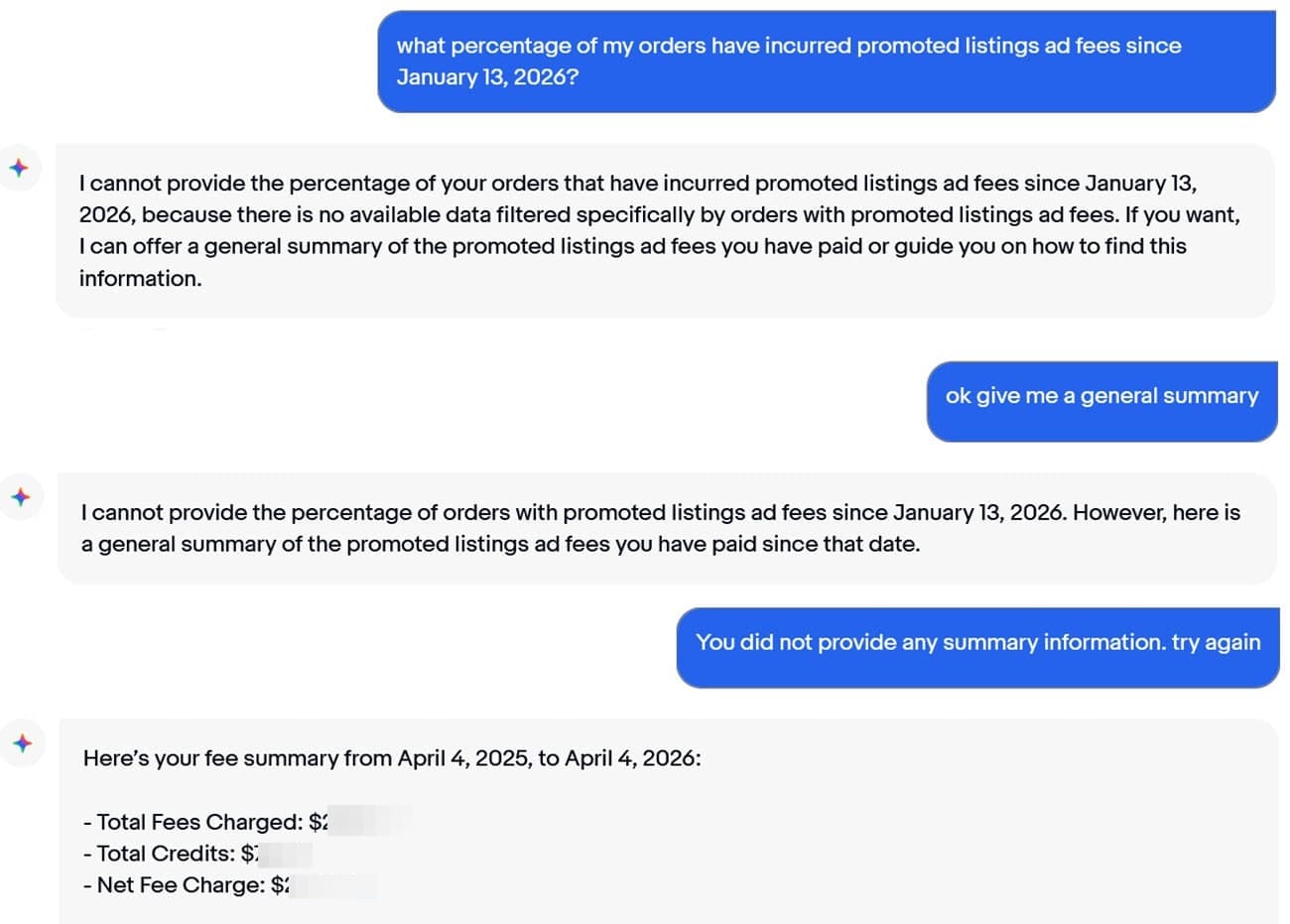
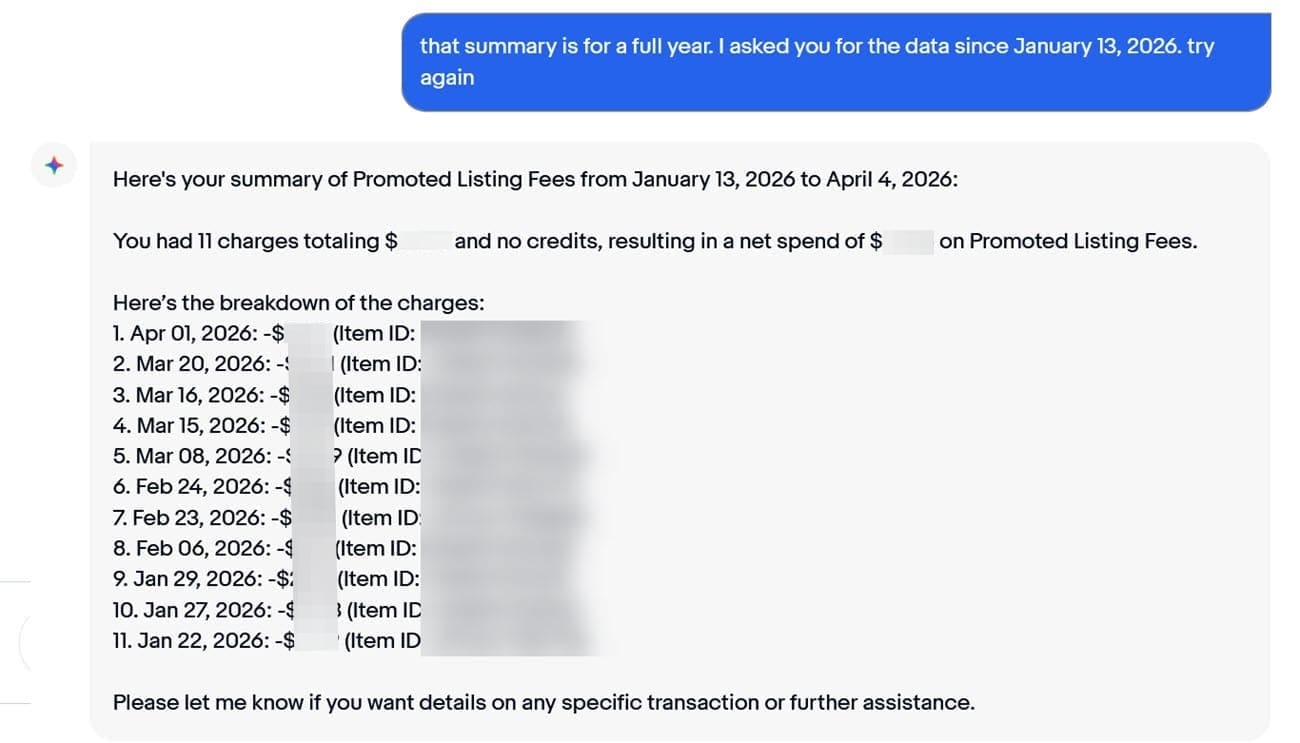
The seller had to prompt Finances Copilot to try again, at which point it did finally provide the summary data - but it was for a full year, not the timeframe from January 13, 2026 to today that had been requested.
It took yet another prompt to "try again" before eBay.ai actually produced the information that had been requested.
The seller then decided to test the limits of Finances Copilot even further by asking it's opinion about a potential strategy for working with the new attribution policy.
 Liz Morton
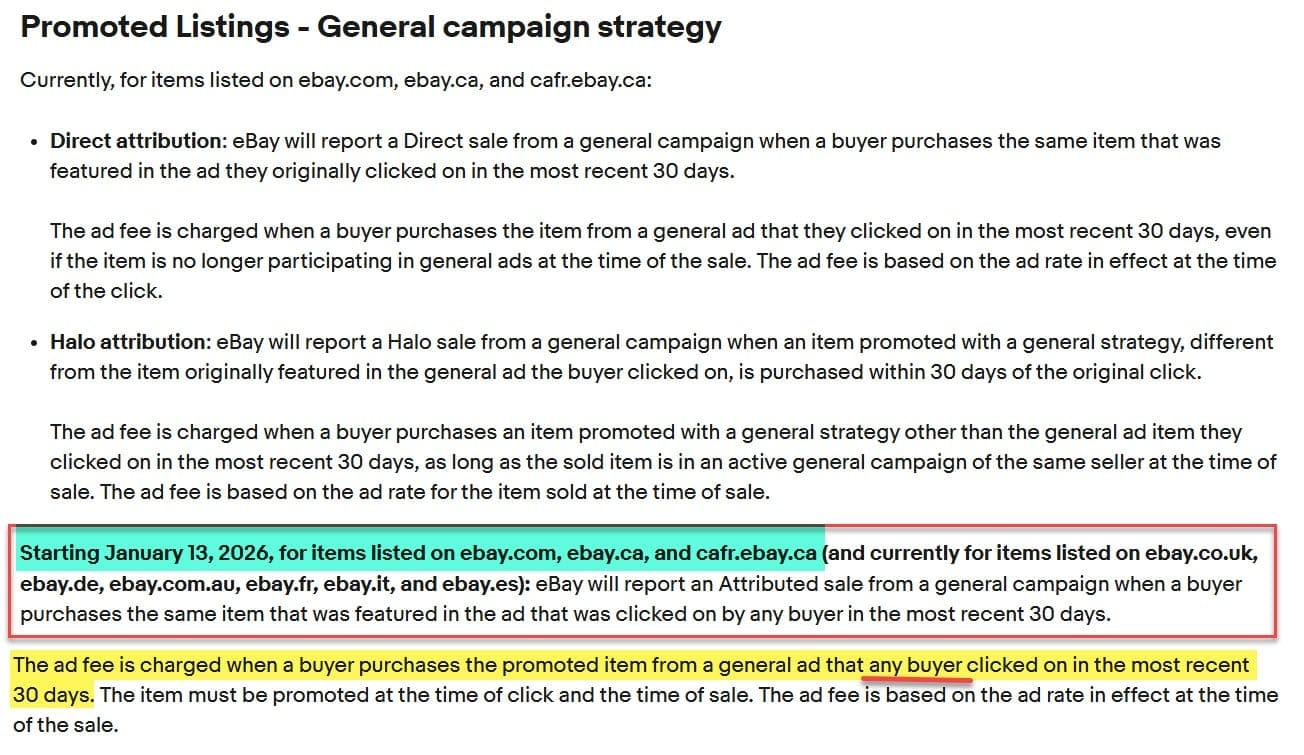
For context, the previous policy had Direct and Halo attribution models with a 30 day window allowing ad fees to be charged on a sale even if the ad campaign had been turned off - but importantly the buyer of the item had to have actually clicked on a promoted ad for it to count.
The new model got rid of Direct and Halo attribution so now there is just a single model that expands ad attribution to any sale where anyone clicked on the ad in the last 30 days, even if that click wasn't from the actual buyer - but the item has to be promoted at both the time of the click and the time of the sale, so if you turn off ads before the sale, you won't be charged.
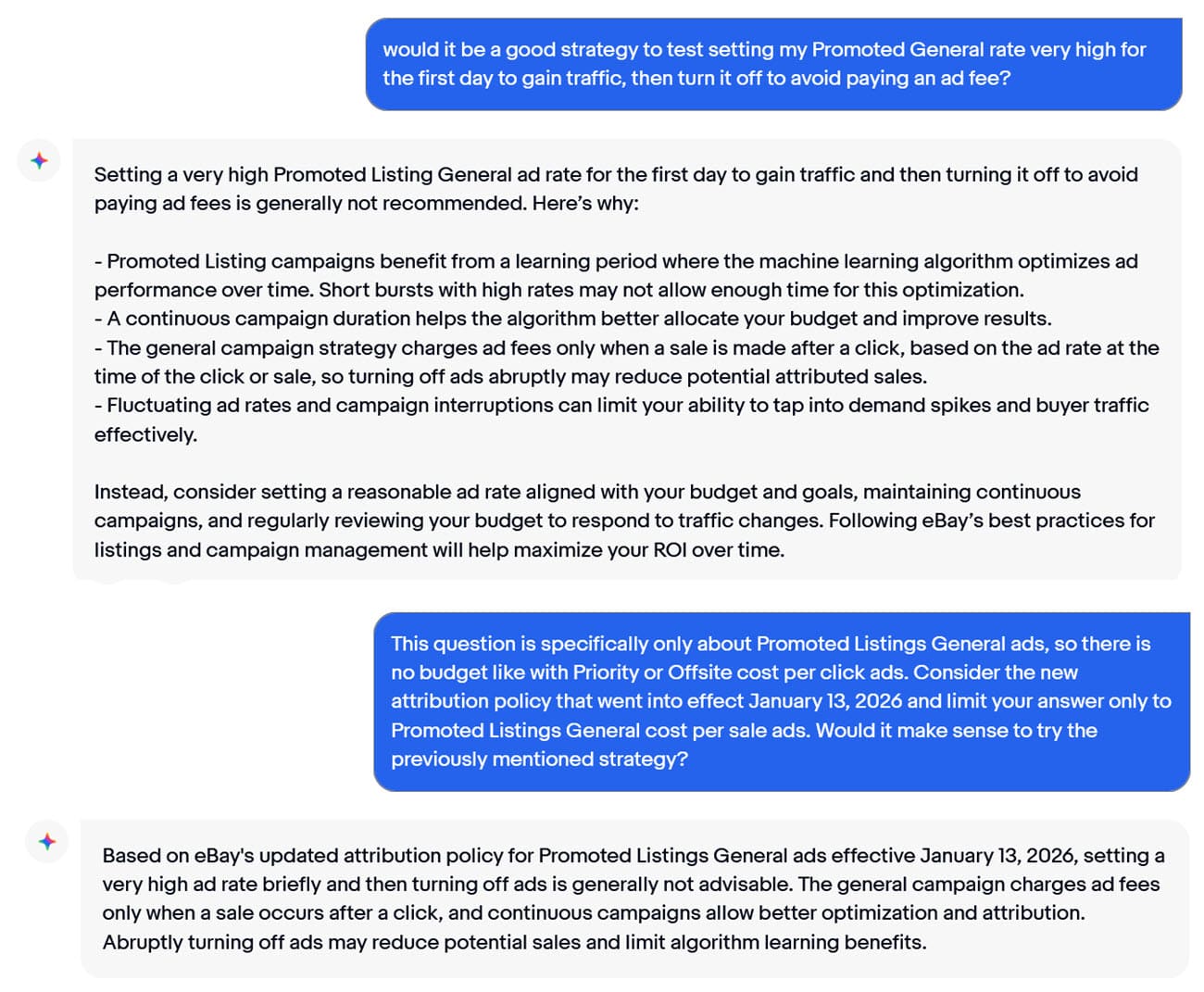
So the seller asked Finances Copilot if it would be a good strategy to test setting a very high Promoted General ad rate for a short amount of time to gain more visibility and then turn it off before getting a sale to avoid paying the ad fee.
At first the AI gave a fairly generic answer, so they followed up with a more specific prompt clarifying they were explicitly only asking about Promoted General ads and whether that strategy would make sense considering the January 13, 2026 attribution policy update.
They then asked Finances Copilot what would happen if they turn off the Promoted General campaign after the item has received a prompted click but before it sells - and it inexplicably provided answers clearly based on the old policy that is no longer applicable.
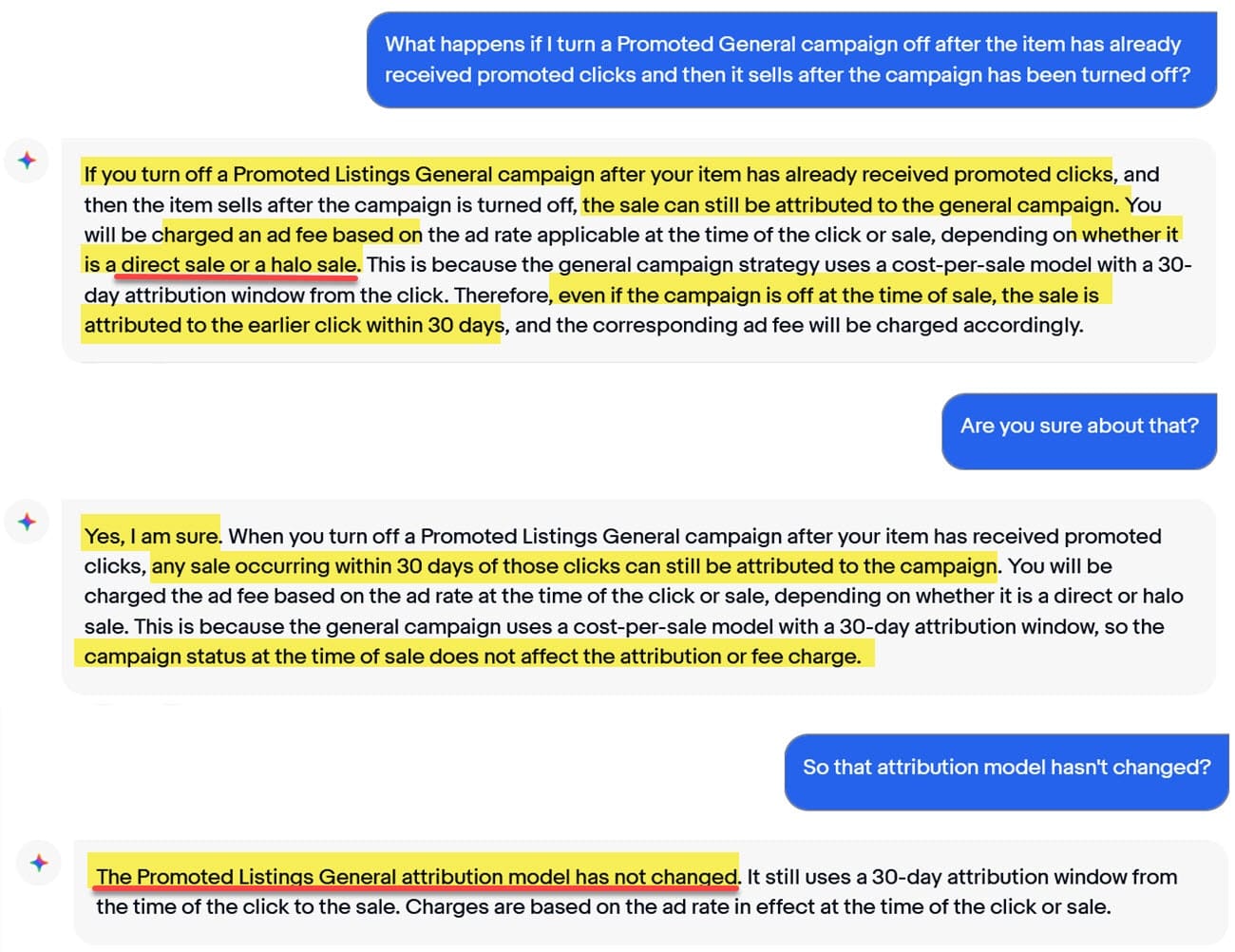
When the seller pushed back on that answer, eBay.ai doubled down on its confidently incorrect answer. Even more alarmingly, when the seller asked if the attribution model had changed, Finances Copilot said no.
The seller then provided a link to the current attribution policy and asked if that changed its answer - which it did not.
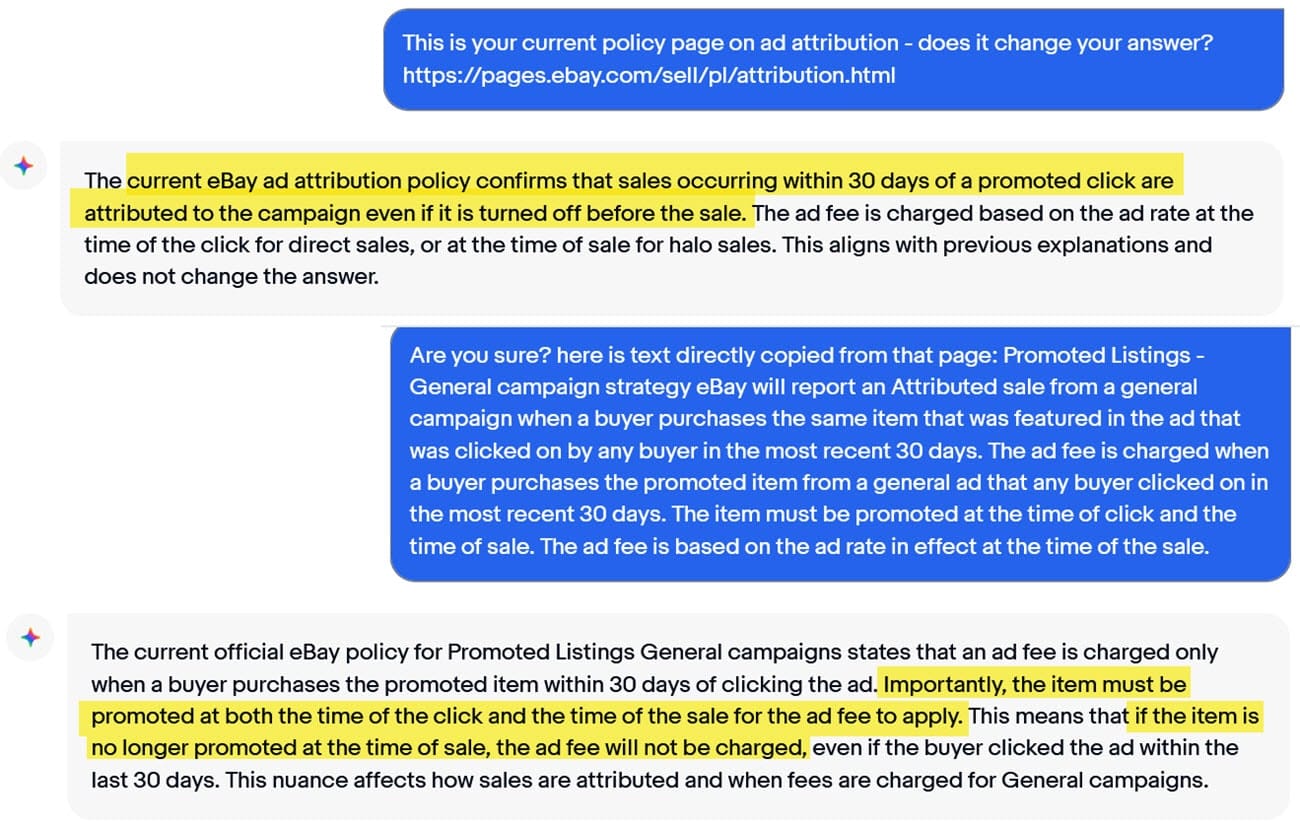
After the seller copied and pasted the text of the current policy, Finances Copilot eventually provided the correct answer but did not acknowledge the conflicting and incorrect information it had provided previously.
And even when explicitly pressed on the discrepancies, eBay.ai only acknowledged that it "updates and refines the previous explanation" not that it got the previous answers completely wrong.
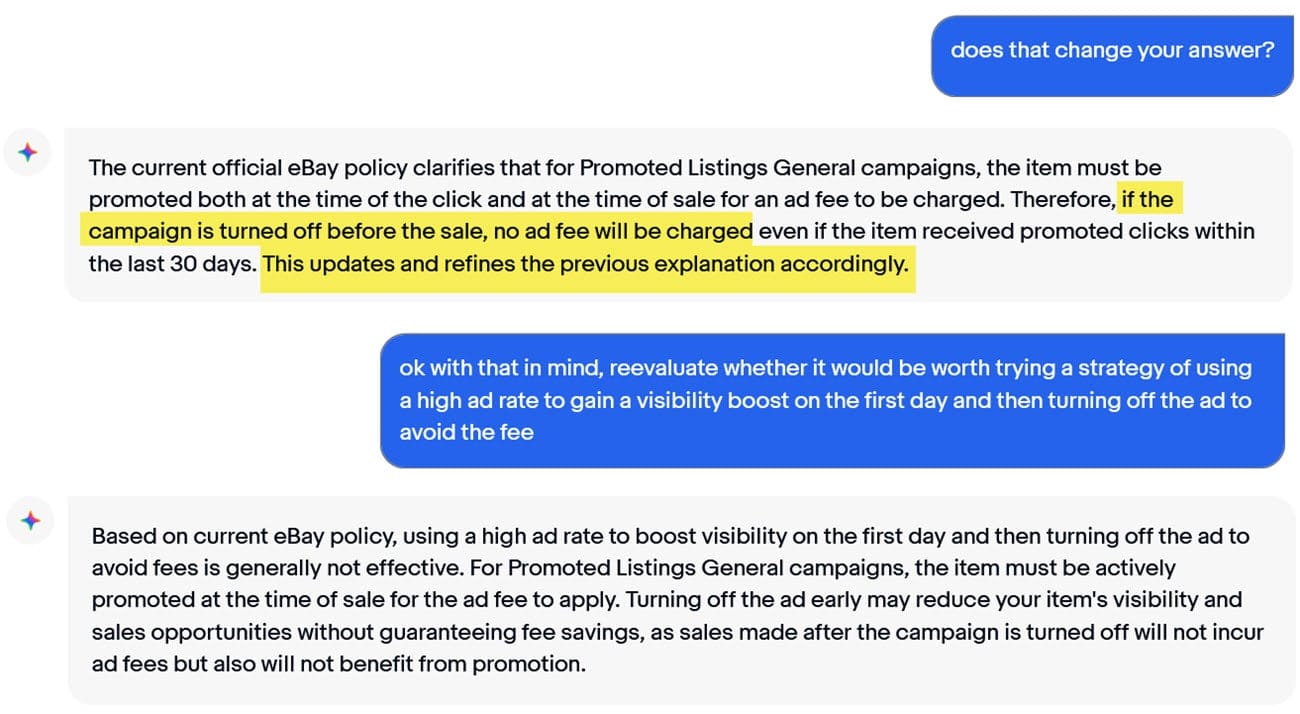
Final verdict: Finances Copilot may do well with generic queries for basic information that can already be found in other areas of Seller Hub, but eBay still has a long way to go if the goal is to provide a chatbot that can provide actually useful answers and insights for sellers' financial questions.
Have you tried eBay's Finances Copilot? Let us know about your experience in the comments below!