Whatnot 2026 Live Selling Report: Growth, Friction, and the Future of Live Commerce

For years, livestream selling has hovered in the “interesting but experimental” category for Western retail, but Whatnot’s State of Live Selling Report 2026 makes it clear that live commerce is no longer a niche channel or creator side hustle - it’s a scalable, revenue-driving business model reshaping how small businesses grow, hire, and compete.
Across the U.S. and Europe, the data points to a structural shift: sellers who embrace live selling aren’t just competing against traditional ecommerce, they’re building entirely different kinds of businesses.
Live Selling Is Now a Core Revenue Engine
Whatnot reports more than $8 billion in live GMV in 2025, more than doubling year over year, with over 20 million new accounts created on the platform last year alone. Even more telling: 53% of sellers now generate the majority of their annual sales through live commerce, up sharply from 41% the year prior.
Sellers are spending an average of 23 hours per week live streaming and running their businesses, and 1 in 8 sellers now sell full time on Whatnot. This aligns with wider social commerce trends showing that, in some segments, platforms combining content, community, and transaction can outperform static product pages on conversion, retention, and lifetime value.
Consistency, Not Virality, Drives Results
One of the most actionable insights in the report is how sharply performance correlates with frequency. According to Whatnot’s data, sellers who go live daily earn between 100x and 250x more than those who stream once or twice a month and even moving from monthly to weekly delivers 10x–20x gains.
This mirrors a broader shift away from chasing viral hits toward reliability and routine as live selling rewards operational discipline: showing up, engaging consistently, and building trust over time.
Category Expansion Signals Maturity
Whatnot reports that in the U.S. alone, 6.4 million sports cards are purchased per month, while globally, more than two sports cards are sold every second on the platform.
But while collectibles still anchor Whatnot’s origins, growth is now also coming from everyday retail categories as beauty sales grew 791% year over year, electronics 444%, jewelry 259%, and women’s fashion was up 223%.
Coins, bullion, and precious metals also stand out as a “quiet giant,” with sellers averaging over $1,000 per hour live - a reminder that trust-heavy categories benefit disproportionately from real-time human interaction.
Live Commerce Is Creating Real-World Economic Impact
Whatnot's report also highlights how live selling is showing up in local economies. Nearly 80% of sellers now operate out of commercial spaces - storefronts, warehouses, or offices - and 24% report renting additional space as they scale.
Hiring follows quickly, with multiple sellers featured in the report growing from solo operations into teams of 20-40+ employees.
Growth, But At What Cost?
Whatnot’s growth has been backed by significant investor confidence. In late 2025, the company raised a $225 million Series F round, valuing the platform at roughly $11.5 billion.
That capital gives Whatnot room to invest in infrastructure, expansion, and trust and safety, but it also changes the equation.
At this scale, the platform isn’t just proving that live commerce works; it’s under pressure to make it work efficiently and at volume. For sellers, that often translates into more competition, tighter margins, and a faster shift from early-stage opportunity to scaled marketplace dynamics.
But even as numbers climb, the full story is more complex than the annual report lets on, with some users and industry observers calling out controversies and raising concerns about systemic issues at Whatnot.
Hidden Costs and Margin Reality for Sellers
While Whatnot’s commission rates are often touted as lower than legacy platforms, the “real cost of going live” can be surprisingly high for sellers once giveaways, shipping logistics, and transaction math are factored in.
Anecdotally, sellers say selling in volume on Whatnot often requires items to be priced lower prices than might fetch on other platforms and that after fees and unexpected costs, net earnings can be modest or even below minimum wage - especially on low-priced items.
Community Complaints and Buyer Experience Gaps
Customer feedback on review sites is mixed. Some buyers love the excitement and community, but others report shipping frustrations, uneven dispute resolutions, customer support inaction, and inconsistent enforcement of guarantees.
Marketplace Trust and Safety Challenges
Independent reviews and watchdog comments point out that not all interactions on the platform feel equally safe or transparent.
On PissedConsumer, for example, some users allege slow refunds, billing issues, and even unauthorized charges, underscoring the risks inherent in high-velocity, peer-to-peer marketplaces.
 Jamie L Agk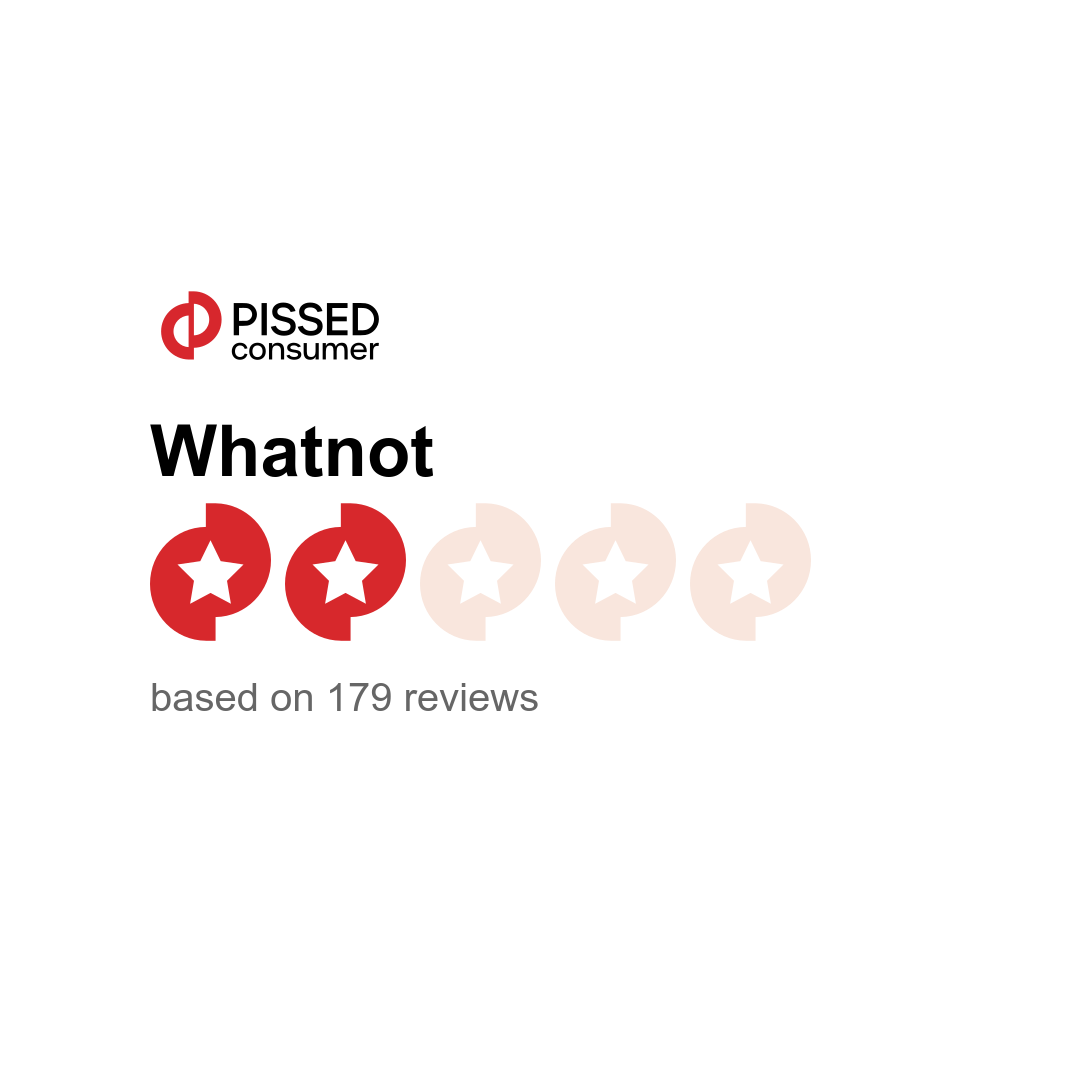
The platform has faced ongoing issues with scams and questionable seller behavior, and while Whatnot says it has taken steps to address these problems, some industry observers remain skeptical - for example, this recent video by YouTuber Rattle Pokemon:
And even when orders are legitimate, the gamified format can exacerbate overspending and impulse purchases, leading to buyer remorse and financial strain - a psychological risk that has drawn scrutiny from The Guardian and other media outlets.
 Rob Davies
Legacy marketplace competitors like eBay have lagged behind the scrappy start up on live commerce, largely due to more restrictive seller vetting and a more cautious approach to trust and safety issues.
 Liz Morton
But the competitive landscape is shifting rapidly with eBay Live's recent category expansions adding Hard Goods, Health and Beauty, and Art and Antiques on top of existing Collectibles offerings in the US as well as launches in the UK in 2024 and Germany and Australia in late 2025.
 Liz Morton
While eBay has so far been tightlipped about providing concrete numbers for their Live business, on the Q3 2025 earnings call, CEO Jamie Iannone touted Annual GMV run rate for live shopping was up approximately 5x year over year with stable quarter over quarter growth in all tracked KPIs, including viewers, watch time, and items sold.
Final Thoughts
Whatnot’s 2026 report makes one thing hard to dispute: live commerce works. Sellers who commit to the format can generate real revenue, build repeat audiences, and turn what once looked like a novelty into a durable business model.
The harder question now is how live commerce scales responsibly.
Whatnot’s growth has been powered by speed, looseness, and a willingness to let the market experiment in public. That approach unlocked opportunity quickly, but it also exposed predictable stress points: thin margins for some sellers, uneven buyer protection, trust and safety challenges, and a format that often blurs the line between shopping and gambling-style engagement.
By contrast, legacy platforms like eBay are moving more cautiously, prioritizing control, seller vetting, and buyer trust over breakout momentum. That restraint may look like hesitation today, but it reflects a different thesis - that live commerce only becomes a lasting retail channel if it can balance excitement with predictability and scale with accountability.
For sellers, the takeaway is clear: live commerce isn’t a shortcut to side-hustle success but rather an operational choice that demands time, capital, and tolerance for volatility. The upside is real, but so is the risk, and reliance on any single platform is increasingly hard to justify.
Livestream selling may have finally found a foothold in the West. Whether it becomes durable infrastructure or another boom-and-bust channel will depend on whether platforms like Whatnot can scale without eroding the trust that makes ecommerce work in the first place.