W, X, And The Business Of Defining Disinformation

A new social media platform called W is preparing to launch in Europe, positioning itself as an alternative to Elon Musk’s X and explicitly framing its mission around countering what it calls systemic disinformation.
The project is led by Dr. Anna Zeiter, former Chief Privacy Officer and VP AI and Data Responsibility at eBay, who departed from the ecommerce marketplace last month.
 Liz Morton
Zeiter officially announced she will be joining the company as CEO at the World Economic Forum in Davos this week - a fitting audience for W's "anti-disinformation" sales pitch.
“We believe there is an urgent need for a new social media platform built, governed and hosted in Europe. With human verification, free speech and data privacy at its core.”
W’s public messaging emphasizes verified human users, European data residency, and compliance with EU privacy and digital services rules.
In that sense, the platform is less a grassroots social network experiment and more an extension of a broader European effort to rethink and reshape the digital public square.
Zeiter told Bilanz.ch that W stands for “We.” Meanwhile, the overlapping Vs that make up the W logo stand for “Values,” and “Verified.”
“The fact that W comes before X in the alphabet is certainly also a welcome coincidence,” Zeiter said.
And W is clearly looking to fill an important role in politics as well.
“If political Brussels starts posting on W instead of X, we'll have already achieved a great deal."
Ironically, the launch announcement of W is being heavily discussed on X, with Washington Post Global affairs columnist Ishaan Tharoor posting a clip of an introductory video from the debut event.
In Davos, there’s a launch of a new social media platform called “W” to counter the misinformation on other social media platforms. Here’s part of their introductory video at the debut event. They tout actual verification and no bots, and being hosted on European servers. pic.twitter.com/hkr7tuCktc
— Ishaan Tharoor (@ishaantharoor) January 19, 2026
To the surprise of absolutely no one, the replies make it clear the average X user is more than a little skeptical of the "misinformation-countering" pitch and Zeiter's claims that W will be the real free speech platform.
W will legally be the subsidiary of “We Don’t Have Time,” a media platform for climate action, but the team is scattered across Europe, with offices in Berlin and Paris planned.
A CB Insights profile reports that We Don’t Have Time has raised about 3.41 million USD over three funding rounds, listing individual angels such as Alexander af Jochnick, Fabrice Grinda, Jan Ståhlberg, Marco Rodzynek, Nick Nuttall, Pär Nuder, Sweta Chakraborty, Tony Kula, and some undisclosed investors.
There’s currently no public disclosure that eBay founder Pierre Omidyar is directly backing W.
But Zeiter’s background at eBay, combined with W’s ethos, will almost certainly raise questions about his possible influence - especially since Omidyar has a long history of anti-Musk, pro-censorship activity framed as fighting “disinformation.”
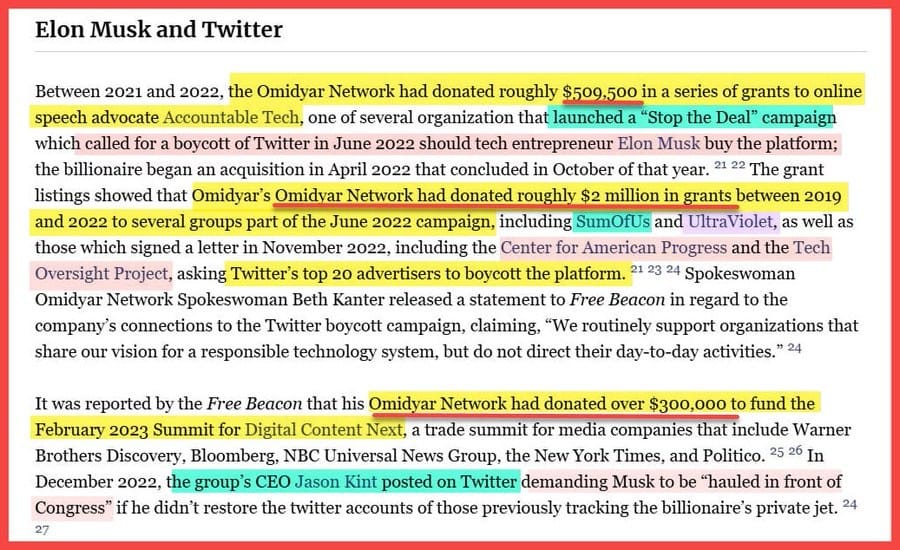
In 2021, Omidyar was a major source of funding for "tech accountability" groups behind boycotts and efforts to stop Elon Musk from buying Twitter, according to Influence Watch.
 Alana Goodman
Oddly, most of the tech accountability orgs that receive Omidyar Network funding never seem to have much to say about eBay.
Extra credit - search for said accountability org & eBay to see how often co Omidyar founded (where he made the 💰he uses for "philanthropy") gets even a fraction of the scrutiny other Big Tech players receive. 🔍
— Liz Morton ~ Value Added Resource (@ValueAddedRS) March 11, 2025
Odds are you won't find much🧐 - see also @accountabletech pic.twitter.com/2AiS3mYaW2
Investigative journalists Michael Shellenberger and Matt Taibbi have documented what they call a “Censorship-Industrial Complex,” an alliance between Big Tech and Big Government. Not surprisingly, Pierre Omidyar appears in many of these stories.
Shellenberger argues that Omidyar betrayed traditionally liberal and progressive values with funding and research aimed at censoring "problematic content" and supposed "disinformation" and "misinformation" both on public social media platforms like Twitter and Facebook and in private chat apps like WhatsApp, Signal and Telegram.
 Michael Shellenberger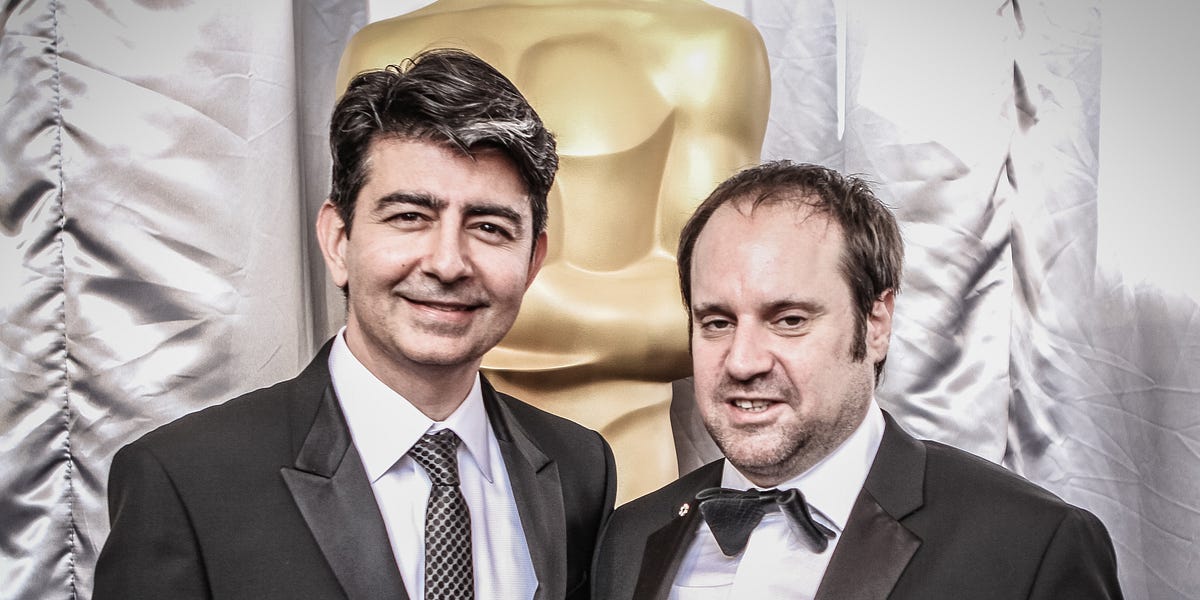
The Omidyar Foundation, created by Ebay founder Pierre Omidyar, has advocated the spying on and censorship of encrypted wrongspeak.
“Reports of violence, disinformation, and manipulation campaigns originating on private messaging platforms have become all too common,” warned Omidyar Foundation in a January 2022 report. “Not only are individuals’ lives and liberties impacted, but dangerous platform design choices also have devastating implications for our democratic institutions and the health and well-being of our societies.”...
...The Omidyar report explicitly argued against the right to privacy in text messaging. “Privacy is essential to building trust, but it is not a singular standard for safety,” wrote Omidyar Foundation authors. “We believe online safety is the result of trustworthy technology and enlightened regulation. While the shift toward adopting end-to-end encryption has reinforced trust between users, the technological architecture that encourages scale, virality, and monetization has ultimately facilitated the rapid and large-scale spread of dangerous, distorted, and deceitful content.”...
...What is going on here? Why is the censorship industry now trying to spy on and censor our private messages?
Taibbi briefly worked for Omidyar at The Intercept but was forced out before ever publishing a word.
No, I only worked for one, and Pierre Omidyar a) mostly just wishes he was one of the richest men in the world, and b) forced me out of his company before I got to publish one word. https://t.co/8xNGEuRvrV
— Matt Taibbi (@mtaibbi) February 22, 2023
As he and Shellenberger delved into the Twitter Files in early 2023, Taibbi's Racket News published a report on the Top 50 organizations involved in the Censorship-Industrial Complex, naming Omidyar one of the most prolific private funders of projects combating “disinformation.”
 Susan Schmidt
Even Glenn Greenwald, who famously covered the Snowden Files as a co-founding editor at the Intercept before resigning in 2020, has criticized Omidyar's pursuit of censorship under the guise of fighting misinformation.
 Glenn Greenwald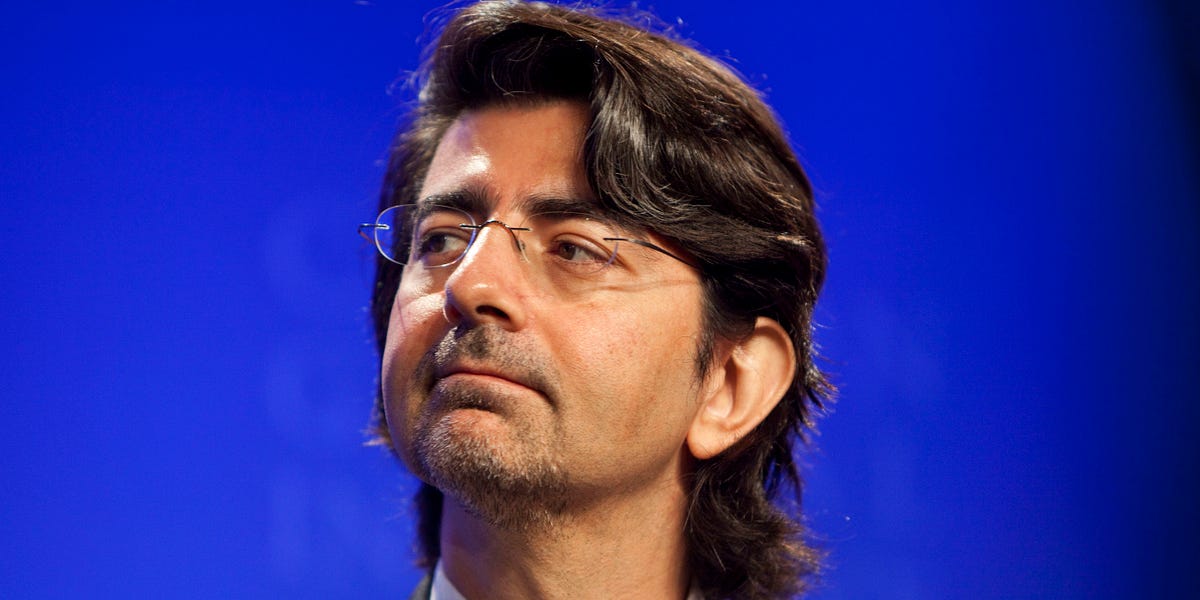
Speaking of Omidyar's backing of Facebook whistleblower Frances Haugen in 2021, Greenwald said it was unsurprising but highly revealing to find the eBay founder at the heart of this effort to police and control political speech on the internet.
It is completely unsurprising to learn, as Politico reported last Wednesday, that the major financial supporter of Facebook "whistleblower” Frances Haugen's sprawling P.R. and legal network coordinating her public campaign is the billionaire founder of EBay, Pierre Omidyar.
The Haugen Show continues today as a consortium of carefully cultivated news outlets (including those who have been most devoted to agitating for online censorship: the New York Times’ "tech” unit and NBC News's “disinformation” team) began publishing the trove of archives she took from Facebook under the self-important title "The Facebook Papers,” while the star herself has traveled to London to testify today to British lawmakers considering a bill to criminally punish tech companies that allow “foul content” or “extremism” — whatever that means — to be published...
...Omidyar's central role in this latest scheme to impose greater control over social media is unsurprising because he and his multi-national foundation, the Omidyar Network, fund many if not most of the campaigns and organizations designed to police and control political speech on the internet under the benevolent-sounding banner of combating "disinformation” and “extremism.”
Though one could have easily guessed that it was Omidyar fueling Frances Haugen and her team of Democratic Party operatives acting as lawyers and P.R. agents — I would have been shocked if he had no role — it is still nonetheless highly revealing of what these campaigns and groups are, how they function, what their real goals are, and the serious dangers they pose.
And it appears Omidyar may have connections to the PR firm behind Meta whistleblower Sarah Wynn-Williams as well.
 Collin Anderson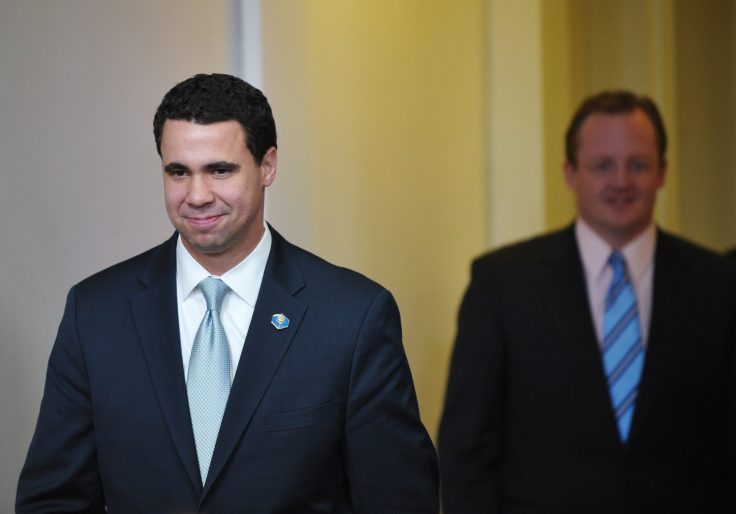
In 2023, Gabe Kaminsky of the Washington Examiner reported on The Global Disinformation Index (GDI) - a "disinformation tracking group" that was part of a stealth operation blacklisting and trying to defund conservative media.
 Gabe Kaminsky
In 2025, Steven Richards and John Solomon of Just The News revealed that GDI was receiving US taxpayer dollars via a grant from the National Endowment for Democracy, but NED isn't the only interesting source of funding.
 Steven Richards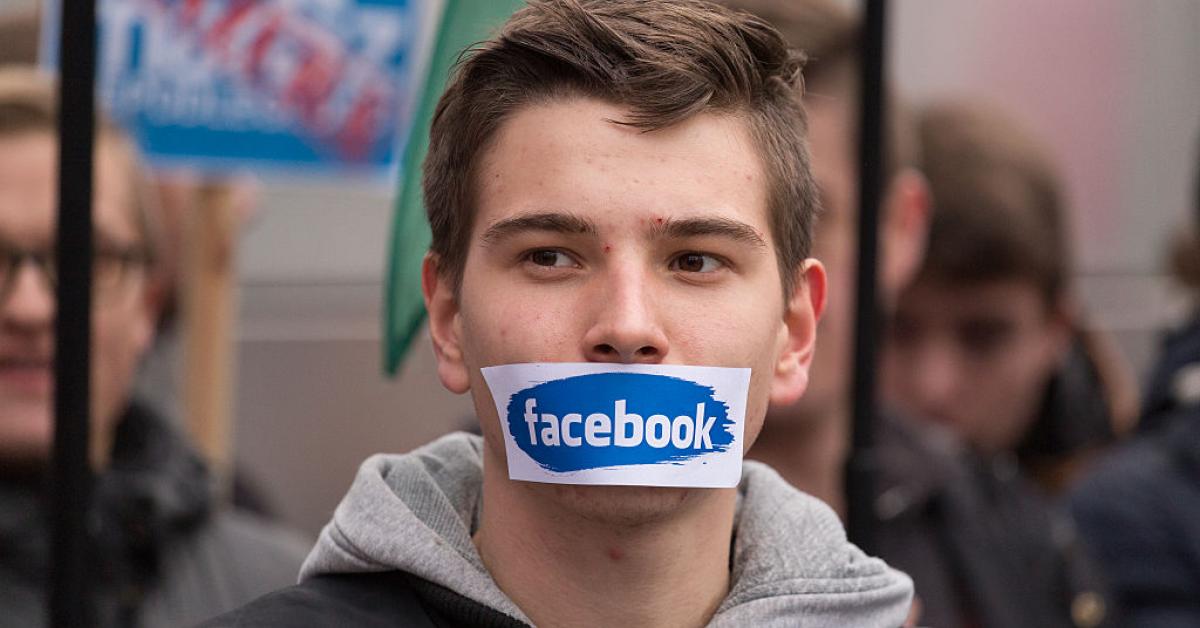
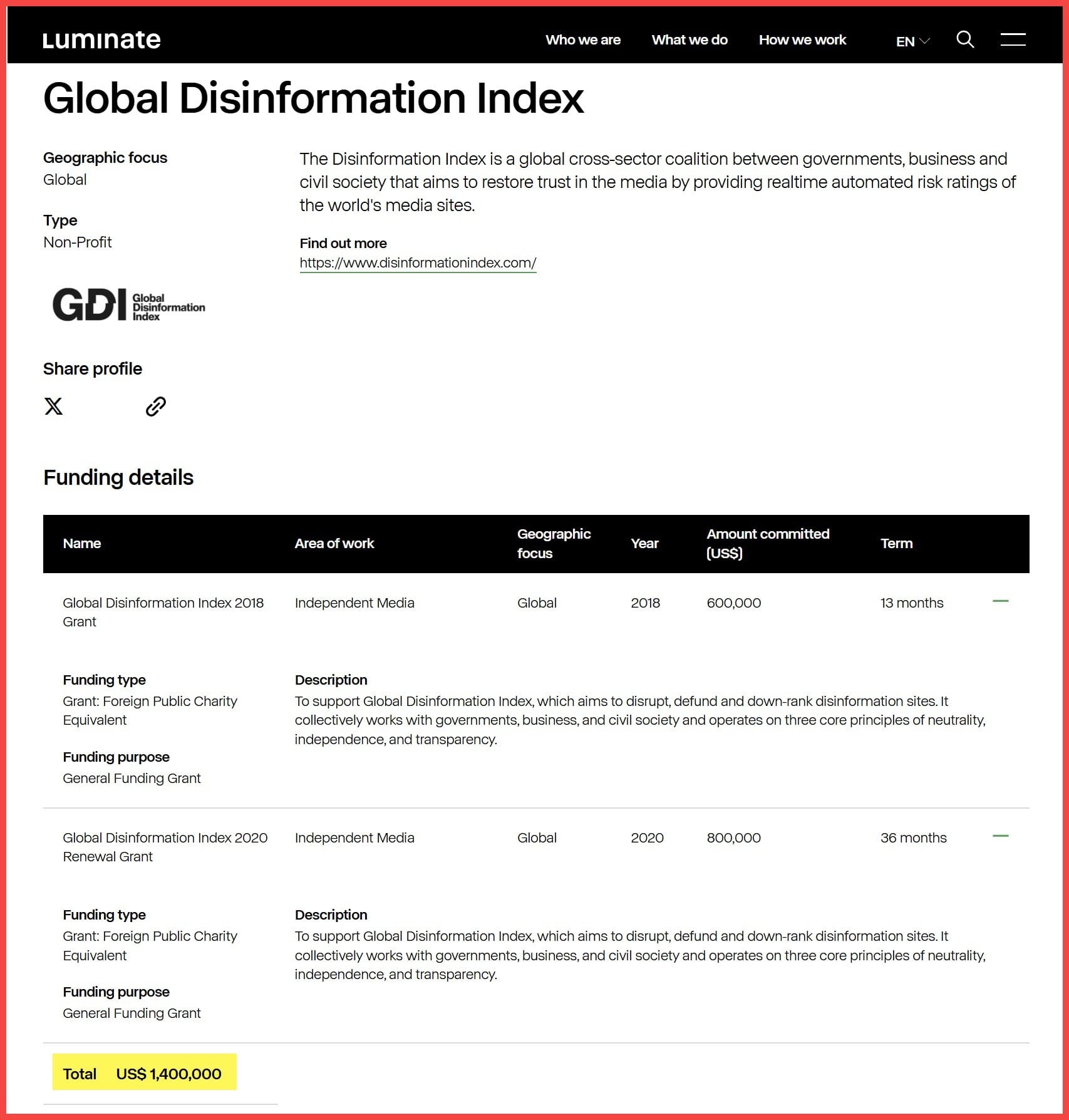
GDI also received ~$1.4 Million in funding from Pierre Omidyar's Luminate Group to “to support Global Disinformation Index, which aims to disrupt, defund and down‑rank disinformation sites.”
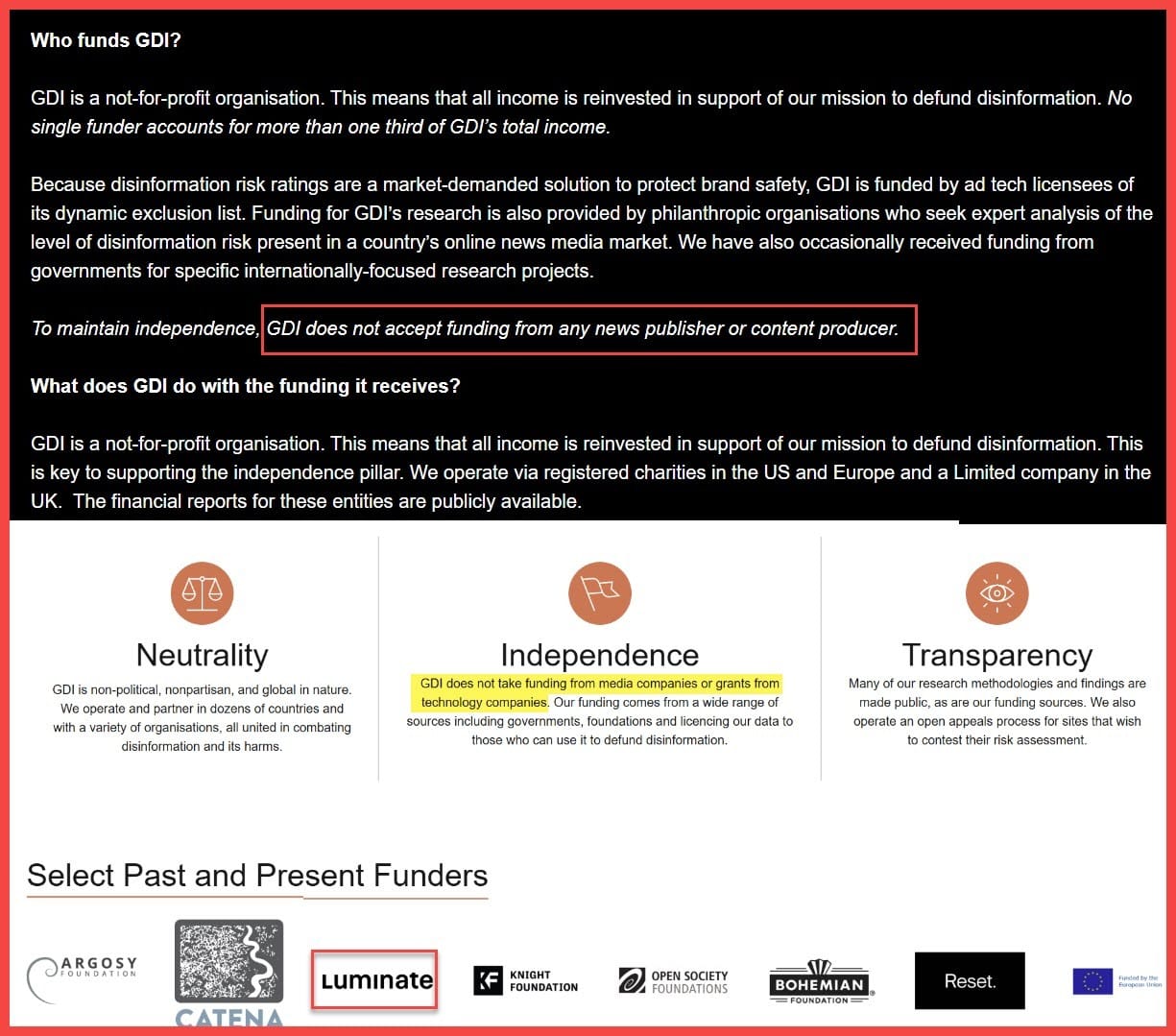
GDI claims they don't accept funding from news publishers, content producers, media or tech companies - yet prominently features Luminate on their site.
And while many at Davos this week, including Anna Zeiter and W, are heavily focused on AI, Omidyar Network has announced their latest cohort of Reporters In Residence who will "focus on the power dynamics driving the AI revolution","scrutinize the concentration of power in AI governance", and "investigate everything from how artificial intelligence is reshaping labor markets, to the impacts on children using AI chatbots, to how algorithmic systems in housing, education, and criminal justice reinforce existing inequalities."
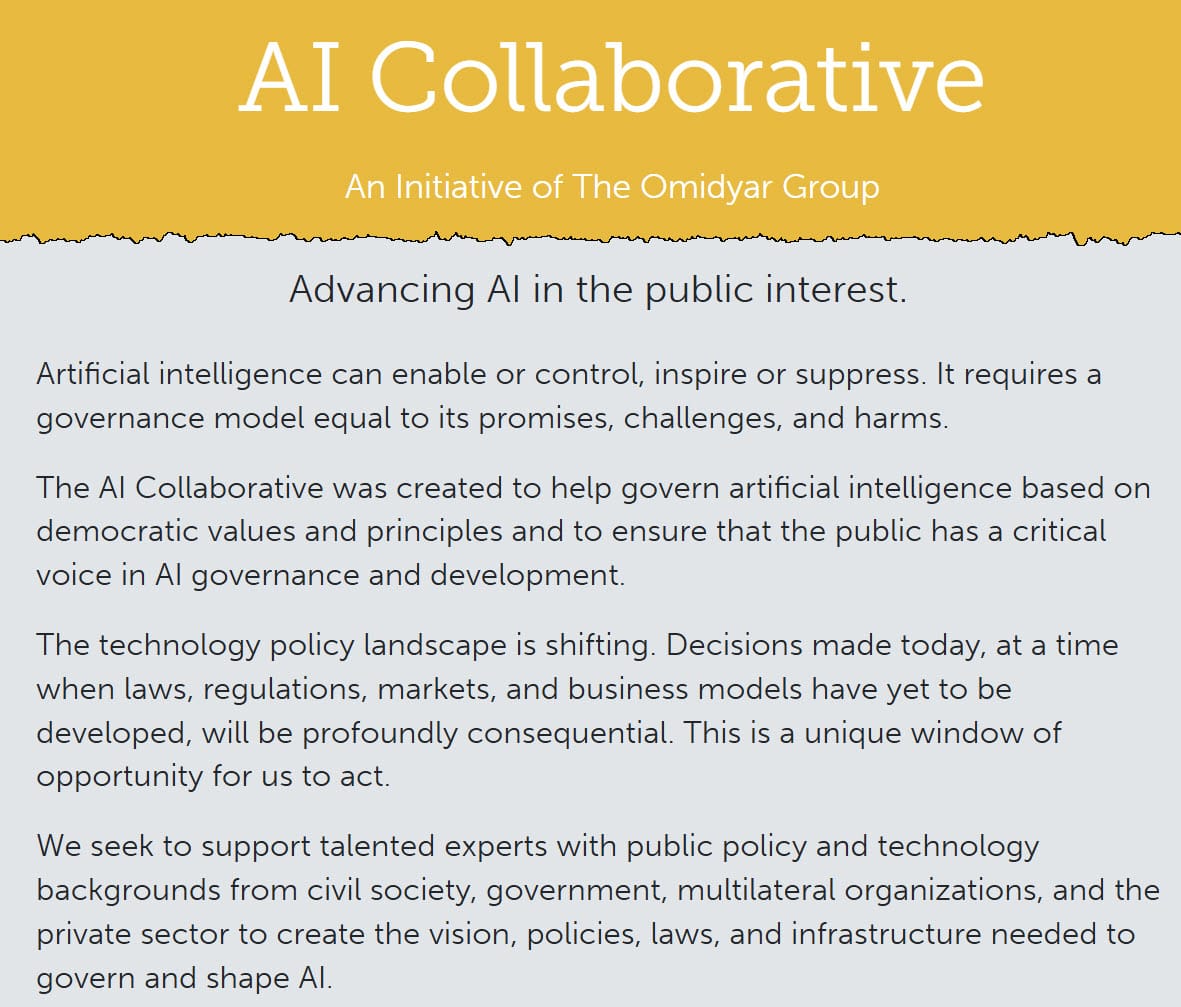
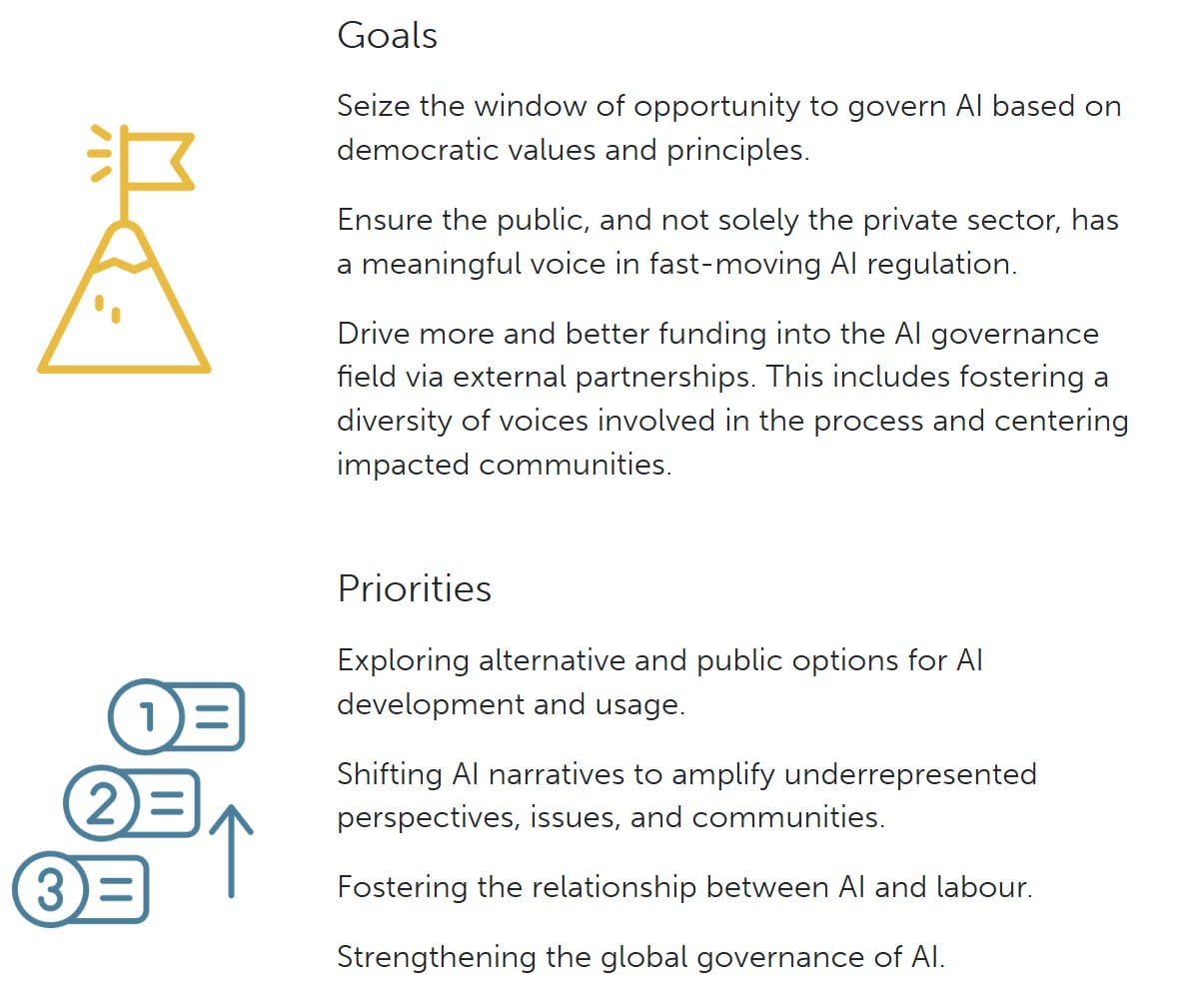
The Omidyar group has also launched the AI Collaborative initiative to "help govern artificial intelligence based on democratic values and principles and to ensure that the public has a critical voice in AI governance and development."
Of course any discussion about Pierre Omidyar and free speech/press freedom would not be complete without mentioning the 2019 eBay scandal where the company's ex-CIA head of security launched criminal stalking and harassment campaign against journalists Ina and David Steiner of EcommerceBytes in effort to stop their reporting and doxx their anonymous source, @unsuckEBAY - all while Omidyar was still active on the Board of Directors.
 Liz Morton
Notably, when Omidyar stepped down from the board 3 months after the scandal went public in 2020, it ended SEC reporting requirements about his eBay stock holdings, freeing up money for political and "philanthropic" efforts with less public oversight and scrutiny as long as he stays below 10% total ownership.
There is no public information suggesting Omidyar is funding W. But the platform emerges from a governance ecosystem shaped by many of the same institutions, assumptions, and actors.
Ultimately, W may market itself as a corrective to systemic disinformation, but it is also a product of the same institutional worldview that has failed to earn public trust in the first place. For all the talk of “We,” values, and verification, the questions remain unchanged: who defines disinformation, who enforces it, and who is protected from the consequences?
That answer shouldn’t be found at Davos.