PayPal’s Earnings Miss & CEO Exit Draw Shareholder Scrutiny Over Disclosure & Governance

Shareholder rights firms are circling as PayPal stock drops ~20% on disappointing earnings and surprise CEO shake-up.
PayPal issued a lackluster profit forecast for 2026 during its Q4 2025 earnings call on Tuesday while also announcing CEO Alex Chriss, who was brought in to steer the payments firm through slowing growth and heightened competition, would be stepping down immediately.
A company press release explicitly stated "the pace of change and execution was not in line with the Board's expectations" under Chriss appointing Chief Financial Officer Jamie Miller to serve as interim CEO until (now) ex-HP CEO Enrique Lores takes over as the new president and CEO of PayPal on March 1.
Now that statement has drawn the attention of multiple shareholder rights law firms, raising questions about when the board came to that conclusion and whether they provided appropriate disclosure that such a dramatic revision to the company's outlook would be forthcoming.
Glancy Prongay Wolke & Rotter LLP, Howard G. Smith and Levi & Korsinsky, LLP have all put out press releases advising they have opened investigations and are actively soliciting for shareholders who may have been harmed to contact them about their legal options.
 Levi & Korsinsky, LLP
According to Levi & Korsinsky:
The timeline of analyst expectations and company communications reveals a notable trajectory. On January 28, 2026, Rothschild & Co Redburn issued a downgrade, cutting PayPal's price target to $50 from $70...
...On February 2, just one day before earnings, analysts published expectations for mid-single-digit revenue growth and higher earnings per share.
The actual results disclosed on February 3 represented a meaningful miss versus these expectations. Revenue of $8.68 billion fell $120 million short of the $8.80 billion estimate, a gap of approximately 1.4%...
...Perhaps more significantly, the company's forward guidance projected 2026 transaction margin dollars to decline alongside an adjusted earnings per share range of a low single digit decline to a slightly positive gain, figures that were substantially below what the investment community had been modeling.
During the company's third quarter 2025 earnings call on October 28, 2025, approximately 98 days before the latest disclosure, management had not indicated that such a dramatic revision to the company's outlook would be forthcoming.
The investigation will examine what information was available to management during this period and when the factors necessitating the lowered guidance became apparent internally.
But shareholder rights firms aren't the only ones chiming in - several prominent ex-PayPal and/or ex-eBayers took to social media to share their thoughts on the disappointing performance and leadership transition as well.
One-time PayPal President (when it was still owned by eBay), David Marcus posted his take on X and LinkedIn, saying nearly 12 years after leaving the company, he now feels compelled to speak up about what he sees as the reason PayPal is in this position.
A few thoughts about PayPal, nearly 12 years after I left.
— David Marcus (@davidmarcus) February 3, 2026
I woke up this morning to dozens of messages from former PayPal colleagues. It pushed me to finally speak up.
I never spoke publicly about the company after I left. Part of that was loyalty to John Donahoe, who gave me…
"We had executed a silent turnaround of a company that had lost its soul," Marcus said of his tenure. "We brought back engineering talent, shipped good products quickly, and acquired Braintree and Venmo. The company was on a tear. So much so that Carl Icahn felt compelled to accumulate a position in eBay and push for a PayPal spinoff. At the time, eBay decided to fight Icahn."
After that fight was lost, Marcus noted that "the leadership style shifted from product-led to financially-led. Over time, product conviction gave way to financial optimization."
He then described how under subsequent leaders, that shift became more pronounced and negatively affected PayPal's performance before finally concluding:
"The common thread through all of this is incentive design. Once PayPal became independent, short/medium-term predictability beat long-term vision and ambition. Stock performance mattered more than platform risk and network opportunity. Financial optimization replaced product conviction..."
"...Over time, the company that had every advantage and could’ve become the most consequential and relevant payments company of our time, lost its mojo, its product edge, and its ability to compete in a market that’s being rewired and reinvented in front of our eyes. That's the part that's hardest to watch for a company I care so deeply about."
MercadoLibre founder Marcos Galperin responded to Marcus' post, adding that he believes PayPal largely inherited a culture of risk aversion and unwillingness to disrupt existing business from eBay.
I would add to this that Paypal inherited from eBay (and its BOD) a culture of risk aversion and an unwillingness to disrupt any existing business as long as it was profitable and helped the P&L. I believe it would have been very hard for any CEO to change this strongly rooted…
— Marcos Galperin (@marcos_galperin) February 4, 2026
And ex-eBay CEO Devin Wenig engaged in a back-and-forth discussion with Alex Rampell, general partner at VC firm Andreessen Horowitz, on X.

According to reporting by EcommerceBytes, Wenig commented:
very few understood the implication of losing one side of the two sided network (and pricing visibility/discrimination) when they lost the ebay sell side monopoly. And they could have kept it .....
Rampell responded:
yes and I'm also not trying to throw shade...it's a really hard problem when the underlying platform / OS embeds a functionally superior product because of ownership of said platform/OS...
And Wenig replied:
right. Live by the sword, die by it.... They had this issue 2x between E and A. Getting distribution is awesome. Riding the cost burden of an underlying platform is great. But if you lose the connection to your customers......eventually the unwind is coming
Wenig subsequently deleted his side of the conversation after the EcommerceBytes article was published.
Very interesting. 🤨 $EBAY $PYPL https://t.co/d51VBhWvIo pic.twitter.com/j1pavcGu8n
— Liz Morton ~ Value Added Resource (@ValueAddedRS) February 3, 2026
As PayPal faces questions about disclosure and oversight, its former parent company, eBay, may soon confront similar scrutiny as the civil case regarding 2019 stalking scandal heads to trial next month.
The suit, brought by Ina and David Steiner of EcommerceBytes, seeks to hold eBay, Wenig, ex-Chief Communications Officer Steve Wymer, and ex-SVP Global Operations Wendy Jones accountable for the criminal harassment and stalking campaign undertaken by eBay security personnel in an effort to alter their reporting on the company and identify an anonymous source known as Fidomaster/ unsuckEBAY.
 Liz Morton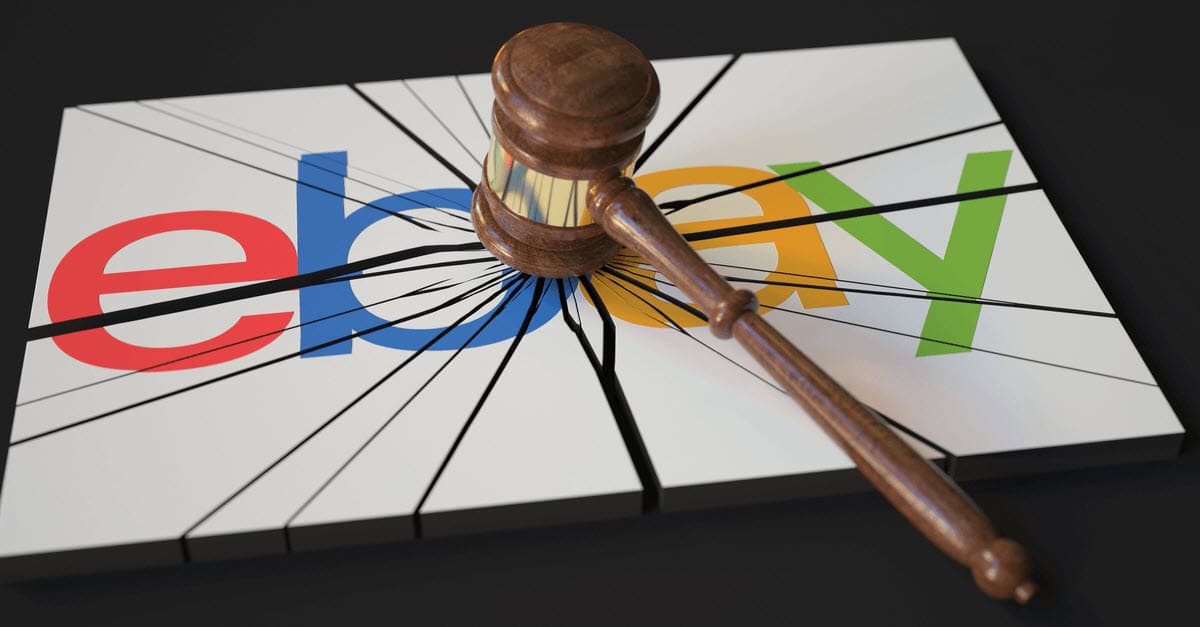
Documents revealed in both the criminal and civil cases have raised serious corporate governance, compliance and disclosure concerns - and eBay could face questions about their disclosure (or lack thereof) of material litigation risks, especially since the Steiners are seeking 9 figures in total compensatory and punitive damages and eBay's Chief Risk and Compliance Officer quietly left in October, leaving critical leadership gap.
 Liz Morton
Taken together, PayPal’s sharp stock decline, abrupt executive reset, and the attention of shareholder rights firms point to an issue that goes well beyond a single missed quarter. The board’s admission that execution “was not in line with expectations” raises unavoidable questions about what was known, when it was known, and how transparently those risks were communicated to investors as recently as the fall.
Against that backdrop, unusually candid criticism from former PayPal and eBay leaders reads less like nostalgia and more like a post-mortem on years of strategic drift where financial optimization steadily displaced product conviction.
Whether new leadership can reverse that trajectory remains an open question. For now, PayPal is grappling not just with slowing growth, but with a credibility gap that markets, regulators, and plaintiffs’ firms are unlikely to ignore.