OpenAI Hits Pause on “Buy in ChatGPT” Just Months After Instant Checkout Launch

OpenAI is hitting pause on its big “buy it in ChatGPT” experiment, just five months after rolling out Instant Checkout with much fanfare, as ecommerce reality proves more complicated than agentic hype.
When Instant Checkout in Chat was announced in September, the pitch to merchants and marketplaces was clear: people already come to ChatGPT for product ideas, so why not capture demand at the source - for a "small fee" of course.
Etsy and Shopify were tapped as flagship launch partners, with Etsy telling sellers that U.S. ChatGPT users would be able to “discover, browse, and purchase items on Etsy directly through ChatGPT,” and Shopify promising one-tap, in-chat purchasing would allow merchants to reach millions of new shoppers.
 Liz Morton
Walmart followed shortly after, announcing an “AI‑first shopping experience” that would let customers “simply chat and buy” via Instant Checkout, bundled in with broader plans to put generative AI at the center of its ecommerce strategy.
 Liz Morton
Now, according to reporting from The Information (paywall), OpenAI is shutting off that native checkout flow and shifting purchases back to retailer apps and sites after discovering there's far more to online shopping than just the checkout process.
Sources say user behavior skewed heavily toward search and discovery — asking ChatGPT what to buy, comparing options, getting links — but very few users actually completed transactions inside the chat interface.
On the merchant side, Shopify insiders reportedly say only about a dozen out of their million+ seller-base actually integrated the necessary plumbing to support in-chat orders.
But slow buyer and seller adoption wasn't the only challenge OpenAI Checkout in Chat faced.
The Information also revealed the AI company was apparently unprepared for the daunting task of ensuring compliance with legal and regulatory requirements around privacy, payments, and sales tax as well as the technical complexities involved with real‑time inventory sync, fraud detection, and more.
As Senior Director, Industry GTM, Consumer Goods & Retail at Salesforce, Devin Kunysz, pointed out in a post on X, there's far more to doing online commerce well than many people realize.
It turns out, there's a reason why an entire category of businesses exist called "retailers". They aggregate a set of related products, provide a trusted checkout experience, etc. pic.twitter.com/a0kfPyAWe8
— Devin Kunysz (@DevinKunysz) March 5, 2026
One more thing about the reversal on LLM shopping... OpenAI had several months building their shopping tools. And as of February, they still hadn't built a system to collect Sales Tax.
— Devin Kunysz (@DevinKunysz) March 5, 2026
Maybe it's not actually easy to Vibe Code Enterprise Software.
The Checkout In Chat setback comes as other marketplaces wrestle with how to integrate agentic AI into buying experiences.
Amazon's Buy For Me beta test sparked backlash from small businesses who raised concerns about consent, transparency, and control.
 Liz Morton
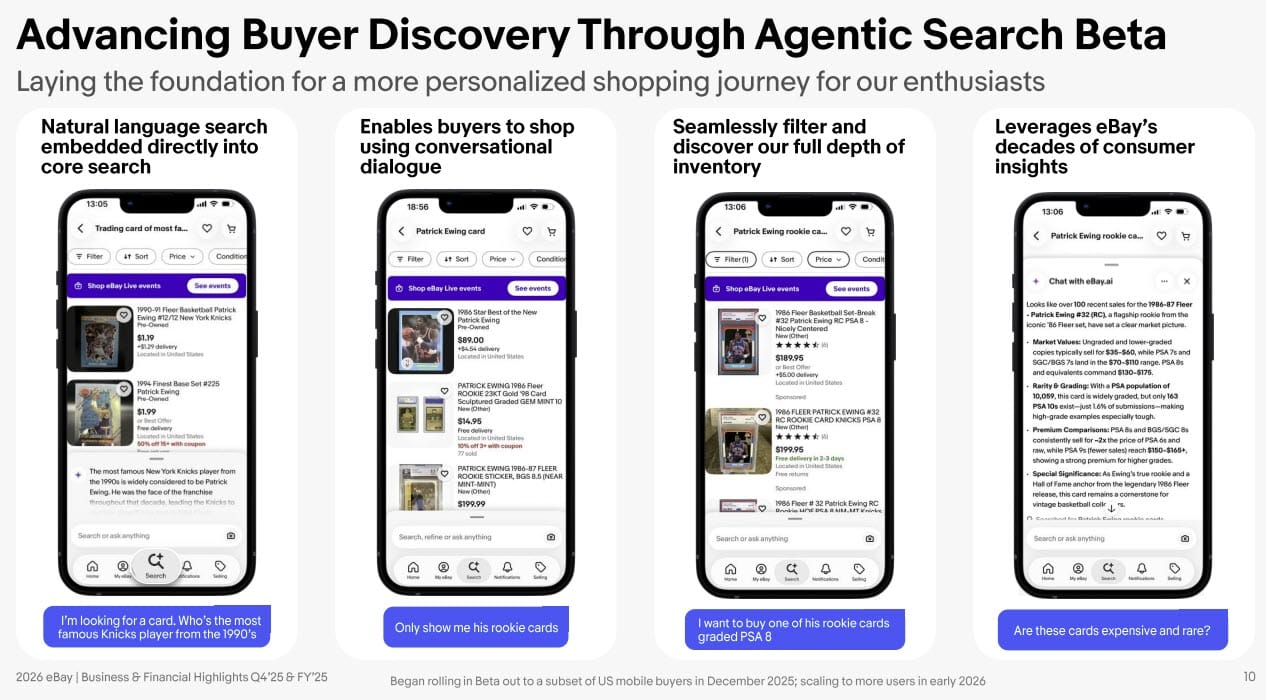
And eBay raised eyebrows in January with a user agreement update that explicitly banned unauthorized buy-for-me agents and LLM-driven bots from interacting with the site, while at the same time revealing in their Q4 2025 earnings call that they are expanding beta testing of their own onsite agentic experience for buyers.
 Liz Morton
OpenAI stepping back from in-chat checkout does not necessarily mean the company is abandoning AI commerce ambitions.
Instead, they're simply shifting their strategy back to where it should have been in the first place - owning product discovery.
Marketplaces already manage payments, fulfillment, and logistics. AI assistants can focus on helping consumers decide what to buy, which may ultimately be more valuable than owning the transaction itself.