Mercari’s U.S. GMV Is Improving, Even as User Growth Lags

Mercari’s latest earnings call was dominated by headline-worthy results out of Japan: record revenue, sharply higher operating profit, and enough momentum for management to lift full-year guidance, but the more strategically interesting story may be the U.S., where the company is quietly proving that its marketplace can grow without sacrificing discipline.
At first glance, the U.S. business still looks modest next to its Japanese counterpart. U.S. GMV rose 12% year over year to about $196 million USD (~¥30B JPY) in the quarter, while the business held to break-even profitability, posting a modest core operating profit of 600 million JPY.
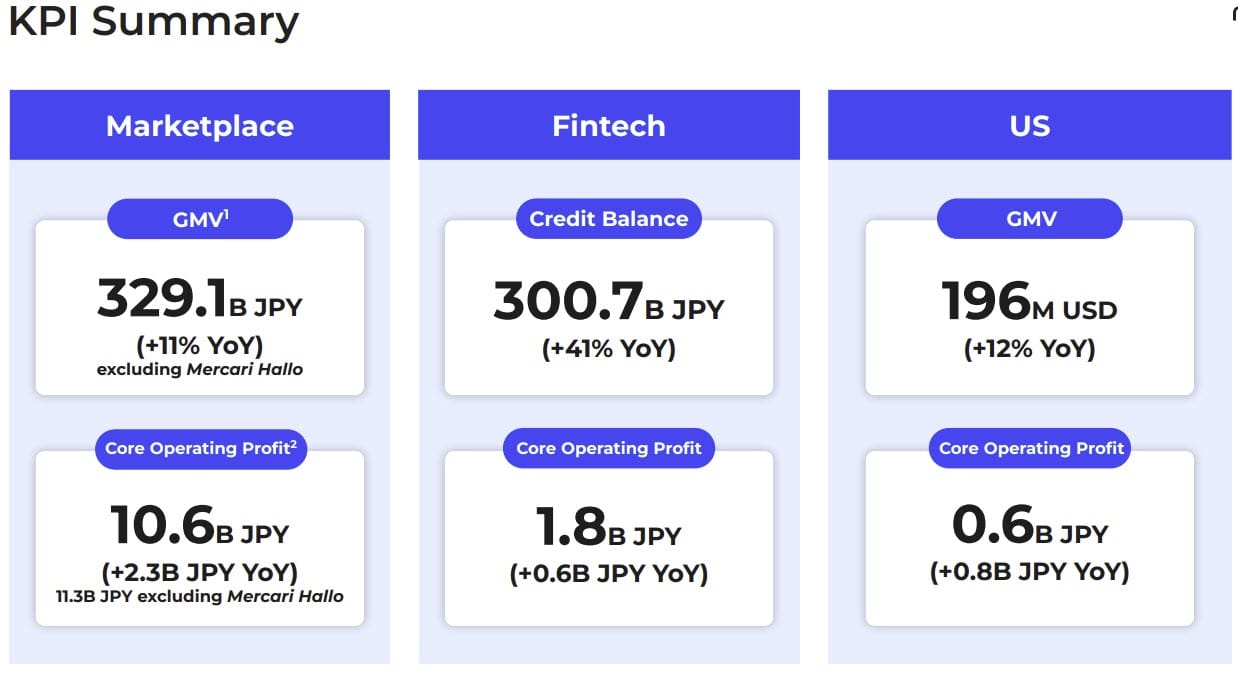
Those figures won’t rival Mercari Japan's scale anytime soon, but they mark a meaningful shift: the U.S. operation is increasingly behaving like a business with a defined growth model.
Crucially, management framed U.S. growth as the result of cumulative product improvements rather than short-term promotional spikes.

Category-specific marketing, CRM-driven coupons, and seller-side tools were paired with investments in trust, safety, and discovery. Entertainment and hobby categories continue to lead, with trading cards and collectibles driving consistent demand, while fashion is beginning to regain momentum, as Mercari continues to experiment with category-specific exchange programs.
 Liz Morton
This quarter’s momentum builds on Mercari’s earlier claim - reported by Value Added Resource in August 2025 - of its first full-year profit in the U.S. marketplace
 Liz Morton
Yet, despite the upbeat commentary on GMV and categories, the user base reality is murkier. U.S. Monthly Active Users (the quarterly average number of users who browsed Mercari’s app or website at least once during a given month) in Q2 was 4.3 million, down 4% year over year and only marginally higher than the prior quarter.
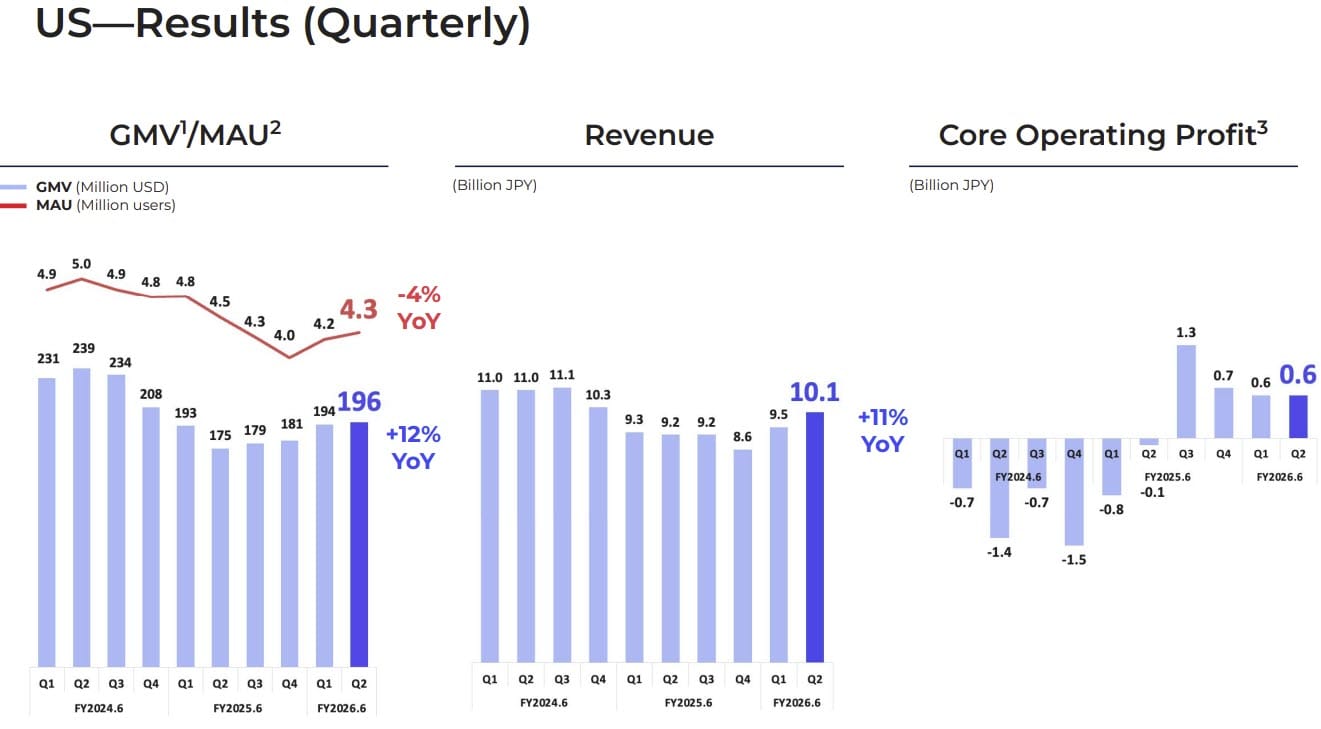
In other words, Mercari is extracting more GMV and revenue from a slightly smaller active audience. That isn't necessarily a bad thing - monetizing existing users better is part of any marketplace’s maturation - but it does put a ceiling on the growth story if MAU does not eventually turn decisively upward.
The CFO underscored that MAU remains a key metric for judging whether they have truly “found the path to success” in the U.S., especially after what they described as a long downward trend. For now, they are watching quarter-over-quarter and year-over-year MAU changes closely, hoping that the combination of category focus, UX improvements, and safety work can restart the user acquisition and reactivation flywheel without sacrificing profitability.
What differentiates Mercari’s U.S. strategy from many marketplace expansions is its restraint. Despite solid first-half performance, the company declined to raise U.S. guidance, citing tougher year-over-year comparisons tied to earlier fee model changes rather than any deterioration in demand.
For U.S. sellers, the takeaway from this earnings call is less about flashy new initiatives and more about a slow, methodical reset. If the company can translate that discipline into sustained double-digit GMV growth and a return to meaningful MAU expansion, it may finally be able to move the U.S. narrative from “stabilization” to genuine second-stage growth.
Until then, sellers and buyers should expect more of what Q2 delivered: a platform that is incrementally safer and more efficient, and carefully managed not to get too far ahead of itself.