Mercari US Reports First Ever Full Year Profit As Strategy Shift Pays Off

Mercari's US operations have reported a full year profit for the first time ever as leadership shakeup and strategy shift starts to pay off.
The Japan-based company ended their fiscal year in the most recent quarter ending June 30th 2025 showing strong growth in the once struggling US marketplace in significant turnaround compared to last year.
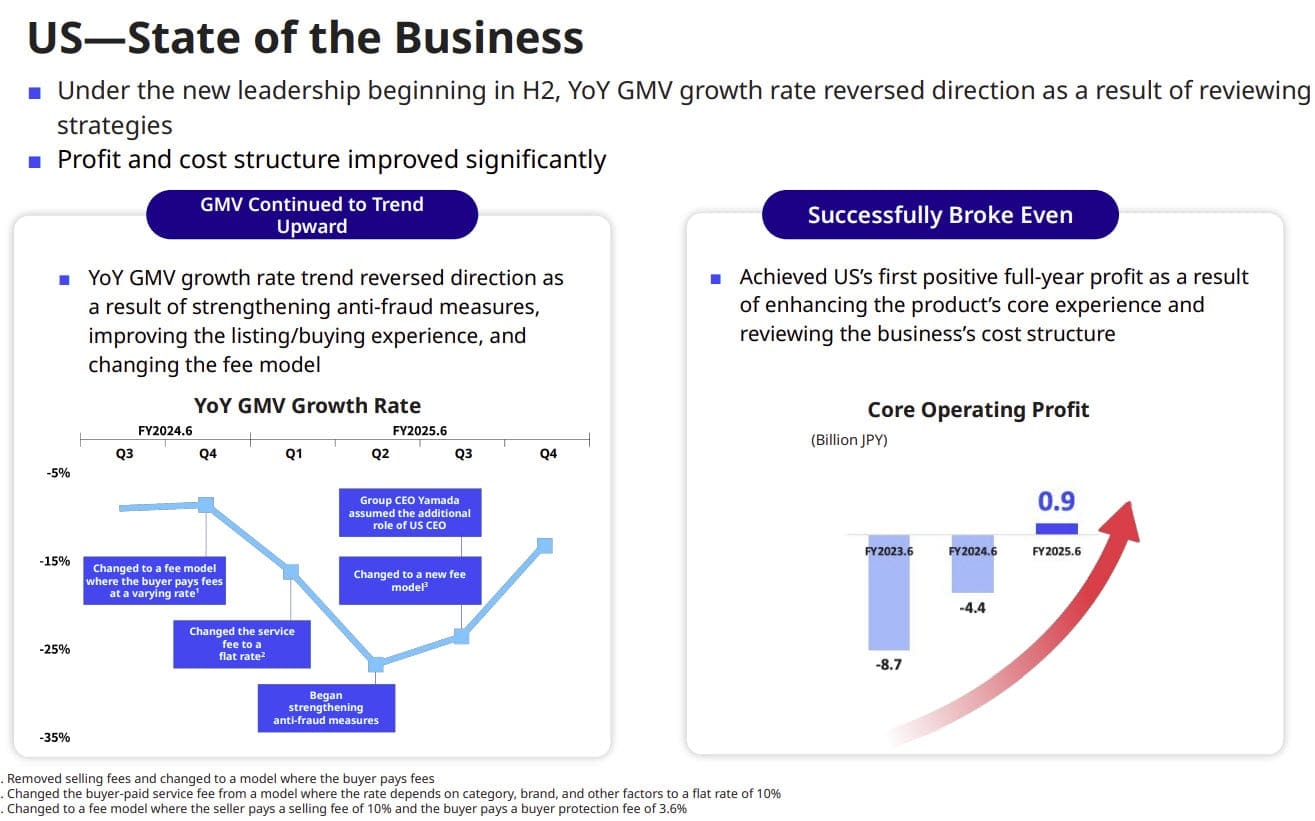
CEO Shintaro Yamada took over leadership of the US marketplace in January following John Lagerling's resignation after a disastrous attempt to change the fee structure on the site caused an exodus of buyers and mass layoff of ~45% of US staff in 2024.
Yamada recalibrated the platforum under another new fee structure, this time split between buyers and sellers - a move Mercari said showed initial signs of improving GMV on the previous earnings call, though the US site was still showing some signs of struggle.
 Liz Morton
Those efforts to update the fee model and strengthen the core product experience appear to finally be paying off, delivering a full-year profit of 900 Million JPY - the first time the US marketplace has shown positive full-year profit since it was launched in 2014.
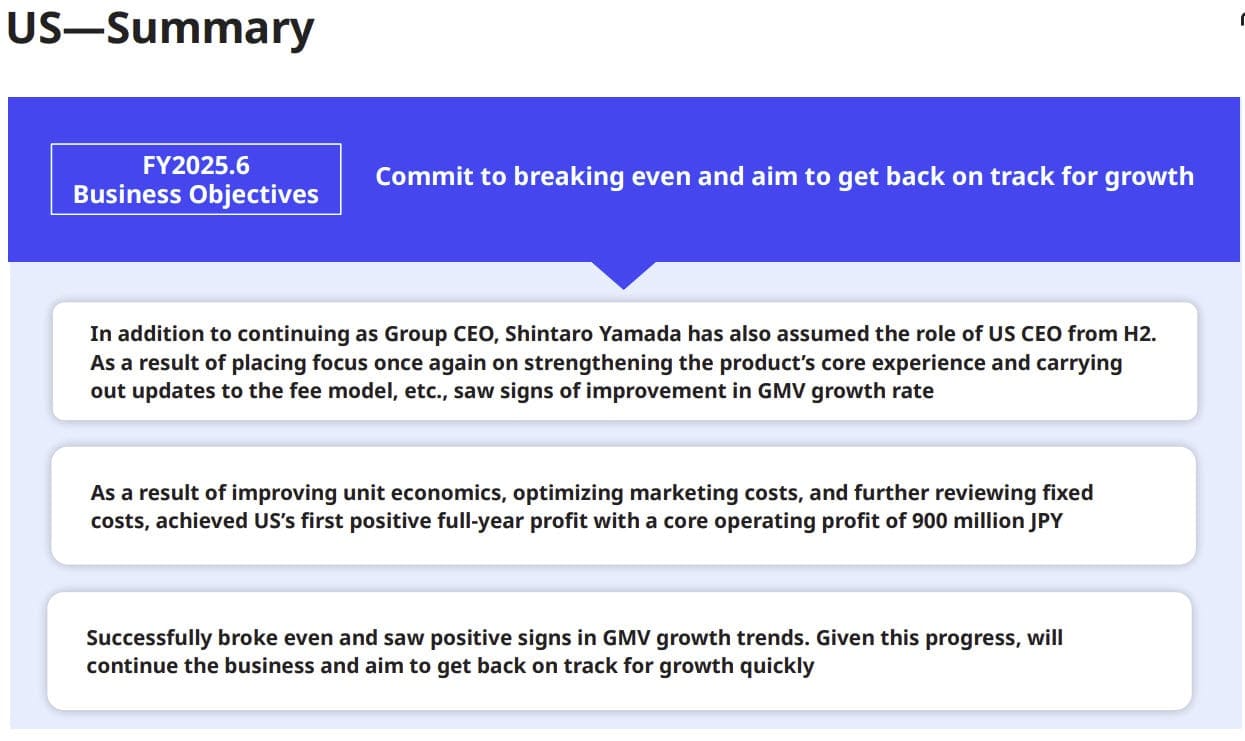
To keep the momentum going in the US, Mercari plans to continue improving the user experience and safety and security of the site through AI tools and capabilities while focusing on category specific strategies to differentiate Mercari from competitors.
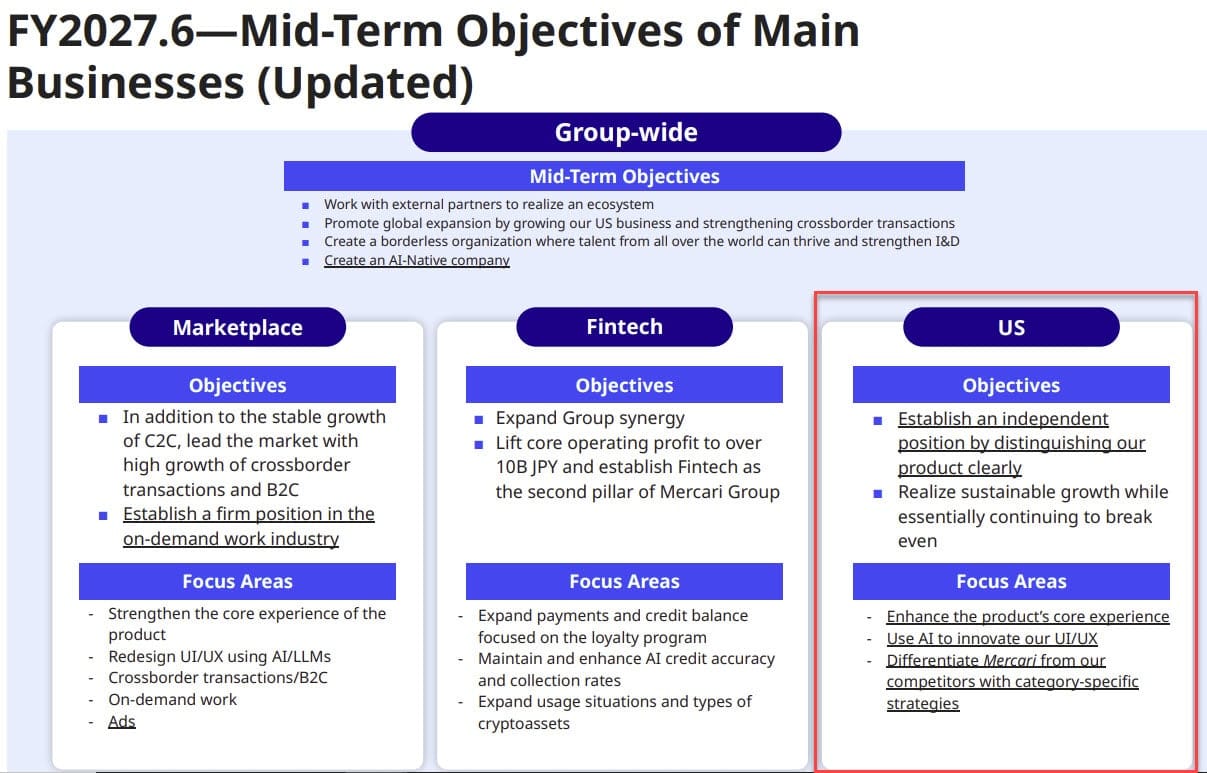
Unsurprisingly, they've tapped fashion as the first category to tackle with others to follow in the mid-to-long term.
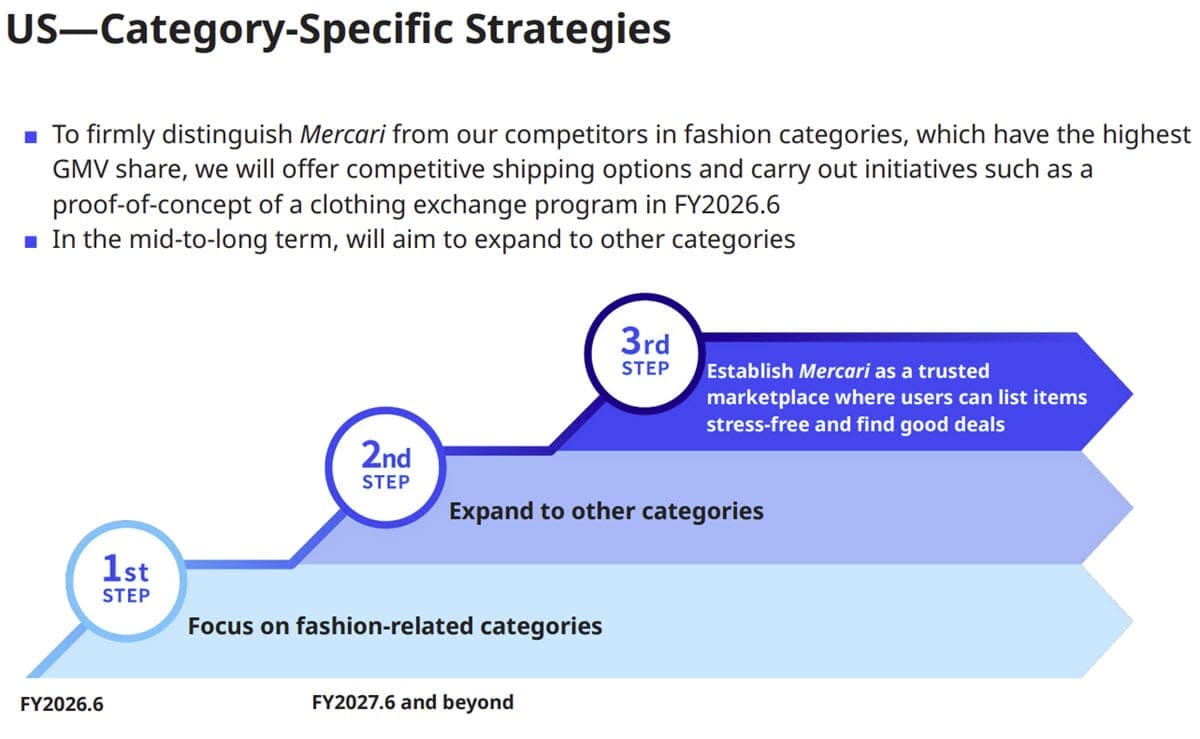
The earnings presentation specifically called out the Fashion Exchange program currently being piloted as a proof of concept as well as recent shipping changes with "best rate" offerings that will be particularly useful for clothing items.
 Liz Morton
Unfortunately, that's not exactly an original strategy - eBay, Depop, Poshmark, Vinted and even Walmart to some degree with luxury fashion and handbags are all already intensely focused on the opportunity that pre-loved fashion represents, so Mercari is betting a lot on the idea they can carve out significant market share in this already very crowded category.
That stiff competition was clearly on analysts' minds in the Q&A segment with one asking: "When it comes to the strategy for fashion categories, how are you going to differentiate Mercari from your competitors and establish a competitive advantage?"
The answer didn't give much in the way of specifics and simply referred to the Fashion Exchange Program, shipping initiatives, and the convenience of the user experience as reasons why they believe Mercari can win in this category.
The fashion categories are huge in the secondhand clothing market, and they are also growing categories, which is why we are focusing on them strategically. There are some excellent competitors in this market, but we believe that we will be able to establish a competitive advantage by distinguishing ourselves with the convenience of our product.
Specifically, in addition to providing competitive shipping options, we will lower the psychological obstacles that keep consumers from purchasing secondhand items through initiatives such as the Fashion Exchange Program, which simplifies the return process and is currently running as a PoC. In doing so, we will capture a tier of users who are fashion conscious.
Another analyst asked about the possibility of Mercari exiting the US market, which had been floated as a potential option during more troublesome times last year.
"You broke even, but is there still a chance that you will withdraw from the US,
and are there criteria that would dictate that decision?"
The answer indicates that while an exit appears much less likely now, the idea of exploring outside investments and/or partnerships is still not off the table.
As is described in the presentation materials, we are continuing to operate in the US at this time, and we are aiming to get back on track for growth. First we are enhancing the product’s core experience, and concentrating on clearly showing its value.
However, as we have said in the past, we are not intent uniquely on succeeding solely with our own independent capital. As a way of prioritizing the success of our business, we are always considering multiple options to success including external capital and partnerships.
How have Mercari's recent changes in the US market affected your sales and shopping on the site? Do you think Mercari has a chance to seriously compete against other marketplaces in pre-loved fashion categories? Let us know in the comments below!