Depop “Junk Fee” Class Action Tests Fee Transparency as eBay Deal Nears Completion

Soon to be eBay-owned fashion marketplace Depop faces class action lawsuit alleging Marketplace Fee constitutes illegal junk fee "drip pricing", raising questions about how legal action could affect acquisition.
Plaintiff Linsey Dinh filed the complaint against Depop on February 6, 2026 in California federal court, alleging violations of state consumer laws.
According to the lawsuit, Depop engages in a practice known as “drip pricing,” where the advertised price of an item does not include the mandatory marketplace fee which is only disclosed at the checkout stage, leaving consumers blindsided and often causing them to reconsider their purchase.
Dinh claims that when she purchased an item from Depop in January 2025, she was charged an additional $1.55 marketplace fee at checkout, which was not included in the item’s advertised price of $17.00.
The suit alleges that this practice is not only misleading but also illegal under California’s Honest Pricing Law, which requires businesses to include all mandatory fees in the advertised price of a product.
Here's how the suit describes and defines "drip pricing" and how the California Consumers Legal Remedies Act applies to Depop's pricing practices.
On July 1, 2024, the California Legislature amended the Consumers Legal Remedies Act, making it illegal “for most businesses to advertise or list a price for a good or service that does not include all required fees or charges.”
This amendment to the CLRA was made to rein in “drip pricing” by “bring[ing] price transparency to all sectors of the state’s economy.” Drip pricing “is a pricing technique in which firms advertise only part of a product’s price and reveal other charges later as the customer goes through the buying process.”
In particular, the amendment was a response to the issue of when “a seller uses an artificially low headline price to attract a customer and usually either discloses additional required fees in smaller print, or reveals additional charges later in the buying process.”
The authors of the amendment emphasized that “[h]iding required fees is nothing more than a deceptive way of hiding the true price of a good or service. Transparency and full disclosure in pricing are crucial for fair competition and consumer protection.”
The lawsuit also claims that Depop’s hidden fees prevent consumers from making informed purchasing decisions and comparing prices with competitors.
Drip pricing is particularly harmful to consumers because “[w]hen merchants include hidden or ‘junk fees’ in the purchase price of goods and services after putting out a much lower advertised price (the bait), consumers are often misled and kept from properly assessing the best prices, thereby hindering the market, especially online.”
Thus, California’s Honest Pricing Law benefits consumers by enabling them to conduct “direct, apples-to-apples price comparison” between different vendors so that they may make “informed purchasing decisions based on their preferences and budgets.”
It also ensures businesses engage in fair competition by competing based on the “price and value offered, rather than on their ability to deceive consumers into paying junk fees.”
Relying on the drip pricing practice, websites like Defendant’s can effectively squeeze every last penny from a consumer’s wallet. This is because “a shopper may have put so much time into the shopping process that by the time additional fees or charges are disclosed they have already made up their minds to make a purchase.”
Indeed, “[c]ompanies may utilize a price dipping approach in order to entice a customer into starting the purchase process, at which point the customer may not want to restart his or her search, once they find out the added costs.”
The complaint contains screenshots of a typical Depop item page, which the plaintiff says was recently changed to include an "i" icon that when selected has a message disclosing that the total price displayed is inclusive of the Fee in an apparent effort to get ahead of this complaint.
Defendant shows each item’s purchase price upfront when it first appears on the Website...
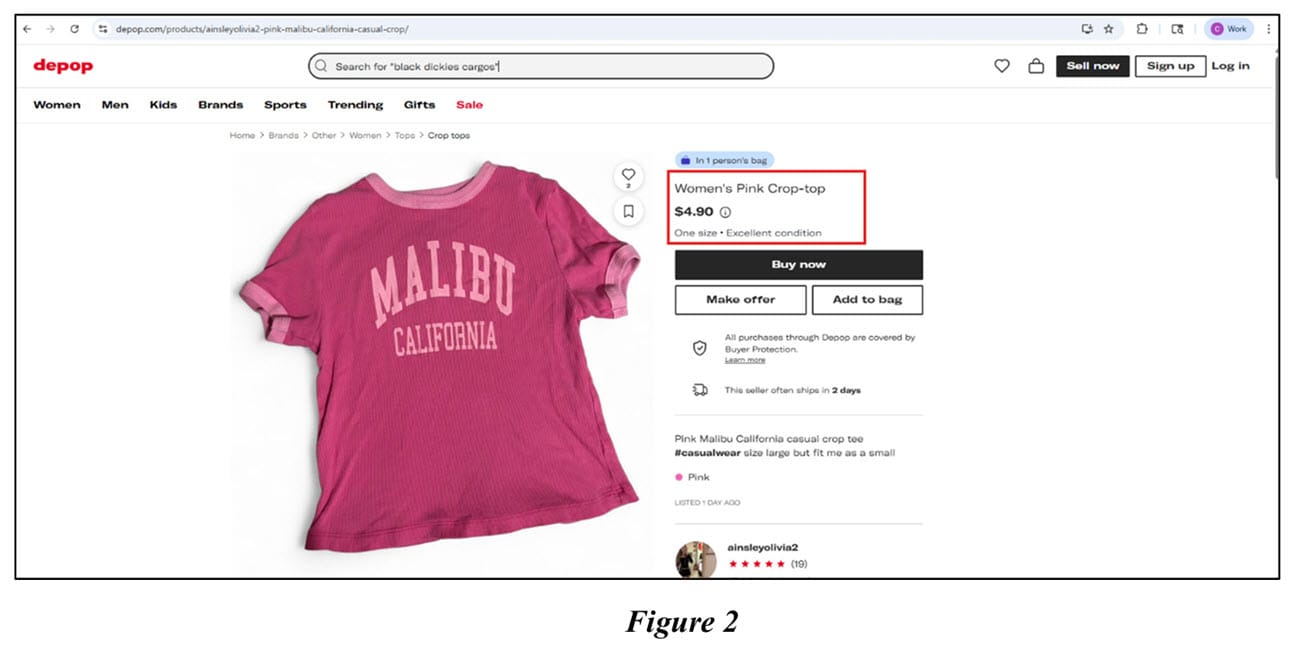
...When a user selects an item of clothing, the price is again displayed on the page. See Figure 2 (red markings added).
Next to the price, there is an “i” icon. When selected, the icon discloses that the total price displayed is inclusive of the Fee, which “powers your Depop experience, helping us to continually invest in” “Depop Protection,” “Customer support,” and “New features and improvements[.]”
Upon information and belief, the “i” icon next to the price shown in Figure 2, and similar icons across the website, are new features of the website that did not exist when Plaintiff placed her order in January 2025.
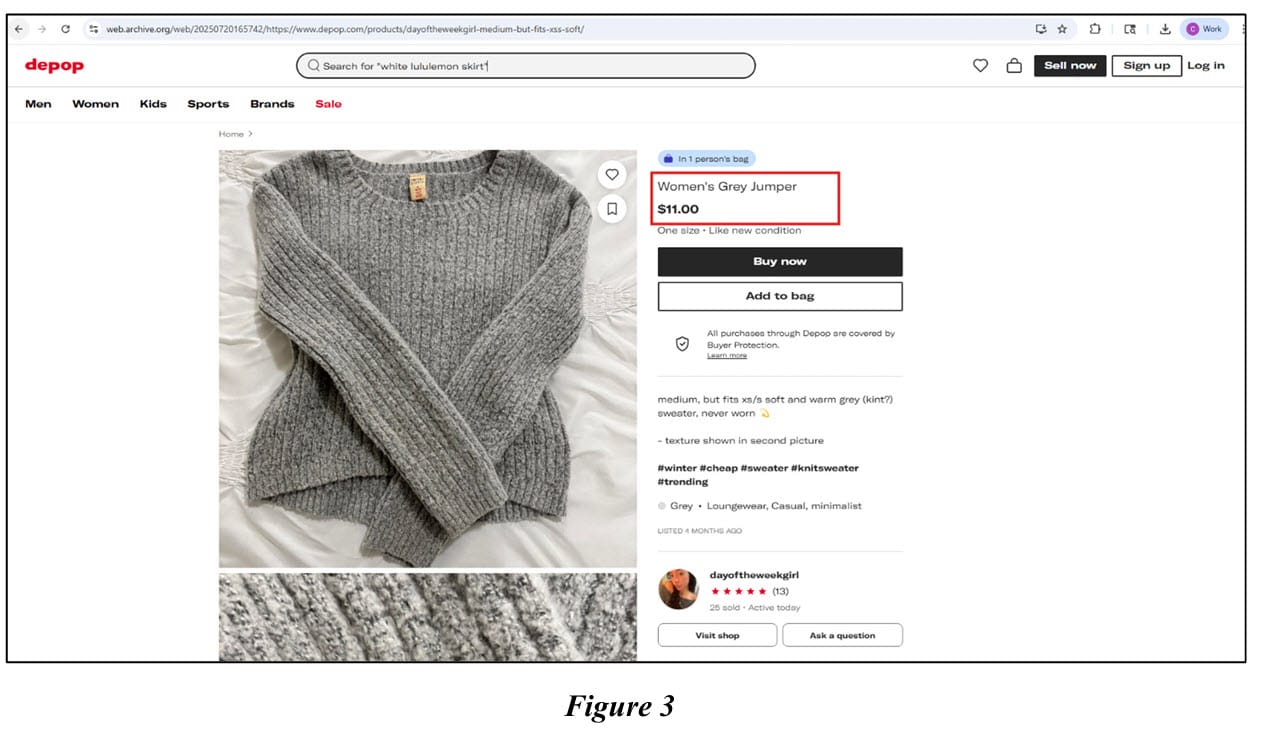
Figure 3 below shows a screenshot from the Website from July 20, 2025 using the internet archive. The informational icon next to the price for the item did not exist.
On information and belief, Defendant recently changed its Website in an attempt to comply with the law.
However, on information and belief, the “i” icon did not exist next to the advertised price of the clothing when Plaintiff placed her order in January 2025. As such, Plaintiff was not placed on notice about the Fee until checkout.
Interestingly, when I checked Depop today, it is not showing fee inclusive pricing or an "i" icon - even when specifically using a California address.
Instead, I am still seeing the price without the fee shown on the item page and in cart, with the fee only being shown once I proceed to checkout.
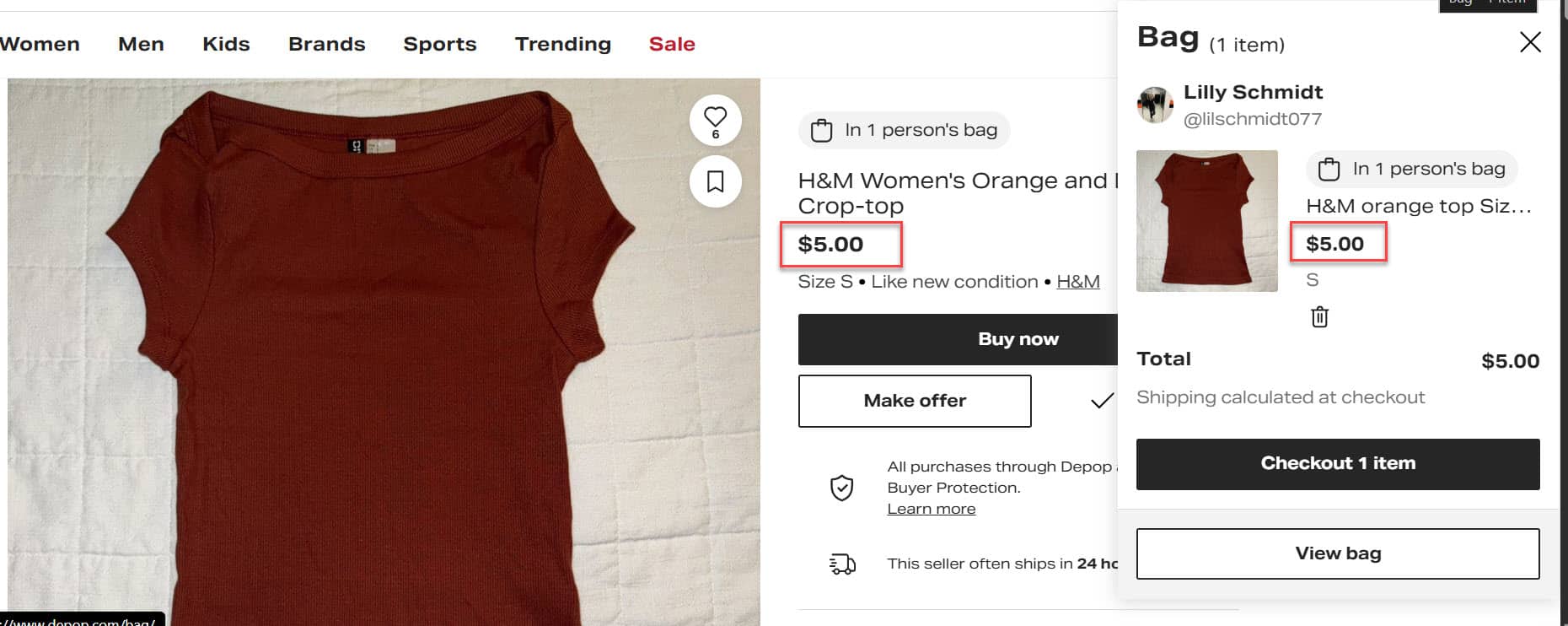
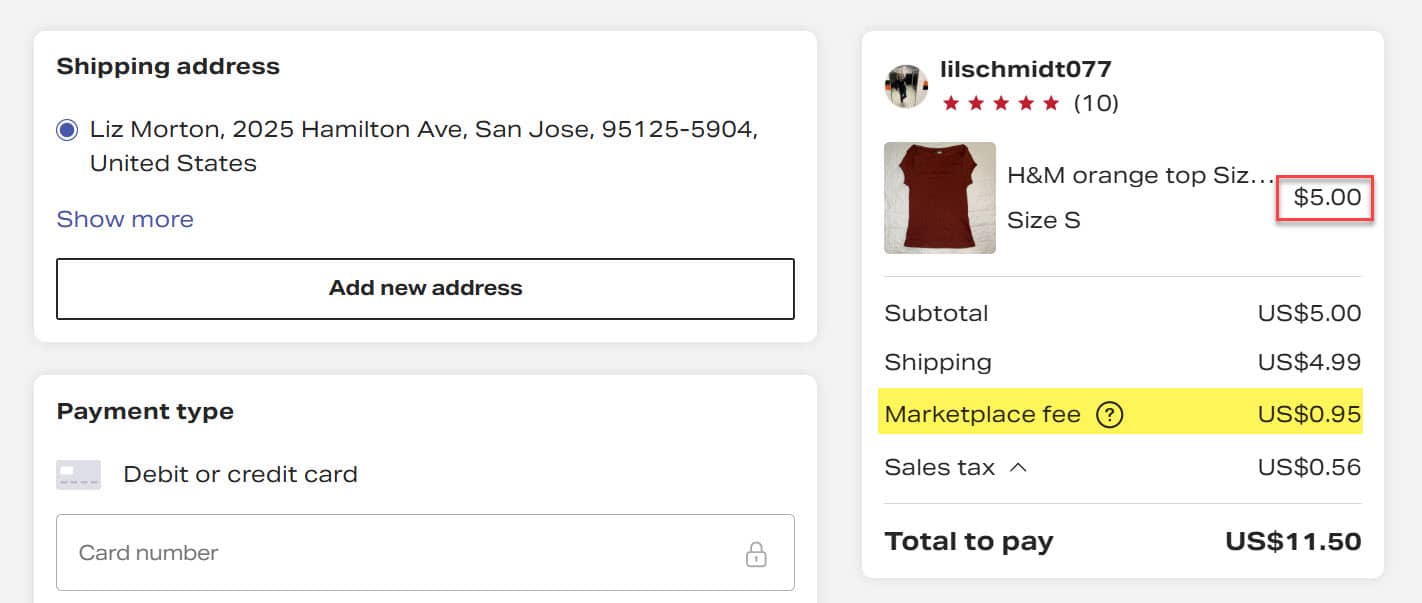
It's not entirely clear if the fee inclusive pricing shown as an exhibit in the lawsuit was a test or if perhaps Depop reversed course on the change after the suit was filed, but it does not appear to still be in use today.
In a twist that could add an additional wrinkle to this suit, less than 2 weeks after the initial complaint was filed, it was announced that current parent company Etsy is selling Depop to eBay in a $1.2B deal expected to close in Q2 2026.
 Liz Morton
Coincidentally, eBay introduced a similar Buyer Protection Fee on private sales in the UK market last year and they do display a fee inclusive price on the item page before checkout - so it will not be surprising to see that come back for Depop after the acquisition is complete too.
 Liz Morton
The timing of both the filing of this lawsuit and Ms. Dinh's original purchase could also raise questions about how the litigation may be affected by the acquisition, especially since the suit is seeking both compensatory and punitive damages on behalf of the plaintiff and any other similarly situated Depop buyers who may end up being included in the Class.
Depop has not yet responded to the complaint and the April 27, 2026 deadline to do so means any eventual resolution of the claims will likely occur after the acquisition by eBay is completed.
The plaintiff is represented by Neal J. Deckant and Celina D. Reynes of Bursor and Fisher P.A and Depop is represented by Benedict Hur and Joshua Anderson of Cooley LLP.
The case is Dinh v. Depop Inc., Case No. 3:26-cv-01173-VC, in the U.S. District Court for the Northern District of California.
Download the full initial complaint: