Trading Card Buyer Sues eBay, PSA, Unknown Seller For Alleged Fraud & Authentication Failures

UPDATE 10-7-25
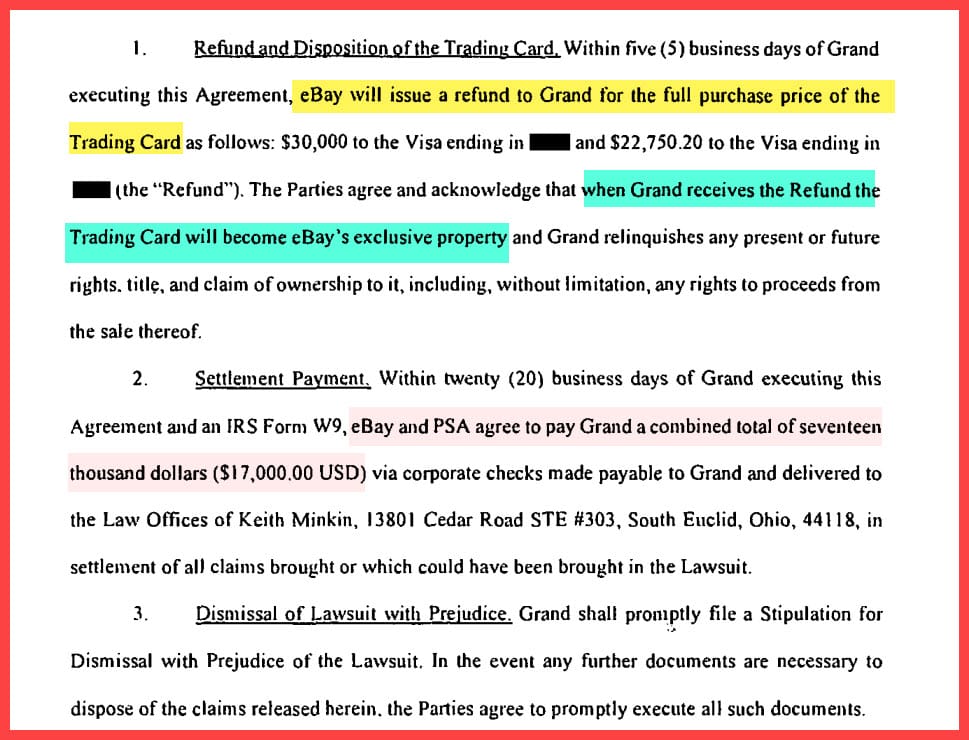
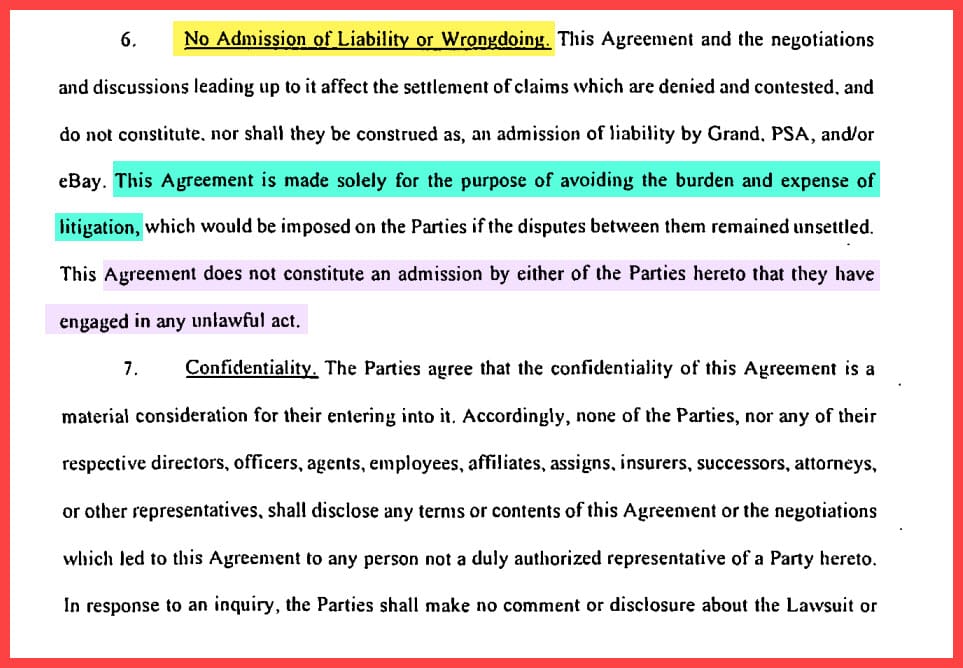
Details of the settlement agreement for this lawsuit have been released.
Plaintiff Daniel Grand will receive a full refund of the cost he paid for the card ($52,750.20) plus an additional $17,000 from eBay and PSA for total compensation of ~$69,750.20.
eBay will get to keep the card and both eBay and PSA do not admit liability or wrongdoing as part of this settlement.
UPDATE 10-3-25
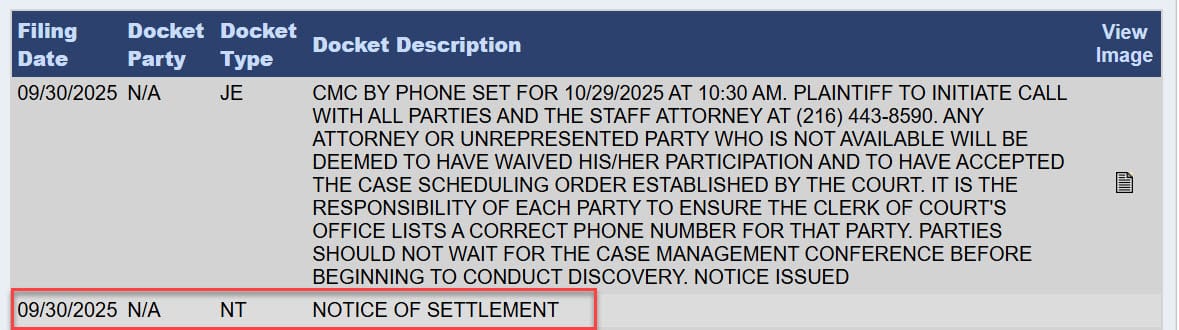
While no details or statements have yet been released, the court docket shows that a notice of settlement has been filed, likely bringing this litigation against eBay and PSA to an end.
UPDATE 9-16-25
eBay is the first defendant to respond to this lawsuit, categorically denying all claims made by plaintiff Daniel Grand and requesting to have the suit dismissed.
eBay is the first of the defendants to respond. pic.twitter.com/63QuRHieiG
— auburn35 (@35auburn) September 16, 2025
Full response from eBay:
A high value trading card buyer has filed suit against eBay, PSA, and an unknown seller, alleging eBay and PSA failed to catch purposely altered listing images and clear differences in condition on a card sold with Authenticity Guarantee.
The plaintiff, Daniel Grand, originally filed the claim pro se (which means he was representing himself), but has since retained Attorney Keith Minkin in the litigation involving a 1984-85 Star Michael Jordan #101 rookie card graded by Beckett Grading Service as 8.5 with three 9.5 subgrades which he purchased on eBay for approximately $53,000.
UPDATE: the original eBay listing for this card has been spotted by @35auburn on X - it appears it was originally sold on June 25th but that sale was not completed and the card was then relisted and sold on June 27th.

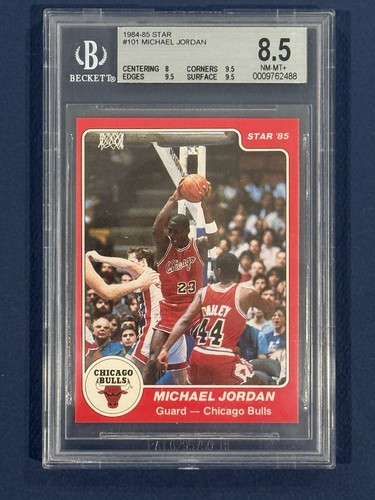
Grand says when he received the card, it contained a blemish which was not disclosed in the listing description or shown in the allegedly altered listing photos - and that PSA and eBay both failed to live up to the terms of the advertised Authenticity Guarantee because the condition discrepancy was not caught during the authentication process.
After Plaintiff paid approximately $53,000 for the card, he immediately discovered that the physical item he received materially differed from the condition represented. Despite prompt notice, weeks have passed, and eBay has issued no determination, no response, and no remedy.
This prolonged delay has magnified the harm to Plaintiff, who used both debit and credit funding to complete the transaction, increasing his debt exposure and financial risk.
eBay’s prolonged silence is not merely a customer service failure; it constituted a breach of its contractual Authenticity Guarantee, which promised a prompt buyer protection process in cases of misrepresentation.
The damage was already done—timing-sensitive arbitrage potential was lost, capital was tied up, and Plaintiff was left without the opportunity to mitigate harm in real time.
In the high-end trading card market, resale and cross-grading opportunities tied to short-term trends are central to investment strategies. eBay and PSA, who actively solicit high-value collectible sales through their Authenticity Guarantee, are or should be aware that the timing of delivery, visual condition, and grading status form the core of the item’s investment utility.
The harm suffered here was not hypothetical—it was structurally built into the commercial ecosystem Defendants promoted. Plaintiff brings this action to recover for the compounded harms caused by the Defendants’misrepresentations, concealment, and systemic failure to provide timely or fair recourse.
No consumer should be left exposed to five-figure financial risk while powerful platforms delay or deflect responsibility behind the illusion of a “guarantee.”
The allegedly undescribed blemish is said to have been a white speck embedded within the plastic case, which Grand says was not visible in listing photos, leading to claims of photo editing/manipulation to hide the defect.
Upon information and belief, the seller intentionally manipulated the listing photograph of the card’s back using digital editing tools (such as Photoshop or equivalent) to conceal a material blemish—specifically, a distinct white speck embedded within the BGS- encapsulated plastic case.
Plaintiff bases this belief on the total absence of the blemish in the listing image, its immediate and obvious appearance upon receipt, and the inconsistencies observable between the item in person and the original listing image. This act constituted a knowing visual misrepresentation of the item’s condition.
Grand went on to explain that he made the high value purchase predicated on assurances of eBay's Authenticity Guarantee program, but eBay failed to live up to their promises.
According to eBay’s published Authenticity Guarantee policy—incorporated into its platform-wide user terms—the authentication process is generally completed within two (2) business days.
If the item’s condition is inconsistent with the listing, eBay represents that it will notify the buyer, provide photographic evidence of the discrepancy, and offer the buyer the choice to cancel for a refund or proceed with the transaction after review.
These procedures were not merely aspirational; they were part of the transacted process and relied upon by Plaintiff, to his detriment, in choosing to complete the purchase...
...In the present transaction, none of these promised procedures occurred: Plaintiff received no disclosure, no photographs, no discrepancy notice, and no opportunity to decline the purchase following authentication.
This failure constituted a deviation from both eBay’s own published terms and industry-standard authentication practices and deprived Plaintiff of the contractual remedy promised at the point of sale.
Further, Grand says that eBay's Authentication partner and designated agent, PSA, should have high resolution intake photos of the card which should show the blemish.
Upon information and belief, PSA captured high-resolution intake photographs of the card as part of its standard authentication protocol. PSA routinely performs this step in its intake workflow, and its contractual obligations under the Authenticity Guarantee reinforce the existence and materiality of these visual records.
These images would have revealed the concealed blemish prior to shipment. Plaintiff intends to obtain these records in discovery and demands their preservation, as they are central to PSA’s role and eBay’s contractual obligations.
Upon information and belief, PSA’s intake photographs plainly depicted the concealed blemish—a white speck within the BGS case—which would have been readily observable to any trained authentication reviewer exercising reasonable care.
The blemish’s visibility is not speculative; Plaintiff has documented it post-delivery and intends to offer expert testimony confirming that the flaw was both noticeable and material under professional authentication standards.
One might reasonably expect that eBay will be likely to pursue a Section 230 based defense when they reply to these claims - especially after successfully ducking a potential ~$2B EPA fine for illegal pesticides, chemicals and emissions-control cheat devices sold through their platform on those same grounds.
Section 230 of the Communications Decency Act of 1996 - also known as "the 26 words that created the internet" - states:
No provider or user of an interactive computer service shall be treated as the publisher or speaker of any information provided by another information content provider.
Big Tech companies know they can wield Section 230 as a "get out of liability free" card with courts consistently ruling in their favor, and eBay is likely to lean heavily on these protections in this matter as well.
But Mr. Grand appears to have anticipated this argument and preemptively countered it with a detailed explanation of why he believes eBay and PSA's significant direct involvement in the transaction and explicitly written policies and practices of the Authenticity Guarantee program preclude any Section 230 protection for the platform.
The combined actions and omissions of all Defendants—including misrepresentation, concealment, failure to act, and breach of contractual and professional duties— have directly and foreseeably caused Plaintiff to suffer substantial financial losses, unrecoverable investment harm, and ongoing economic exposure.
No independent intervening cause exists. The harm flowed from a unified transaction structure in which all Defendants jointly controlled item custody, verification, and release, making the resulting losses a proximate consequence of their breach.
Here, eBay was not acting as a passive conduit of third-party content, but as an active commercial intermediary. It has skin in the game, a large final value fee that it charges.
Through its Authenticity Guarantee program, eBay inserted itself into the transaction—removing the seller from the shipping chain, exercising control over the item through its designated agent (PSA), and issuing its own post-authentication representations to the buyer, making eBay’s operational structure go far beyond mere publication or facilitation of third-party content and constitutes eBay’s own conduct as commercial involvement.
As such, eBay is not entitled to immunity under Section 230 of the Communications Decency Act.
However, in the EPA case, the Department of Justice put forward similar arguments, offering the eBay Moneyback Guarantee, Global Shipping Program, catalog information, advertising and other eBay controlled aspects of the sales as examples of the company's direct involvement which should preclude Section 230 immunity - but U.S. District Judge Orelia Merchant was not convinced.
If this matter proceeds, it's unlikely a pro se plaintiff who is representing himself will succeed against eBay's Section 230 heavy hitters, Sullivan and Cromwell, where the EPA and DOJ failed.
 Liz Morton
Grand is also asking the court to force eBay to provide information about the seller operating the account from which the card was purchased so that he can properly serve them in this lawsuit as well.
He also attempts to get around eBay's User Agreement Terms which mandate arbitration and restrict rights to sue by claiming eBay's deviation of their own terms for Authenticity Guarantee should allow him to bypass any arbitration requirements.
Plaintiff reserves the right to challenge the enforceability of any mandatory arbitration or forum selection clause asserted by eBay,including those contained in standard-form user agreements, based on unconscionability, public policy, and waiver through eBay’s inconsistent enforcement or conduct in this dispute.
eBay’s active commercial role created direct obligations to Plaintiff separate from any user agreement disclaimers. Even if a standard-form arbitration clause is asserted, Plaintiff reserves the right to challenge enforceability based on eBay’s deviation from its own terms, post-sale conduct, and unfair surprise.
In total, Grand is seeking:
- Compensatory Damages of no less than the $52,750.20 full purchase price paid for the materially misrepresented trading card.
- Diminution in Value Damages, reflecting the difference between the card’s value as received (approximately $25,000–$30,000) and the price paid, due to the concealed blemish.
- Consequential and incidental damages, including but not limited to:
- interest-bearing debt exposure
- credit card interest and fees
- legal and transactional costs
- emotional and reputational distress caused by eBay’s prolonged inaction
- Lost Market and Investment Opportunity Damages, including the reasonably anticipated arbitrage loss from Plaintiff’s inability to cross-grade the card to PSA 7.5 or 8, with an estimated resale value of $90,000–$185,000, had the card been delivered in the condition represented
- Punitive Damages against Defendant John Doe for intentional fraud and concealment
- Other declaratory and injunctive relief
The case is DANIEL GRAND vs. EBAY INC., ET AL. CV-25-121220 in the CUYAHOGA COUNTY, OHIO COURT OF COMMON PLEAS.
Shout out to @35auburn on X for finding this case and for their outstanding work shining a light on fraud and counterfeits in The Hobby!