Lawsuit Claims Bonanza Sold Out User Privacy With CIPA Violating Pixel Tracking

UPDATE 9-20-25
After Bonanza failed to respond before the September 2, 2025 deadline, lawyers for Mr. Hanson have now filed for voluntary dismissal of their own lawsuit.
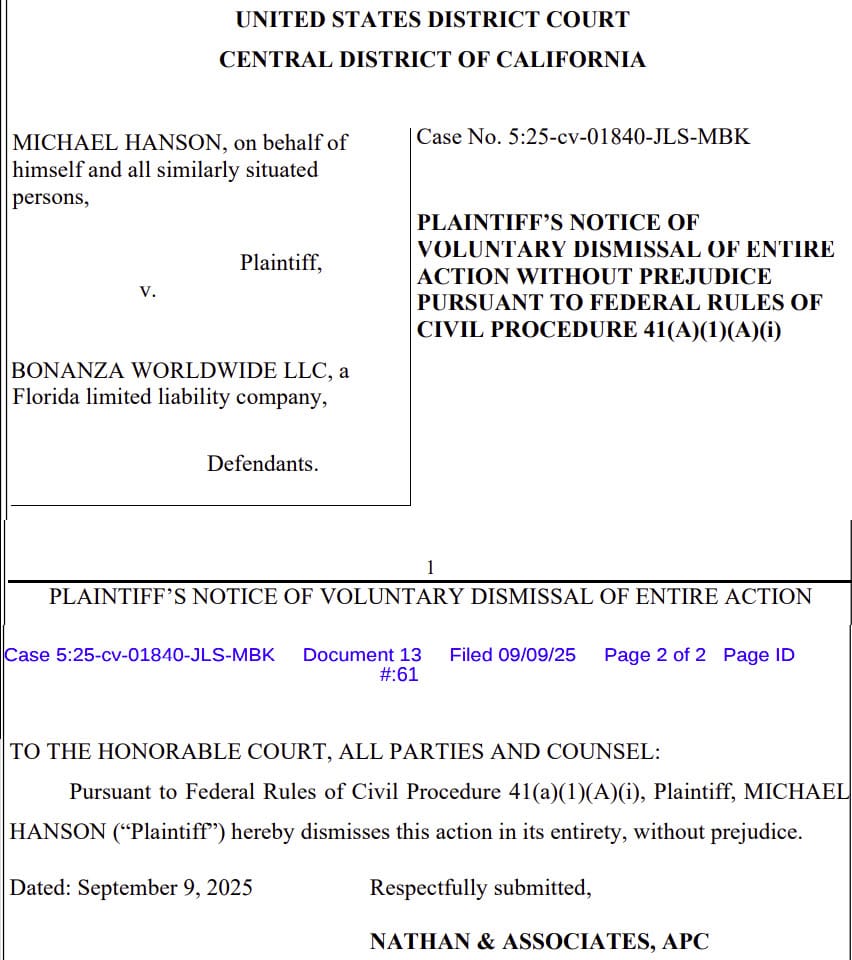
No further details were provided in court filings, so it's unclear if a settlement was worked out to avoid further action.
UPDATE 9-5-25
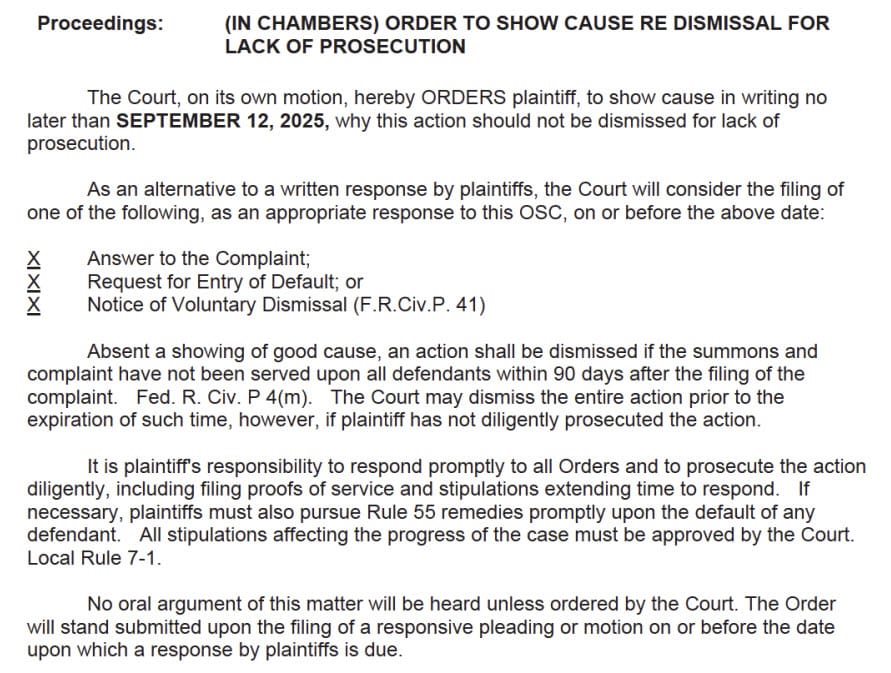
The September 2, 2025 deadline for Bonanza to respond to this lawsuit has come and gone with no answer from the company which should have provided an open and shut case for Mr. Hanson's attorneys to move forward with requesting a default judgement.
But inexplicably they have yet to do so, resulting in Judge Josephine L. Staton issuing an order demanding that either a response to the original complaint, a notice of voluntary dismissal or request for entry of default be filed by September 12th or else she will dismiss the lawsuit herself.
Bonanza is facing a proposed class action alleging the company allowed third parties to collect personal information from the site's users through the use of pixel trackers, in violation of the California Invasion of Privacy Act (CIPA).
In a suit filed July 21,2025 in the US District Court for the Central District of California, plaintiff Michael Hanson claims Bonanza (aka bMarketplace) parent company Bonanza Worldwide LLC violated CIPA and other state laws by using pixel trackers operated by third parties like Google, Meta, Microsoft, Klaviyo, Pinterest, and Criteo.
According to the suit:
A pixel tracker, also known as a web beacon, is a tracking mechanism embedded in a website that monitors user interactions. It typically appears as a small, transparent 1x1 image or a lightweight JavaScript snippet that activates when a webpage is loaded or a user performs a tracked action.
When triggered, the pixel transmits data from the user’s browser to a third-party server. This data typically includes page views, session duration, referrer URLs, IP address, browser and device details, and other interaction metadata.
When users visit the Website, Defendant causes tracking technologies to be installed, executed, embedded, or injected in visitors’ browsers.
These include, but are not limited to, the following:
- Google Ads / DoubleClick Tracker
- Facebook Pixel Tracker
- Bing/Microsoft Ads Tracker
Other third party software trackers used by Defendant on the Website include the Klaviyo, Pinterest and Criteo Trackers, among others.
The third parties who operate the trackers use pieces of User Information (defined below) collected via the Website as described herein for their own independent purposes tied to broader advertising ecosystems, profiling, and data monetization strategies that go beyond Defendant’s direct needs for their own financial gain...
...Defendant enables these trackers, which transmit user data to third-party servers to identify users and support advertising, profiling, and data monetization activities.
Through the Trackers, the Third Parties collect detailed user information including IP addresses, browser and device type, screen resolution, operating system, pages visited, session duration, scroll depth, mouse movements, click behavior, referring URLs, unique identifiers (such as cookies and ad IDs), and geolocation based on IP.
This information is used for behavioral profiling, ad targeting, cross-device
tracking, and participation in real-time advertising auctions (collectively, “User Information”).
Hanson says he and other potential class members didn’t “consent to the installation, execution, embedding or injection” of the trackers and didn’t “expect their behavioral data to be disclosed or monetized in this way,” alleging the pixel trackers violate CIPA because the trackers are trap-and-trace devices prohibited without consent or a court order.
He also claims that Bonanza does not comply with their own posted privacy policy regarding this kind of tracking.
Defendant provides a privacy policy on the Website (the “Privacy Policy”) but does not conform to the Privacy Policy:
- Defendant represents that it engages third-party companies and individuals to help operate, provide, and advertise its services and that such third parties have limited access to personal information and are only permitted to use personal information to perform the identified tasks on Defendant's behalf and are prohibited from disclosing or using personal information for other purposes.
- Defendant claims limited, purpose-bound sharing, which is inconsistent with the broad dissemination of tracking data to thirdparty adtech ecosystems with no indication of real-time constraint enforcement.
- Defendant does not clearly disclose that real-time behavioral data is transmitted to third parties immediately upon site arrival;
- Defendant represents that the Website uses data analytics software to improve its services and that Defendant relies on consumer consent to personalize advertisements on third-party platforms. In reality, the Website provides no initial consent mechanism;
- Tracking and third-party sharing occurs prior to presenting users with a valid choice to opt-out or manage consent;
- Defendant omits material details regarding the depth of personal data shared with third parties and the nature of behavioral profiling activities.
The suit seeks to include all individuals in California whose browsers had trackers installed or were otherwise affected by Bonanza's website and is asking for statutory damages, an injunction prohibiting the conduct alleged in the complaint, and attorneys’ fees and costs.
Mr. Hanson is represented by Nathan & Associates APC and Ross Cornell APC - the same firms which also filed an almost identical suit against Etsy on behalf of a different plaintiff on July 3, 2025.
 Liz Morton
Pixel tracking lawsuits have become very common in the ecommerce world and several firms have also been investigating potential claims against eBay for similar alleged CIPA violations, though so far no suits appear to have been filed.
 Liz Morton
While plenty of law firms are still finding success with these suits, often resulting in settlements to avoid trial, the tactic could face new challenges in the near future as some judges have recently shown skepticism and reluctance to apply CIPA to internet communications, resulting in dismissals of some cases.
 Tammana Malik
Bonanza sellers have been frustrated with many recent changes at the company, including wildly unpopular fee changes in recent months, and rumors have been cropping up in forums and across social media that there may be more legal trouble on the horizon for the company.


The company’s LLC is now located in Florida. Additionally, the company Hanson Enterprises of which Quincy is listed as CEO on their website, is now suing Bonanza Worldwide LLC for some reason, most likely not good.
Bonanza Marketplace founder Bill Harding did sue Faison/ Bonanza Worldwide LLC/ Hanson Enterprises LLC for failure to make payments on a promissory note that was issued as part of the sale of the company - but that was resolved in early 2024.
 Liz Morton
A search of various court records through PACER does not pull up any other currently active litigation involving the company, so it's likely this pixel tracking matter may be what those sellers are referring to and there is simply confusion due to the plaintiff in this suit also having the name Hanson.
However, it does not appear that plaintiff Michael Hanson is in any way related to or connected with Hanson Enterprises LLC, which is the registered agent for Bonanza Worldwide LLC according to the Florida Division of Corporations.
Bonanza was successfully served in this lawsuit on August 11, 2025 and is expected to file a response by September 2, 2025.
The case is Michael Hanson v. Bonanza Worldwide LLC, C.D. Cal., No. 5:25-cv-01840